
Hipster Quiz
How the Scales are Structured
Who Usually Takes This Test?
See How You Compare
Below is a preview of how scores are typically distributed across each scale.
Example Questions From the Test
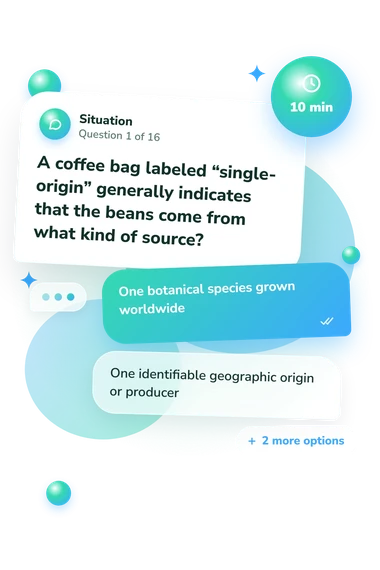
- One botanical species grown worldwide
- One identifiable geographic origin or producer
- One standardized roasting temperature
- One retail chain’s exclusive blend
- An illicit drinking establishment operating during Prohibition
- A café that hosted public poetry readings
- A shop specializing in imported coffee and tea
- A private club for radio broadcasters
- A reissue pressed only on colored vinyl
- A live recording without studio editing
- A record that plays at only one fixed speed
- A release usually longer than a single but shorter than an album
Hipster Quiz - Description and methodology of the test
Readers interested in a hipster culture quiz can use this assessment to place their familiarity with independent music, coffee, fashion, design, and neighborhood culture in context. This hipster quiz is for curious readers who want to connect scattered cultural references and see which areas merit further reading. The result summarizes the history, terminology, and cultural practices sampled here, giving the respondent a practical starting point for exploration.
What This Assessment Explores
The assessment samples cultural knowledge through situations and terms from music, coffee, fashion, design, and neighborhood culture. Items address coffee origins, zines, DIY music, gentrification, upcycling, normcore, localism, indie production, and fixed-gear bicycles.
This hipster culture knowledge test suits readers curious about these references and gives the result a concrete cultural-literacy meaning.
The result uses one displayed scale, Hipster Knowledge (0-16), which summarizes knowledge of hipster history, terminology, and cultural practices. This scale measures cultural knowledge rather than identity, so the result indicates familiarity with the material represented in the questions. The three result bands are:
- Curious Newcomer (0-6) indicates recognition of a few touchstones and room to explore the culture’s roots and vocabulary.
- Culture Conversant (7-12) indicates understanding of many major ideas, with some less familiar areas remaining.
- Scene Scholar (13-16) indicates broad, accurate knowledge across the quiz.
Methodology and Cultural Context
Each of the 16 items uses multiple-choice format: a definition or cultural scenario is followed by four alternatives. The multiple-choice responses produce the displayed result; the answer choices sample recognition of the intended concepts rather than personality or lifestyle traits.
Topic selection covers historical references and contemporary practices: knowledge of indie culture is one strand, while coffee, fashion, music, design, and neighborhood change provide other contexts. The result therefore reflects recognition across the sampled subjects, and prior cultural exposure to those subjects can affect performance.
Conceptually, the questionnaire is consistent with Maly and Varis (2016), who present hipster culture as fluid, socially situated, and shaped by distinctions within superdiverse environments. Schiermer (2014) offers a complementary late-modern account of hipster practices, while Steinhoff (2021) supports transnational and intersectional interpretation. These works provide context; this online questionnaire is conceptually consistent with them, not an adaptation of any one source.
No standardization or norming is established, so the displayed bands are interpretive labels for this topic set. Prior cultural exposure, uneven familiarity across subjects, and self-assessment uncertainty can affect the result.
- Ico Maly and Piia Varis. “The 21st-century hipster: On micro-populations in times of superdiversity.” European Journal of Cultural Studies, 2016, 19(6), 637-653. 10.1177/1367549415597920
- Bjørn Schiermer. “Late-modern hipsters: New tendencies in popular culture.” Acta Sociologica, 2014, 57(2), 167-181. 10.1177/0001699313498263
- Heike Steinhoff (ed.). Hipster Culture: Transnational and Intersectional Perspectives. Bloomsbury Academic, 2021. ISBN 9781501370410
Updated: