
The Raven Quiz
How the Scales are Structured
Who Usually Takes This Test?
See How You Compare
Below is a preview of how scores are typically distributed across each scale.
Example Questions From the Test
- Whether Lenore left him a final written message
- Whether the raven will guide him out of the chamber
- Whether his books can reveal the cause of Lenore’s death
- Whether he will be reunited with Lenore in heaven or paradise
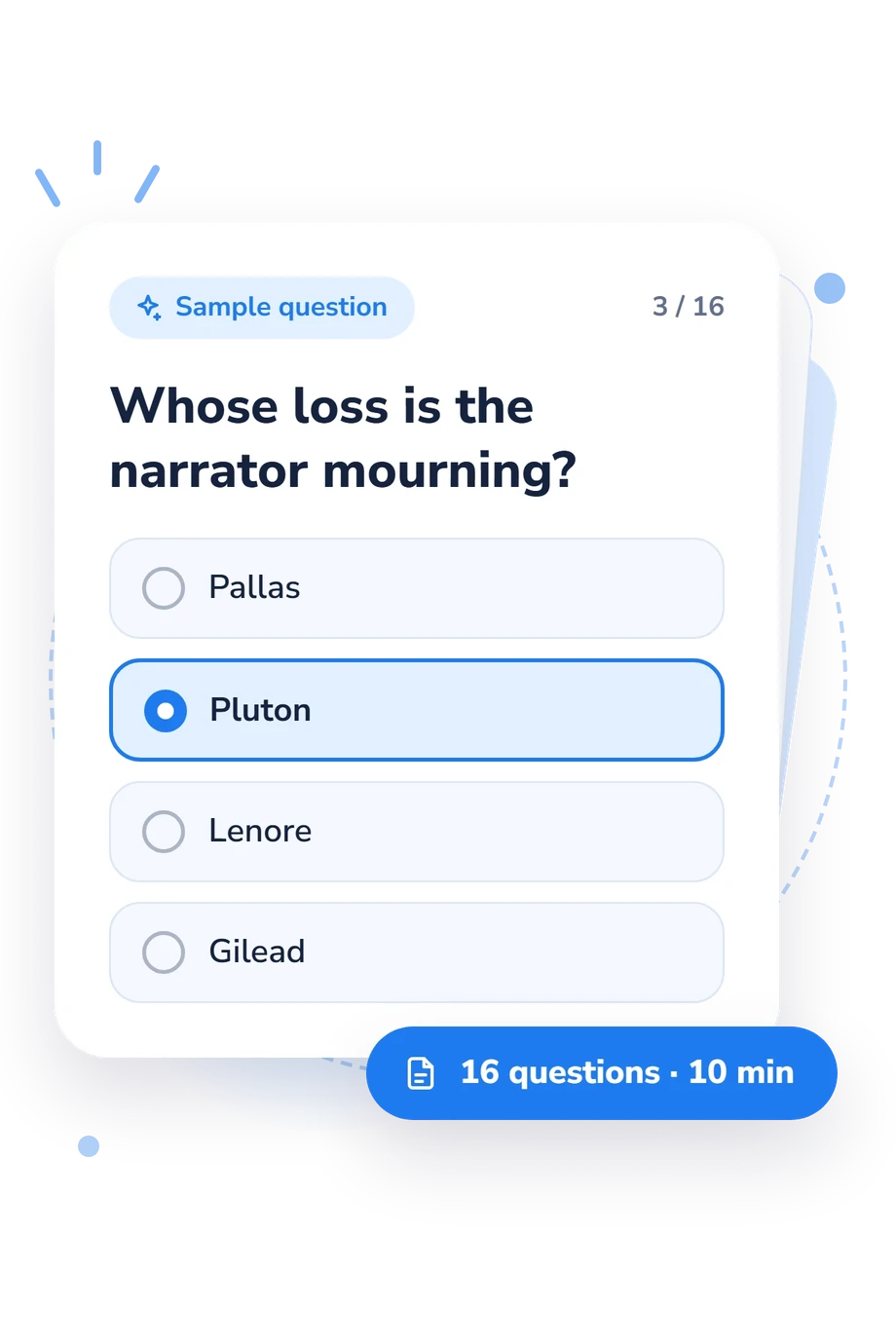
- Pallas
- Pluton
- Lenore
- Gilead
- He lights another lamp and calls for Lenore
- He opens the window shutter after hearing louder tapping
- He leaves the chamber to search the hallway
- He removes the bust of Pallas from its shelf
The Raven Quiz - Description and methodology of the test
Readers returning to Poe’s poem, whether students or general readers, can use the raven quiz to check how closely they understand its unfolding narrative and artistic choices. This Edgar Allan Poe quiz focuses on the experience of reading one poem, helping its audience see an overall indication of performance on The Raven. Its single result offers a concise prompt for rereading and discussion.
What This Assessment Explores
This questionnaire checks whether readers can follow the poem’s sequence, identify key figures and objects, recognize allusions, and explain how sound and repetition intensify grief. This comprehension quiz on The Raven checks readers’ understanding.
The questions and answer choices cover three thematic dimensions:
- Narrative recall shows how you follow events, losses, and the chamber scene.
- Symbolic interpretation shows how Pallas, Gilead, nepenthe, and Aidenn connect with the narrator’s hopes and fears.
- Form, atmosphere, and emotional movement show how rhythm, repetition, setting, and the fixed reply shape the poem’s anguish.
The displayed result is The Raven Knowledge (0-16), with one point for each correct answer. First Flight (0-6) indicates recognition of central features; Gathering Insight (7-12) indicates a solid grasp with finer details still available; Raven Scholar (13-16) indicates strong knowledge of events, language, sound, and symbolic tensions.
Methodology and Evidence Base
Each item uses a multiple-choice format with four alternatives, and the reader selects the interpretation that best fits the poem’s wording and context. Items move among plot details, allusions, imagery, sound, and the narrator’s changing state, so success depends on attentive reading rather than isolated name recognition.
Scoring is direct: each correct response contributes one point to the displayed scale. The result therefore reflects performance on this set of interpretations, not a general measure of literary ability.
Poe’s poem supplies the narrative, vocabulary, symbols, and formal effects being tested. A study by Harits and Sari discusses the poem’s myths, clarifying why its classical and biblical references matter. The questionnaire is conceptually consistent with those works, not an adaptation of the study.
The questionnaire works as a Raven poem quiz by linking close reading with recall. Its result is an informal literary knowledge result, not an official assessment. Results can vary with memory, wording familiarity, and current attention. It is most useful as a prompt to reread passages and compare your interpretation with the poem.
- Poe, Edgar Allan. The Raven and Other Poems. New York: Wiley and Putnam, 1845.
- Harits, Imron Wakhid, and Ulfah Rizkyanita Sari. "Myths in Edgar Allan Poe's 'The Raven.'" Language Circle: Journal of Language and Literature, vol. 10, no. 2, 2016, pp. 125-132. 10.15294/lc.v10i2.5619
Updated: