
Dog Name Quiz
How the Scales are Structured
Who Usually Takes This Test?
See How You Compare
Below is a preview of how scores are typically distributed across each scale.
Example Questions From the Test
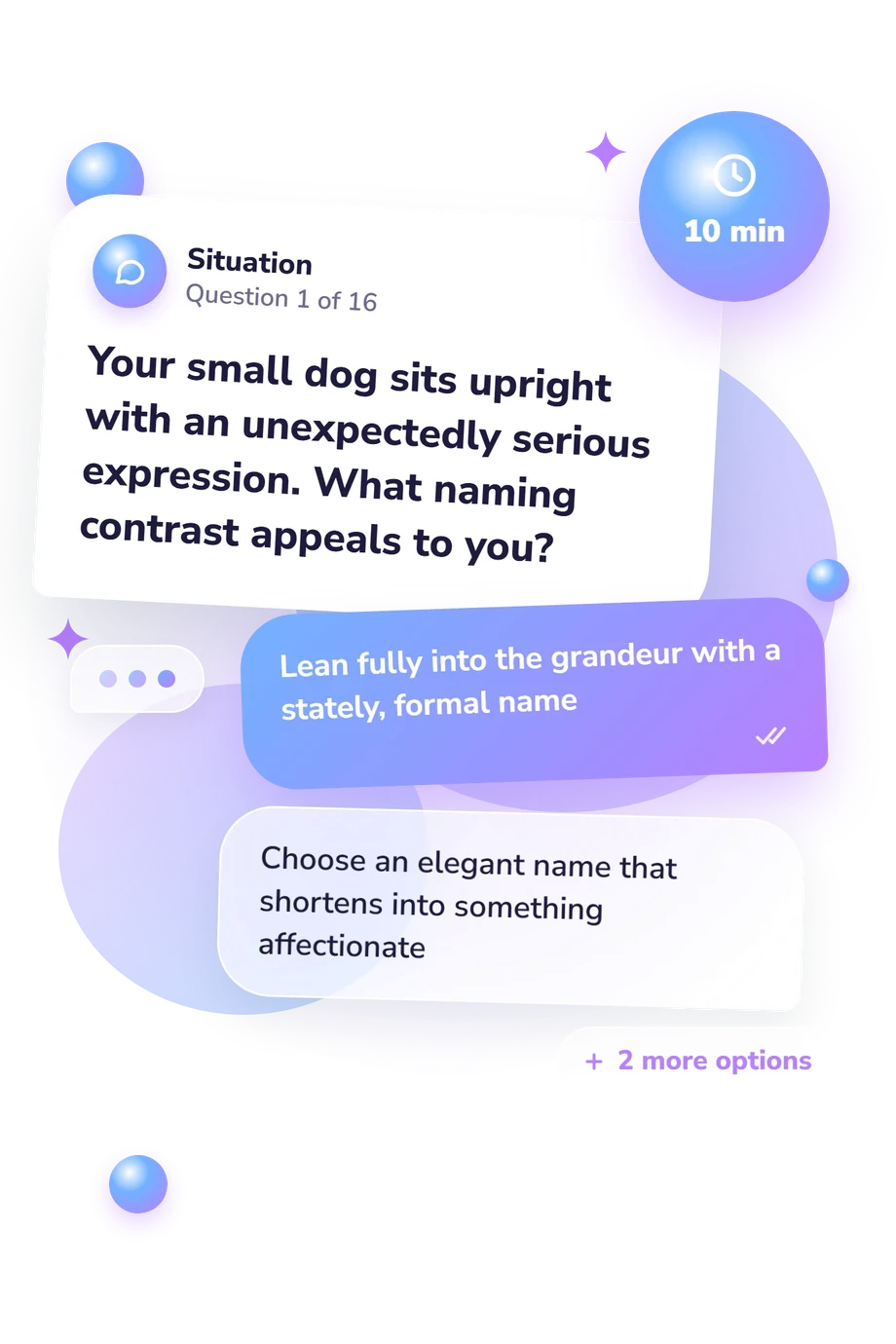
- Lean fully into the grandeur with a stately, formal name
- Choose an elegant name that shortens into something affectionate
- Use a straightforward classic that suits many moods
- Highlight the contrast with a deliberately silly name
- A laugh followed by, “That fits perfectly”
- A smile at the name's lighthearted charm
- Interest in the personal meaning behind it
- Immediate recognition of its elegance or timelessness
- A landscape, plant, season, or outdoor place I value
- A natural image that captures the dog's look or energy
- A shared joke, favorite character, or everyday memory
- A sense of tradition, heritage, or old-fashioned elegance
Dog Name Quiz - Description and methodology of the test
Prospective owners often need a name that works for everyone who will call the dog, not just one that sounds appealing on paper. This dog name quiz helps individuals, couples, or families weigh familiarity, memorability, practicality, and fit before settling on one call name. Used as a what should I name my dog quiz, it gives the household a shared way to discuss what to name your dog.
What This Assessment Explores
It explores reactions to familiarity, natural imagery, comic surprise, and formal elegance across family use, appearance, behavior, and long-term fit. The profile shows whether one style leads or several blend.
The profile makes this a dog name generator quiz: it shows which style sits behind your shortlist rather than producing one automatic answer. The result has four types:
- Classic & Familiar Names (0-12) show whether recognizable, enduring choices lead: Different Direction (0-4), Classic Influence (5-8), or Strong Classic Affinity (9-12).
- Nature-Inspired Names (0-12) show whether outdoor imagery guides you: Occasional Inspiration (0-4), Natural Connection (5-8), or Strong Nature Affinity (9-12).
- Playful & Quirky Names (0-12) show whether humor and surprise matter: Subtle Humor (0-4), Quirky Accent (5-8), or Strong Playful Affinity (9-12).
- Regal & Refined Names (0-12) show whether polish and grandeur appeal: Casual Preference (0-4), Refined Touch (5-8), or Strong Regal Affinity (9-12).
Methodology and Evidence Base
Each prompt presents a brief naming situation with four response choices. You select the reaction that best matches your instinct, covering ease of use, imagery, humor, tradition, and the sound of a name when called aloud.
Responses are organized across separate style dimensions, so this puppy name generator quiz clarifies taste when choosing a name rather than producing one automatic answer. Scores are read independently; close results may indicate a blend.
The questionnaire is conceptually consistent with Harris (1983), which examined factors involved in selecting and naming pets. Brandes (2012) adds context on dog-naming preferences, while Abel and Kruger (2007) describe patterned gender naming practices for dogs and cats. It is not presented as an adaptation of these studies; they provide relevant context for the naming themes, not the scoring of this questionnaire.
It is a structured self-reflection tool with descriptive bands for each style. Used as a name your dog quiz, it can focus a household discussion; however, self-report, current mood, household preferences, and imagined situations can shape the profile, so it is not a diagnostic measure.
- Mary B. Harris. 1983. Some Factors Influencing Selection and Naming of Pets. Psychological Reports, 53(3_suppl), 1163-1170. 10.2466/pr0.1983.53.3f.1163
- Stanley Brandes. 2012. Dear Rin Tin Tin: An Analysis of William Safire’s Dog-Naming Survey from 1985. Names, 60(1), 3-14. 10.1179/0027-773811Z.0000000001
- Ernest L. Abel and Michael L. Kruger. 2007. Stereotypic Gender Naming Practices For American And Australian Dogs And Cats. Names, 55(1), 53-64. 10.1179/nam.2007.55.1.53
Updated: