
Tsundere Quiz
How the Scales are Structured
Who Usually Takes This Test?
See How You Compare
Below is a preview of how scores are typically distributed across each scale.
Example Questions From the Test
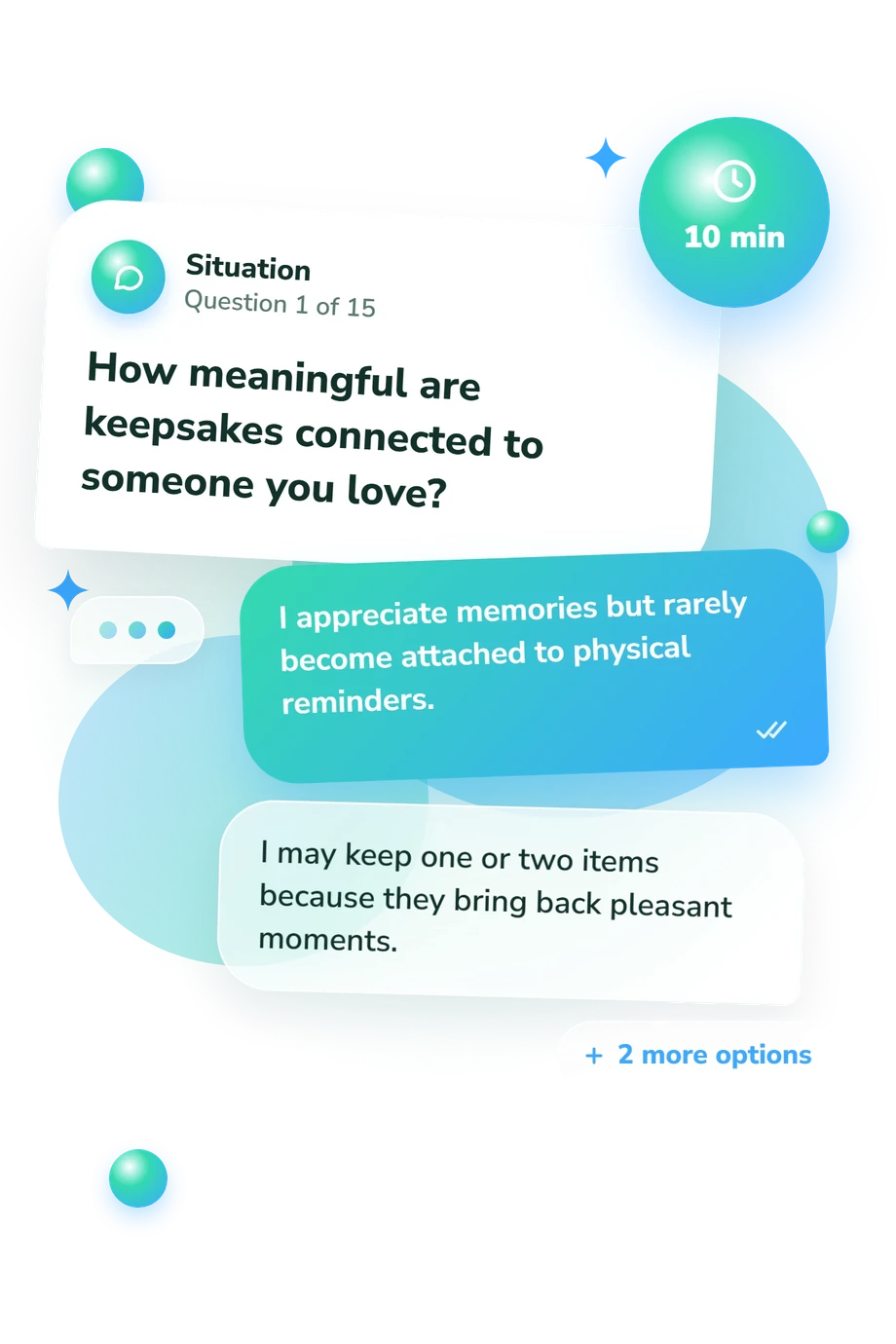
- I appreciate memories but rarely become attached to physical reminders.
- I may keep one or two items because they bring back pleasant moments.
- I treasure several reminders and revisit them when I miss the person.
- A keepsake can feel like a powerful symbol or extension of the bond itself.
- Two self-directed people support each other while keeping separate lives.
- A slow-burn partnership grows through trust and shared experience.
- An unusually intense bond makes the characters each other’s clear priority.
- One character’s all-consuming devotion drives nearly every choice and conflict.
- Greet them exuberantly and show exactly how much I missed them.
- Offer a warm hug and talk openly about the time apart.
- Give a restrained smile, then send a more personal message later.
- Remain composed and let one subtle gesture reveal how glad I am.
Tsundere Quiz - Description and methodology of the test
Readers who enjoy comparing their reactions to hypothetical closeness, teasing, reassurance, praise, and distance may find the tsundere quiz a useful light-hearted exercise. It suits people curious about how imagined situations bring out open, guarded, reserved, or intensely fictional forms of expression. Framed as a tsundere personality test, it helps organize those responses without assigning a fixed identity.
What This Assessment Explores
Questions in this fictional archetype quiz present imagined situations involving warmth, restraint, teasing, practical care, reminders, distance, and jealousy. The profiles focus on fictional preferences and expressive reactions rather than actual attachment, moral character, or relationship quality. Results let readers compare guarded, reserved, and intensely fictional devotion styles.
- Kuudere Affinity (0-15) describes Expressive Presence (0-5), Quiet Composure (6-10), or Classic Kuudere Affinity (11-15), from open emotion to calm, subtly loyal expression rather than emotional depth or relationship quality.
- Tsundere Affinity (0-15) describes Open Warmth (0-5), Guarded Spark (6-10), or Classic Tsundere (11-15), with guarded affection expressed through teasing or downplayed helpful acts.
- Yandere Affinity (0-15) describes Independent Bond (0-5), Intense Connection (6-10), or Dramatic Yandere Affinity (11-15) as fictional themes of devotion, preoccupation, and jealousy.
The scores stand separately, with each band describing its own fictional style profile.
Methodology and Scientific Basis
Each item offers four response choices rather than a yes/no judgment. The options describe imagined reactions to affection, reassurance, praise, disagreement, support, separation, and jealousy, ranging from direct expression to restrained, indirect, or preoccupied responses. The questionnaire produces separate displayed scores for three profiles, with each score placed in a stated band. These bands are descriptive style profiles, not a ranking of one overall type.
The yandere dimension is conceptually consistent with Hiyama et al.'s 2024 study, while the tsundere dimension is consistent with Togashi's source on indirect or defensive tsundere expression. The questionnaire is not an adaptation of either source. Its reserved profile describes calm, concise expression and loyalty shown through subtle, consistent actions; it concerns expressive style, not emotional depth or relationship quality.
The online self-report format presents a fictional personality quiz rather than a standardized clinical measure; it has no established population norms in this format. Scores may shift with mood, context, fictional preferences, and candor. A high yandere result is a fictional-style profile, not a diagnosis, danger rating, or reason to ignore another person's boundaries.
- Hiyama, Rin, Ryohei Egusa, and Kaya Akagi. "Relationship between yandere thinking tendency and University Life Satisfaction." JSAI Technical Report, Type 2 SIG, vol. 2024, no. BI-024, 2024, pp. 23-28. 10.11517/jsaisigtwo.2024.BI-024_23.
- Togashi, Junichi. "Properties of the Tsundere Character and Their Relationship to Linguistic Expression: A Case Study of Tsundere Expressions." In Development of Role Language Studies, edited by Satoshi Kinsui, Kuroshio Publishers, 2011, pp. 279-295. ISBN 9784874245224.
Updated: