
1 Peter Quiz
How the Scales are Structured
Who Usually Takes This Test?
See How You Compare
Below is a preview of how scores are typically distributed across each scale.
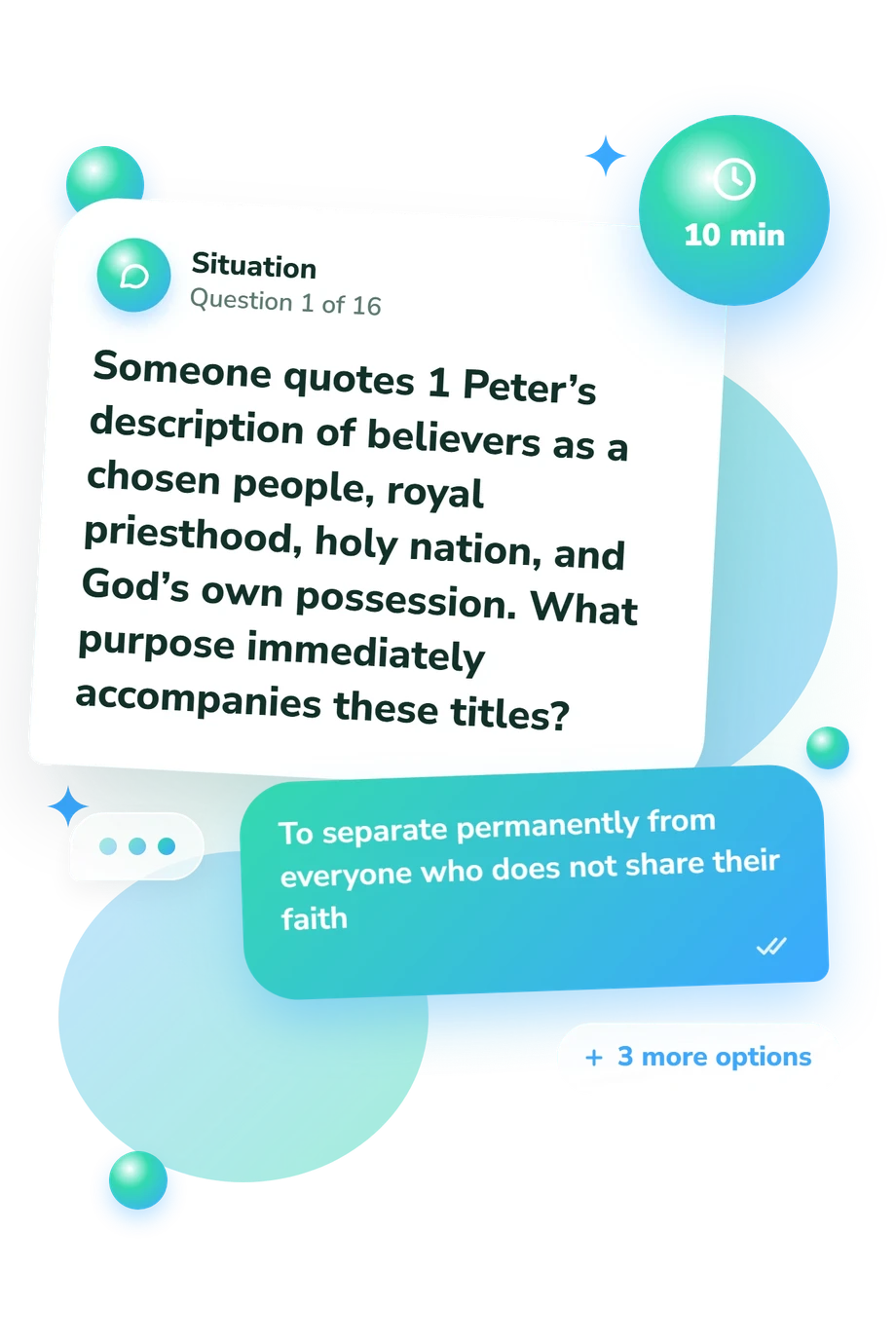
Example Questions From the Test
- The giving of the law at Mount Sinai
- The descent of the Spirit at Pentecost
- The resurrection of Jesus Christ from the dead
- The destruction of the Jerusalem temple
- Their own acts of sacrifice and obedience
- The suffering experienced by the earliest apostles
- The accumulated wisdom of Israel’s teachers
- The precious blood of Christ, like that of an unblemished lamb
- Remain silent because words never affect conflict
- End the relationship immediately, regardless of the situation
- Publicly shame the other person before offering forgiveness
- Respond with blessing rather than repaying insult with insult
1 Peter Quiz - Description and methodology of the test
Readers studying 1 Peter can use this 1 timothy quiz to check how well they follow the letter’s argument and practical guidance. The 1 Peter Quiz focuses on 1 Peter’s audience, images, teachings, and ethical instructions, making it useful for personal study or group preparation. As a 1 Peter Bible quiz, it indicates overall understanding and may suggest whether further review is useful.
What This Assessment Explores
This questionnaire measures knowledge of 1 Peter’s content rather than personality, religious commitment, or spiritual maturity. The items ask readers to recognize the letter’s audience and central claims, then connect them with guidance about holiness, suffering, witness, leadership, service, and community life. The result reflects how accurately someone answers the selected content questions, giving an overall indication of understanding rather than a confidence rating.
These themes recur across the 1 Peter quiz questions:
- 1 Peter Knowledge, scored from 0-16, reflects the number answered correctly: Foundation to Build (0-6) suggests reviewing the letter’s structure and images; Developing Understanding (7-12) shows recognition of many central teachings; Strong Understanding (13-16) indicates a well-developed grasp of the content.
- Identity and message are tested through the audience, chosen-people imagery, living hope, inheritance, redemption, and prophetic witness.
- Ethical practice and perseverance appear through holiness, respectful witness, spiritual gifts, servant leadership, unjust treatment, fiery trials, and hope under pressure.
Methodology and Evidence Base
Each item presents a short question with four answer choices. The format tests recognition of what the letter says, including links between teachings, examples, and instructions; it does not ask respondents to rate themselves. The total is a direct count of correct answers, so a higher score represents more correct responses, not stronger faith or better character.
The questions draw on 1 Peter itself, sampling its audience, teachings, images, and practical instructions across chapters 1-5. Because the items use question-and-answer paraphrases of the letter, familiarity with another translation may affect recall. Conceptually, this is a text-based 1 Peter study quiz rather than a published standardized instrument or normed psychological scale.
Interpret the result as a focused snapshot of reading and memory. It can support a general decision about whether further study or discussion would be useful, but it cannot establish theological expertise, personal faith, or comprehension beyond the selected items. Current study, translation differences, and the respondent’s attention can all influence performance.
- Horrell, David G., and Travis B. Williams. 1 Peter: A Critical and Exegetical Commentary: Volume 1: Chapters 1-2. Bloomsbury Academic, 2023. 10.5040/9780567709974.
- Horrell, David G., and Travis B. Williams. 1 Peter: A Critical and Exegetical Commentary: Volume 2: Chapters 3-5. Bloomsbury Academic, 2023.
- National Council of the Churches of Christ in the United States of America. The Holy Bible: New Revised Standard Version Updated Edition. National Council of the Churches of Christ in the United States of America, 2021.
Updated: