
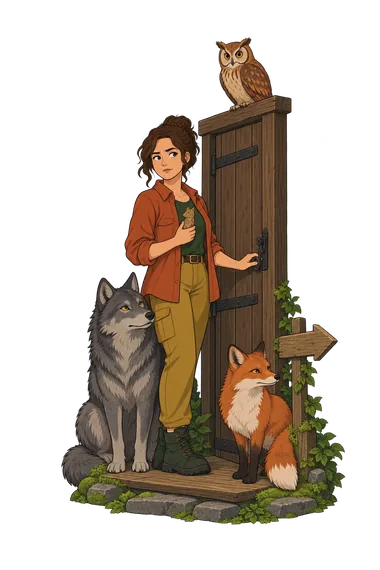
Spirit Animal Quiz

Curious which animal best reflects your inner nature? Take this Spirit Animal Quiz in about 10 minutes to discover the animal that mirrors your instincts, strengths, and stress style. Get a detailed readout with core traits, blind spots, and practical tips to use your strengths.
Start Online Test
Questions7210 minutes
Hi! My name is Freudly, i am an AI therapist, I will give you an interpretation of the test after you complete it.
08:30
March 25, 2026
March 25, 2026
Material has been updated
243 views
700 completions
34 likes
Verified by Daniel Hall
Psychologist with 25 years of experience
Share
Scale Explorer

How the Scales are Structured

example score
6/NaN
Instinct vs Intuition (IvI)
This scale measures whether you tend to rely on quick, action-oriented instinct versus reflective, pattern-sensing intuition when making decisions.
Instinct-leaning
Balanced
Intuition-leaning
0NaNInstinct-leaning8NaNBalanced15NaNIntuition-leaning
A score of 6 suggests you tend to respond in the moment and trust tangible, gut-level cues more than pausing to read subtle patterns.
example score
8/NaN
Social Energy (SE)
Social Energy measures whether you tend to recharge through solitude and independence or through connection and group interaction.
Quiet Recharger
Balanced Social
Social Energizer
0NaNQuiet Recharger8NaNBalanced Social14NaNSocial Energizer
A score of 8 suggests you’re fairly balanced, enjoying connection in manageable doses while still valuing downtime to reset.
example score
3/NaN
Stress Response Style (SRS)
This scale measures whether you tend to withdraw and conserve energy or confront and take direct action when under pressure.
Withdraw & Process
Flexible Responder
Direct Action
0NaNWithdraw & Process7NaNFlexible Responder14NaNDirect Action
A score of 3 suggests you’re more likely to step back, protect your boundaries, and process internally before engaging with a stressful situation.
Start Online Test
just completed the test
DATA-BASED USER COHORTS

Who Usually Takes This Test?

Curious Self-Explorers
41%OF USERS
They enjoy playful self-discovery and want a quick, meaningful mirror of their strengths, instincts, and growth edges.
Spiritual and Symbolism Fans
34%OF USERS
They like archetypes, animal symbolism, and intuitive insights that feel reflective and motivating rather than scientific.
Friends and Social Sharers
25%OF USERS
They take it for fun with others, compare results, and use the interpretations as conversation starters and bonding prompts.
BASED ON AGGREGATED, ANONYMIZED DATA FROM TENS OF THOUSANDS OF FREUDLY USERS.
Benchmarking

See How You Compare

Once you complete the test, your results are compared with real-world data from people in your country.
Below is a preview of how scores are typically distributed across each scale.
Instinct vs Intuition (IvI)
Average
7.8
Normal range
4.511.2
min.
0
max.
20
Majority
This curve shows how scores are typically distributed.
Once you complete the test, your result will appear on the scale so you can see how you compare.
Social Energy (SE)
Average
7
Normal range
3.710.3
min.
0
max.
20
Majority
This curve shows how scores are typically distributed.
Once you complete the test, your result will appear on the scale so you can see how you compare.
Stress Response Style (SRS)
Average
14.7
Normal range
12.117.2
min.
0
max.
20
Majority
This curve shows how scores are typically distributed.
Once you complete the test, your result will appear on the scale so you can see how you compare.
Featured On
CLEAR ANSWERS TO COMMON QUESTIONS

Frequently Asked Questions

What is my spirit animal quiz based on?
It's based on your responses across instincts, stress style, and core motivation, matching you to an archetypal animal that best reflects your natural tendencies. Results include core traits, potential blind spots, and practical tips for leaning into your strengths.
How long does it take and how many questions are included?
Estimated completion time is about 10 minutes. The quiz contains 72 questions, and all items contribute to your final match. Select the option that best reflects your typical behavior rather than an ideal response.
Is this spirit animal test scientifically or spiritually authoritative?
No. This is an entertainment-style self-discovery tool and does not diagnose mental health conditions. Results should not be treated as clinical or cultural authority — it's meant as a fun, reflective way to think about your instincts and stress style, not a spiritual or scientific determination.
How should I answer if an item doesn't quite fit my situation?
Use the first answer that seems accurate unless an item clearly does not apply to you. There's no need to overthink individual questions — your overall pattern across all 72 items determines your final match, not any single response.
Can I retake my spirit animal quiz and get a different result?
Yes. Since the quiz reflects your current instincts, stress style, and motivations, your answers — and potentially your result — can shift if you retake it during a different period of your life or after a significant change in how you typically respond to challenges.
What's your spirit animal quiz result meant to be used for?
It's designed as a fun, memorable lens for reflecting on your natural strengths and blind spots — something engaging to think about or discuss with friends, rather than a serious personal development framework on its own.
Can friends compare their my spirit animal quiz results together?
Yes, this is one of the most popular ways to use it. Many people take the quiz specifically to compare results with friends or partners, discuss how accurately each match captures their instincts and style, and enjoy the shared, lighthearted conversation it sparks.
WHAT THE TEST MEASURES
About This Assessment
Spirit Animal Quiz

This quiz matches you with an archetypal "spirit animal" based on your instincts, strengths, stress style, and what motivates you. The Spirit Animal Quiz includes 72 questions and typically takes about 10 minutes to complete. It is an entertainment-style self-discovery tool and does not diagnose mental health conditions; results should not be treated as clinical or cultural authority.

Why Take a Spirit Animal Quiz

Animal archetypes have long served as a memorable shorthand for describing personality — the steady patience of a bear, the sharp instincts of a fox, the loyal pack mentality of a wolf. What is my spirit animal quiz aims to do is take that familiar symbolism and turn it into something reflective: a fun, structured way to explore your own instincts, how you handle stress, and what genuinely motivates you.

This spirit animal test is popular precisely because animal metaphors are easy to relate to and remember — it's often easier to picture "leaning into your inner fox" than to remember a list of abstract personality traits. The result gives you a vivid, memorable lens for thinking about your natural strengths and where you might have blind spots, in a way that feels engaging rather than clinical.

This quiz is especially popular with people who enjoy fun, reflective self-discovery tools and want a shareable result to compare with friends, as well as anyone curious about which archetype best captures their instincts and stress style.

What the Assessment Measures

The quiz explores your typical tendencies across several dimensions:

  • Instinct vs. intuition — whether you tend to rely on quick, action-oriented instinct versus reflective, pattern-sensing intuition when making decisions
  • Stress style — how you typically respond under pressure or when facing a challenge
  • Core motivation — what genuinely drives your choices and behavior day to day
  • Strengths and blind spots — the natural advantages of your style, along with areas that might need more conscious attention

All 72 items contribute to your final match. Results include a detailed readout covering your archetype's core traits, potential blind spots, and practical tips for leaning into your strengths.

Who This Assessment Is For

This Spirit Animal Quiz is appropriate for anyone curious which animal best reflects their inner nature. It's popular with people who enjoy fun, reflective self-discovery quizzes and want a shareable, memorable result, and with friends or partners who like comparing matches and discussing how accurately their result captures their instincts and style.

How to Use This Assessment

This is an entertainment-style self-discovery tool — it does not diagnose mental health conditions, and results should not be treated as clinical or cultural authority. Select the option that best reflects your typical behavior rather than an ideal response, using your first instinct unless an item clearly doesn't apply, for the most fitting match.

Popular tests
Narcissistic Personality Inventory (NPI)
This self-report measure is used to assess narcissism as a personality trai…
Start Test
Yale-Brown Obsessive Compulsive Scale (Y-BOCS)
This measure is used to rapidly quantify the current severity of obsessive…
Start Test
CRAFFT Screening Test (CRAFFT 2.1)
This brief screening measure is designed to identify potential alcohol and…
Start Test
Patient Health Questionnaire-9 (PHQ-9)
This measure is commonly used to quickly screen for the presence and severi…
Start Test
Maslach Burnout Inventory (MBI)
This self-report measure is used to assess occupational burnout symptoms in…
Start Test
Adolescent Anxiety Questionnaire
This measure is designed to support a brief appraisal of anxiety symptoms a…
Start Test
Emotional Creativity Inventory (ECI)
This self-report measure assesses individual differences in the originality…
Start Test
Horne–Ostberg Morningness–Eveningness Questionnaire (MEQ)
Circadian preferences influence typical patterns of alertness and sleep tim…
Start Test
Ambivalent Sexism Inventory (ASI)
This measure is designed to assess attitudes toward women, including both o…
Start Test
Internalized Misogyny Scale (IMS)
This measure is designed to assess internalized negative beliefs and stereo…
Start Test
Perceived Stress Scale (PSS-10)
This self-report measure assesses the degree to which individuals appraise…
Start Test
Impulsive Behavior Scale (SUPPS-P)
Impulsivity is a multidimensional construct that is often assessed with bri…
Start Test
Clinical Institute Withdrawal Assessment for Alcohol, Revised (CIWA-Ar)
This rating scale is used to rapidly assess the severity of alcohol withdra…
Start Test
Positive and Negative Affect Schedule (PANAS)
This measure provides a brief self-report assessment of current or typical…
Start Test
Light Triad Scale (LTS)
This self-report measure assesses prosocial personality tendencies and orie…
Start Test
Suicidal Ideation Scale
In clinical settings, the Suicidal Ideation Scale is used to structure an i…
Start Test
Body Dysmorphic Disorder Scale (BDD-D)
This brief self-report measure is designed to screen for and quantify distr…
Start Test
Beck Anxiety Inventory (BAI)
This measure is a brief self-report inventory used to screen for anxiety sy…
Start Test
Differential Test of Perfectionism
This instrument is used to screen for perfectionism-related attitudes and t…
Start Test
Locus of Control Scale
This measure assesses generalized expectancies regarding the degree to whic…
Start Test
New Apathy Scale
This brief self-report measure is used to screen for apathy-related symptom…
Start Test
Perth Alexithymia Questionnaire (PAQ)
This measure assesses individual differences in alexithymia, including diff…
Start Test
Social Intelligence Scale
This brief self-report measure is designed to support rapid screening of in…
Start Test
Fear Test
This measure is designed to evaluate individual differences in fear-related…
Start Test
Neuroticism Level Scale
The measure is intended for brief screening of an individual’s propensity t…
Start Test
Aggressiveness Indicators Screening Questionnaire
This screening tool is designed to quickly identify behavioral indicators a…
Start Test
Comments
Leave a Comment