
Whiskey Quiz
How the Scales are Structured
Who Usually Takes This Test?
See How You Compare
Below is a preview of how scores are typically distributed across each scale.
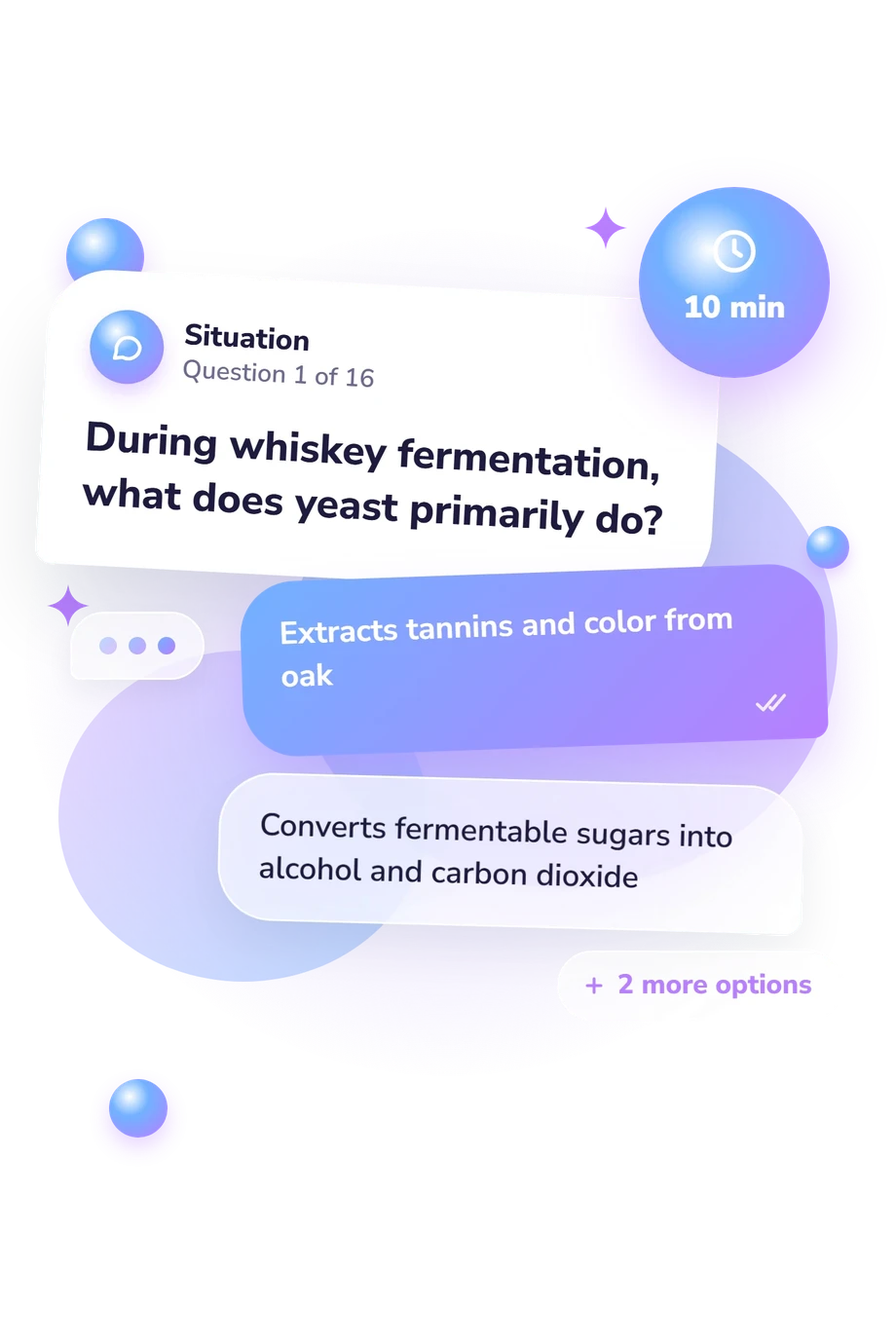
Example Questions From the Test
- Extracts tannins and color from oak
- Converts fermentable sugars into alcohol and carbon dioxide
- Separates the spirit into heads, hearts, and tails
- Removes oils that could make the whiskey cloudy
- A very wide, shallow glass with no inward curve
- A tulip-shaped glass with a bowl and narrower opening
- A tall straight-sided glass filled to the rim
- A sealed container with no space above the liquid
- It can contribute smoky, earthy, or medicinal aromas
- It automatically makes the mature spirit darker
- It ensures that the whiskey tastes sweet
- It prevents the spirit from taking flavour from oak
Whiskey Quiz - Description and methodology of the test
Curious drinkers, students, and anyone building confidence with spirits can use this whiskey quiz to check what they already understand and choose a sensible next step. For learners who want a structured starting point, this whisky quiz provides a focused way to see which parts of their knowledge are secure and which deserve attention. The result turns uncertainty into a practical study direction.
What This Assessment Explores
It tests practical knowledge of production, categories, labels, maturation, and tasting decisions rather than drinking frequency or palate sensitivity. Beginners and developing enthusiasts can use the whisky quiz questions to identify topics that need review.
The result uses the Whiskey Knowledge scale, 0-16: Foundation to Build (0-6), Developing Knowledge (7-12), and Strong Knowledge (13-16). These educational bands describe performance on this set, not validated measures of tasting ability, intoxication, tolerance, or alcohol-related risk.
The result draws on four connected areas:
- Production items show whether you can link fermentation, distillation cuts, and haze reduction to their purposes.
- Category and label items assess distinctions involving Scotch styles, bourbon, proof, age statements, and cask strength.
- Maturation items connect oak, peat, cask history, colour, and grain choices with likely flavour effects.
- Tasting-practice items examine glass shape, dilution, aroma comparison, and flight order.
Methodology and Scientific Basis
Each item presents one best answer with four options. The sequence moves from processes to category definitions and tasting choices, so the result reflects recognition and application across contexts. Performance is reported from selected answers; the displayed bands are educational interpretations of performance on these questions, not a validated norm-referenced or clinical measure.
Its content is conceptually consistent with Stewart and Russell (2014), which explains production, maturation, blending, and sensory influences, and with Miller (2019), which presents the chemistry and process logic behind distillation and maturation. The books provide conceptual context but do not validate or norm the online questionnaire; the Scotch and bourbon definitions used by the questions align with the 2019 DEFRA technical file and 27 CFR §§ 5.11 and 5.143.
Readers can treat the result as a study profile: a stronger band suggests broader command of tested concepts, while a lower band identifies useful subjects to revisit. This whiskey knowledge test can support self-study by showing whether to begin with fundamentals, compare category rules, or practise sensory vocabulary. Guessing, memory, or wording familiarity may affect the outcome.
- Stewart, Graham, and Inge Russell, eds. Whisky: Technology, Production and Marketing. 2nd ed. Academic Press, 2014. ISBN 978-0-12-401735-1.
- Miller, Gregory H. Whisky Science: A Condensed Distillation. Springer, 2019. 10.1007/978-3-030-13732-8.
- Department for Environment, Food and Rural Affairs. Scotch Whisky Technical File. June 2019.
- Alcohol and Tobacco Tax and Trade Bureau, Department of the Treasury. 27 CFR §§ 5.11, 5.143: Whisky. Code of Federal Regulations, Title 27, 2025 edition.
Updated: