
Cold or Flu Quiz
How the Scales are Structured
Who Usually Takes This Test?
See How You Compare
Below is a preview of how scores are typically distributed across each scale.
Example Questions From the Test
- Sharing cups only with people who have mild symptoms
- Cleaning hands regularly and covering coughs and sneezes
- Avoiding all outdoor activity during cold weather
- Taking antibiotics immediately after exposure
- Seasonal pollen allergy
- Pneumonia
- Permanent immunity to all future flu strains
- A common cold caused by influenza changing into a cold virus
- Gradual sneezing with a mildly stuffy nose
- Itchy eyes that recur during pollen season
- Abrupt fever, chills, body aches, and marked fatigue
- Nasal congestion without broader symptoms
Cold or Flu Quiz - Description and methodology of the test
People who want a clearer understanding of cold and flu symptoms can use this assessment to examine practical knowledge instead of matching one sign to one illness. The cold or flu quiz is intended for readers who want to understand prevention, treatment choices, complications, and warning signs in everyday respiratory illnesses. Its result highlights concepts that are well understood and areas worth reviewing.
What This Assessment Explores
This flu vs cold quiz measures practical knowledge about symptom patterns, prevention, treatment, complications, and warning signs. The questions contrast gradual nasal cold patterns with the abrupt, systemic illness often associated with influenza, while recognizing that cough, fatigue, sore throat, and congestion can overlap.
The result uses the Cold or Flu Knowledge scale (0-16): Foundation (0-6) signals basics to review, Developing (7-12) shows many distinctions are understood, and Strong (13-16) reflects broad understanding of patterns, prevention, responses, and warning signs.
The question groups show what each result reflects:
- Symptom patterns show how timing and accompanying features can guide an interpretation.
- Prevention and treatment show whether vaccination, hygiene, antivirals, antibiotics, and medication safety are understood.
- Complications and warning signs show when worsening or severe illness requires prompt attention.
Methodology and Evidence Base
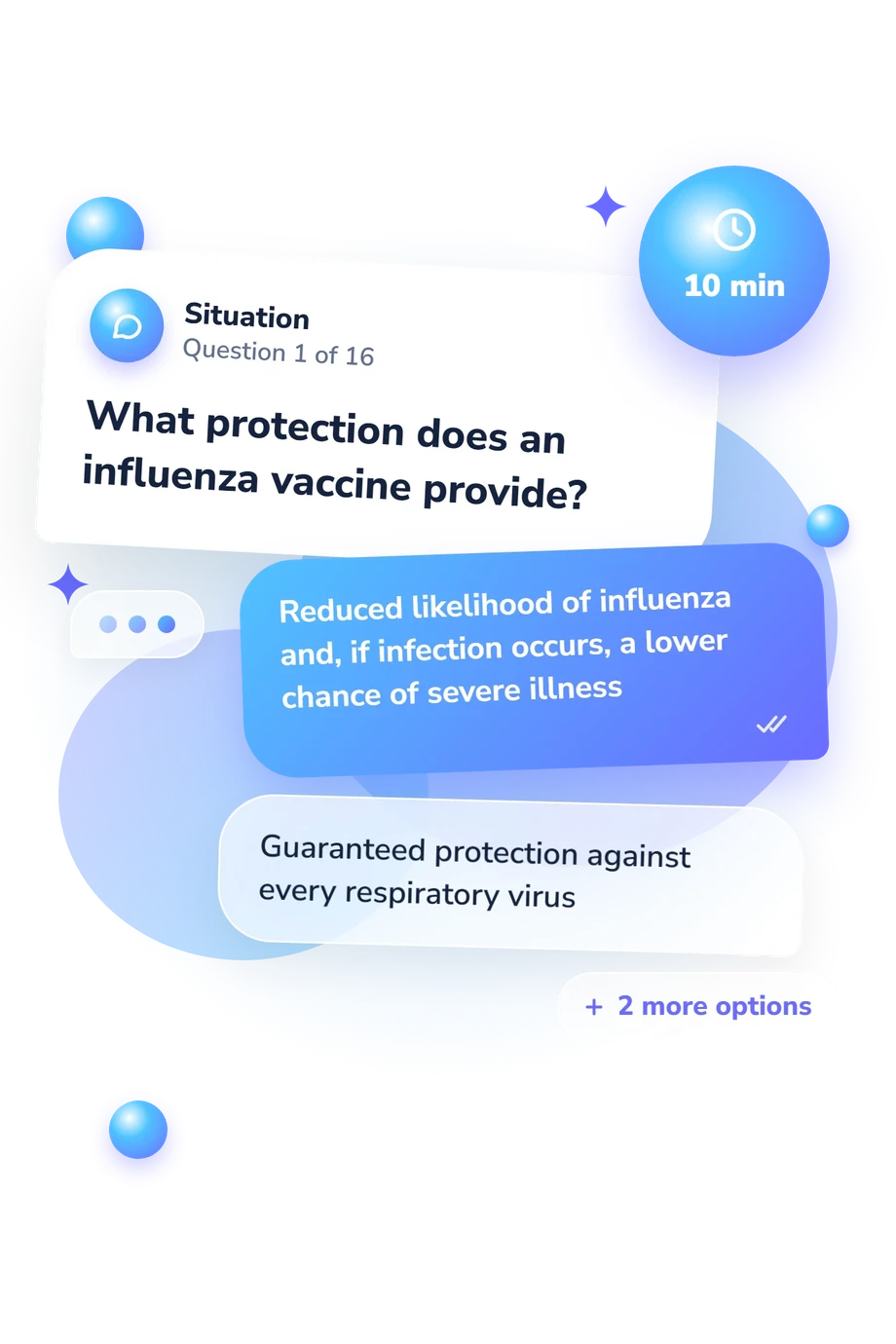
Each item presents one health-knowledge question with four answer choices. The displayed total is the number of correct answers. The content covers vaccine protection, antiviral timing, transmission habits, symptom onset, overlapping infections, medication ingredients, complications, and urgent care. Taken as a flu vs cold symptoms quiz, the format is most useful for learning patterns and decisions together, because symptom clusters overlap.
Eccles (2005) offers the closest conceptual basis for comparing cold and influenza features, emphasizing that no single symptom is decisive. Monto and colleagues (2000) likewise support cautious use of symptom combinations and timing when considering influenza. The IDSA guideline by Uyeki and colleagues (2019) supports material on testing, antivirals, complications, and urgent warning signs. These sources provide a conceptual comparison, not a standardized adaptation.
Because the score is an unvalidated educational measure, it should not be used as a what virus do i have quiz: symptoms alone cannot identify the infecting pathogen, and the bands are not clinical cutoffs. Performance may also reflect prior health education, attention, and how accurately the respondent reads each option.
- Eccles R. Understanding the symptoms of the common cold and influenza. The Lancet Infectious Diseases. 2005;5(11):718-725. 10.1016/S1473-3099(05)70270-X
- Monto AS, Gravenstein S, Elliott M, Colopy M, Schweinle J. Clinical Signs and Symptoms Predicting Influenza Infection. Archives of Internal Medicine. 2000;160(21):3243-3247. 10.1001/archinte.160.21.3243
- Uyeki TM, Bernstein HH, Bradley JS, Englund JA, File TM Jr, Fry AM, Gravenstein S, Hayden FG, Harper SA, Hirshon JM, Ison MG, Johnston BL, Knight SL, McGeer A, Riley LE, Wolfe CR, Alexander PE, Pavia AT. Clinical Practice Guidelines by the Infectious Diseases Society of America: 2018 Update on Diagnosis, Treatment, Chemoprophylaxis, and Institutional Outbreak Management of Seasonal Influenza. Clinical Infectious Diseases. 2019;68(6):e1-e47. 10.1093/cid/ciy866
Updated: