
Which Destiny 2 Class Are You Quiz
How the Scales are Structured
Who Usually Takes This Test?
See How You Compare
Below is a preview of how scores are typically distributed across each scale.
Example Questions From the Test
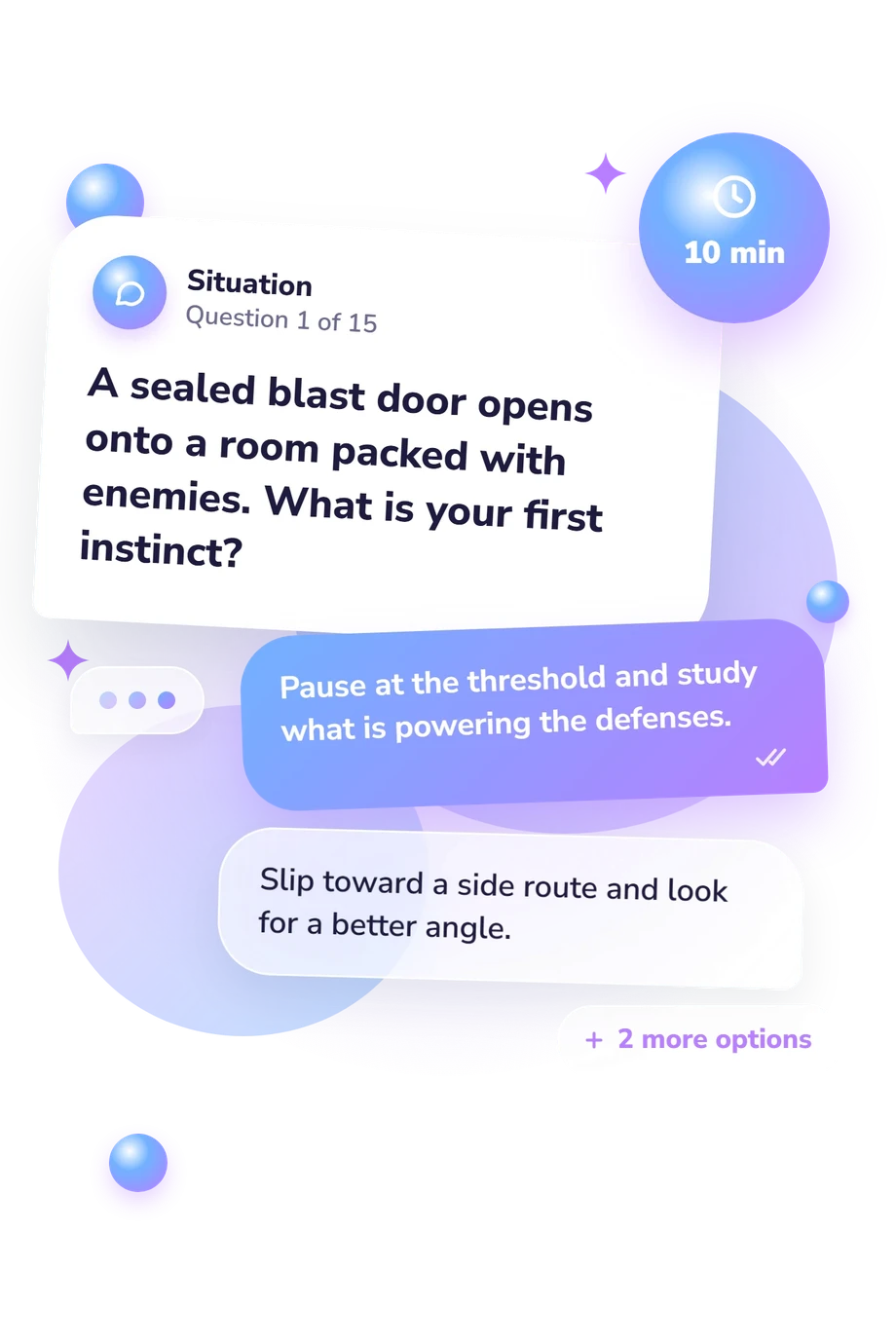
- Pause at the threshold and study what is powering the defenses.
- Slip toward a side route and look for a better angle.
- Move in with the group while watching for whoever needs support.
- Take the lead, draw attention, and establish space for the fireteam.
- Choose a durable setup and trust myself to meet pressure directly.
- Pack adaptable equipment and rely on quick decisions once inside.
- Review the essential plan but leave room to learn during the encounter.
- Examine the mechanics and construct a build around how the encounter works.
- Propose one clear plan and commit to executing it together.
- Volunteer to test a different position during the next attempt.
- Combine the useful parts of both suggestions into a practical compromise.
- Compare the evidence from previous attempts and isolate the mechanic causing the failure.
Which Destiny 2 Class Are You Quiz - Description and methodology of the test
Players who want to explore preferred approaches to fictional fireteam situations can use the Which Destiny 2 Class Are You Quiz to reflect on pressure, movement, teamwork, and discovery. It focuses on stated Destiny class preferences and play-style instincts rather than established gameplay habits, equipment, rank, or technical performance. The result highlights the relative Hunter, Titan, or Warlock affinity that best matches a preferred way of approaching a fireteam challenge.
What This Assessment Explores
Rather than rating aim or gear, the Destiny 2 class quiz reads choices in fictional situations. Its themes include exploration, improvisation, precision, preparation, protection, resilience, study, experimentation, and teamwork. It suits players seeking a reflective play-style profile, whether they have a favorite class or are still choosing one.
The three displayed class-affinity scales are:
- Hunter (0-15) reflects independence, opportunistic movement, precision, and calculated risks: Different Instincts 0-5, Hunter Lean 6-10, Hunter Trailblazer 11-15.
- Titan (0-15) reflects direct action, resilience, protection, and holding ground: Different Instincts 0-5, Titan Lean 6-10, Titan Stronghold 11-15.
- Warlock (0-15) reflects experimentation, study, insight, and mastery of mysterious forces: Different Instincts 0-5, Warlock Lean 6-10, Warlock Scholar 11-15.
Together, the scores describe relative class affinity rather than a permanent label.
Methodology and Scientific Basis
The questionnaire presents 15 gameplay scenarios, each with four response choices. Options emphasize investigation, independent movement, support, or holding ground, so respondents answer from instinct rather than technical skill. The format suits players with different levels of Destiny experience.
The result presents three affinity scores and applies the documented comparison rule: the highest is the strongest affinity, while any class within one point joins it in a blended result. Labels therefore show relative closeness among class preferences, not a pass/fail outcome.
Through a scenario-based, self-report approach, this Destiny 2 class test classifies stated preferences in fictional fireteam situations. Bungie’s class and subclass guides provide game-world context for the archetypes, not validation of this assessment. Related fantasy-character preference research, including Park and Henley’s study, offers background for treating fictional character choices as preference material rather than evidence of gameplay skill.
The displayed bands are descriptive class-affinity labels, with no supplied norm-based interpretation. Scores may shift with current mood, recent activities, class familiarity, or the wish to give appealing answers; the result works best as a snapshot for self-reflection.
- Bungie. (2023, March 3). Destiny 2: New and Returning Player Guide..
- Bungie. (n.d.). Your Guardian: Subclasses, Abilities and Gear. Bungie Help.
- Park, Anna E., and Tracy B. Henley. (2007). Personality and Fantasy Game Character Preferences. Imagination, Cognition and Personality, 27(1), 37-46. 10.2190/IC.27.1.d
- Norouzzadeh Ravari, Yaser, Pieter Spronck, Rafet Sifa, and Anders Drachen. (2017). Predicting Victory in a Hybrid Online Competitive Game: The Case of Destiny. Proceedings of the Thirteenth Artificial Intelligence and Interactive Digital Entertainment Conference, 13(1), 207-213. 10.1609/aiide.v13i1.12944
Updated: