
Headphone Quiz
How the Scales are Structured
Who Usually Takes This Test?
See How You Compare
Below is a preview of how scores are typically distributed across each scale.
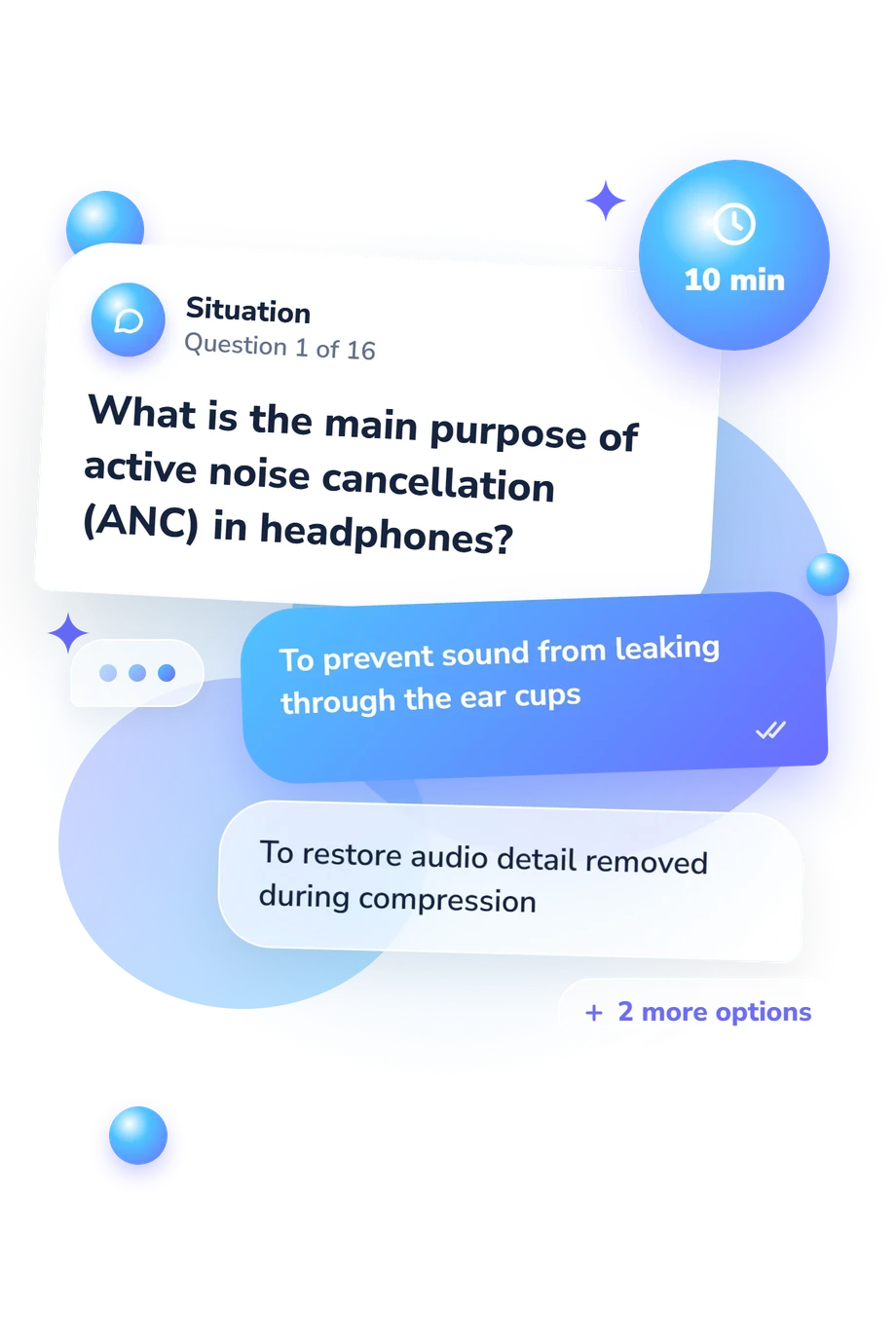
Example Questions From the Test
- To prevent sound from leaking through the ear cups
- To restore audio detail removed during compression
- To reduce external sound by generating an opposing sound signal
- To strengthen the Bluetooth radio connection
- To store audio files inside the headphones
- To convert an electrical audio signal into sound
- To measure the listener's hearing threshold
- To encode music for Bluetooth transmission
- Send separate songs to the left and right earpieces
- Pair without using any wireless radio
- Maintain connections with two source devices at the same time
- Increase the bit rate of every audio file
Headphone Quiz - Description and methodology of the test
People comparing wired and wireless models, troubleshooting audio problems, or learning specifications can use the headphone quiz as a focused knowledge check. It helps readers connect technical information with a purchase or setup decision rather than treating the result as a product recommendation. Readers can use the what headphones should i buy quiz to identify which features deserve closer attention. Results point to topics worth reviewing before acting.
What This Assessment Explores
Rather than recommending a brand, the assessment checks whether readers can apply headphone principles to everyday listening situations. It focuses on how sound is produced, how enclosure and fit affect leakage and bass, why wireless links fail, and which habits support safer listening. As a headphone buying quiz, it helps connect specifications with practical needs instead of treating every feature as a marketing signal.
The questions cover three practical areas:
- Audio fundamentals cover drivers, stereo, decibels, and impedance.
- Design and fit show how enclosure type and ear-tip seals affect leakage and bass.
- Connectivity and durability cover multipoint pairing, latency, wireless range, IP markings, and cable faults.
The single Headphone Knowledge score (0-16) awards one point per correct answer and uses the bands Foundations to build (0-6), Developing knowledge (7-12), and Strong knowledge (13-16).
Methodology and Evidence Base
Each item presents a practical prompt with four answer choices. One point is awarded for a correct response, so the total reflects familiarity with the tested concepts rather than preference, personality, or hearing sensitivity. It helps identify topics to revisit, but it does not measure listening ability or product quality.
Avis and Kelly (2006) provide the technical frame for drivers, enclosure types, impedance, isolation, and related design choices. Olive (2022) distinguishes measurable headphone characteristics from the more complex experience of perceived sound quality. WHO and ITU (2019) provide the safety context for volume exposure and symptoms such as ringing or muffled hearing. The questionnaire is conceptually consistent with these sources, not an adaptation of any one.
The bands make this headphone knowledge test an educational profile: a correct-answer total interpreted through fixed educational ranges. A score says nothing about hearing health. Because performance depends on prior knowledge and how each item is interpreted, uncertainty can affect results; persistent ringing, muffled hearing, pain, or sudden hearing changes warrant prompt professional care.
- Avis, Mark R., and Liam Kelly. “Principles of Headphone Design-A Tutorial Review.” Audio at Home: AES 21st UK Conference, Paper 17. Audio Engineering Society, 2006.
- Olive, Sean E. “The Perception and Measurement of Headphone Sound Quality: What Do Listeners Prefer?” Acoustics Today, vol. 18, no. 1, 2022, pp. 58-67. 10.1121/AT.2022.18.1.58.
- World Health Organization and International Telecommunication Union. Safe Listening Devices and Systems: A WHO-ITU Standard. Geneva: World Health Organization and International Telecommunication Union, 2019.
Updated: