
Pick an Outfit Quiz
How the Scales are Structured
Who Usually Takes This Test?
See How You Compare
Below is a preview of how scores are typically distributed across each scale.
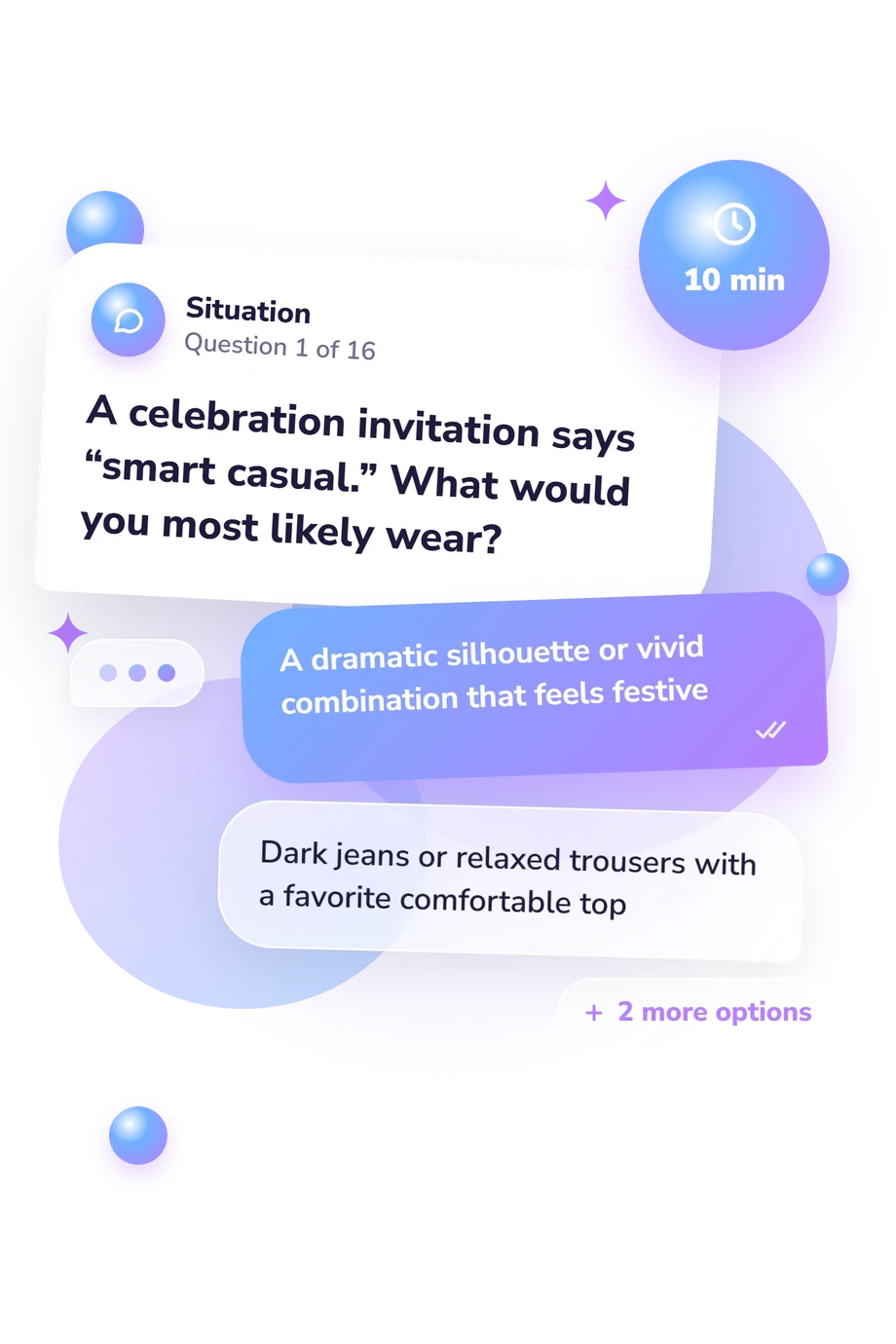
Example Questions From the Test
- Composed and familiar, so clothing stays in the background
- Comfortable with a small detail that feels personal
- Noticeable through one strong color, shape, or accessory
- Distinctive enough to become an easy conversation starter
- An unusual color or shape that turns the jacket into the outfit
- A soft, easy layer with roomy pockets and minimal structure
- A versatile jacket with a current detail that keeps it fresh
- A well-cut style in a neutral or traditional pattern
- A restrained combination of dependable neutrals
- Mostly soft or familiar shades with a gentle contrast
- A calm base plus one saturated accent color
- A high-contrast or unexpected combination that catches the eye
Pick an Outfit Quiz - Description and methodology of the test
Anyone reconsidering a wardrobe, preparing for different social settings, or trying to understand why certain outfits appeal may find the Pick an Outfit Quiz useful. It offers a profile of outfit preferences that can help readers notice whether comfort, coordination, visual impact, or detail tends to guide their choices. The result is a prompt for reflection, letting personal taste remain flexible.
What This Assessment Explores
Every scenario asks you to choose between practical, polished, expressive, or softer approaches to dressing. Meetings, celebrations, errands, travel, weather changes, and shopping reveal what you prioritize when appearance, comfort, usefulness, and self-expression compete. The profile suits people exploring personal style and wanting a flexible description of their preferences.
The four result dimensions and their displayed bands are:
- Bold Statement (0-12) reflects a pull toward contrast and memorable visual choices: Subtle Spark (0-4), Expressive Mix (5-8), or Standout Signature (9-12).
- Classic Polish (0-12) reflects clean lines, enduring pieces, and coordinated finishes: Occasional Accent (0-4), Flexible Foundation (5-8), or Signature Polish (9-12).
- Relaxed Ease (0-12) reflects softness, movement, practicality, and uncomplicated combinations: Selective Comfort (0-4), Adaptable Casual (5-8), or Effortless Signature (9-12).
- Romantic Detail (0-12) reflects graceful shapes, tactile fabrics, and thoughtful decoration: Light Touch (0-4), Gentle Blend (5-8), or Romantic Signature (9-12).
Methodology and Evidence Base
Each item presents a concrete wardrobe situation with four answer choices. The options contrast impact, comfort, coordination, structure, and detail, so you select the approach that feels most natural rather than rating isolated garments. The four-choice format captures patterns in clothing decisions rather than preferences for individual garments. This preference-based self-report format summarizes patterns across the four style directions.
The questionnaire is conceptually consistent with Stolovy’s study of clothing practices, personality expression, and body-image experience. Work by Joyner Armstrong, Kang, and Lang examines clothing style confidence as multidimensional, while Vingilyte and Khadaroo connect wardrobe choices with true, ideal, and creative self-concepts. These sources support reading clothing choices as possible expressions of identity; they do not make this online questionnaire an adaptation or validated version of their instruments.
Interpretation is comparative rather than hierarchical. The highest total marks the strongest affinity, and results within one point form a blended style. Self-awareness, current mood, social setting, available clothes, and personal meanings of words such as polished or romantic can influence answers; the displayed bands are descriptive categories, with no stated population norms or clinical validation for this questionnaire.
- Stolovy, T. (2021). Styling the Self: Clothing Practices, Personality Traits, and Body Image Among Israeli Women. Frontiers in Psychology, 12, Article 719318. 10.3389/fpsyg.2021.719318
- Joyner Armstrong, C. M., Kang, J., & Lang, C. (2018). Clothing style confidence: The development and validation of a multidimensional scale to explore product longevity. Journal of Consumer Behaviour, 17(6), 553-568. 10.1002/cb.1739
- Vingilyte, J., & Khadaroo, A. (2025). Personal clothing style and self-concept: Embracing the true, the ideal and the creative self. Fashion, Style & Popular Culture, 12(3), 319-335. 10.1386/fspc_00130_1
Updated: