
Which Archangel Are You Quiz
How the Scales are Structured
Who Usually Takes This Test?
See How You Compare
Below is a preview of how scores are typically distributed across each scale.
Example Questions From the Test
- Helping someone recover their sense of balance
- Expressing something that makes another person feel understood
- Taking a stand when others hesitate
- Discovering the principle that makes a complex issue click
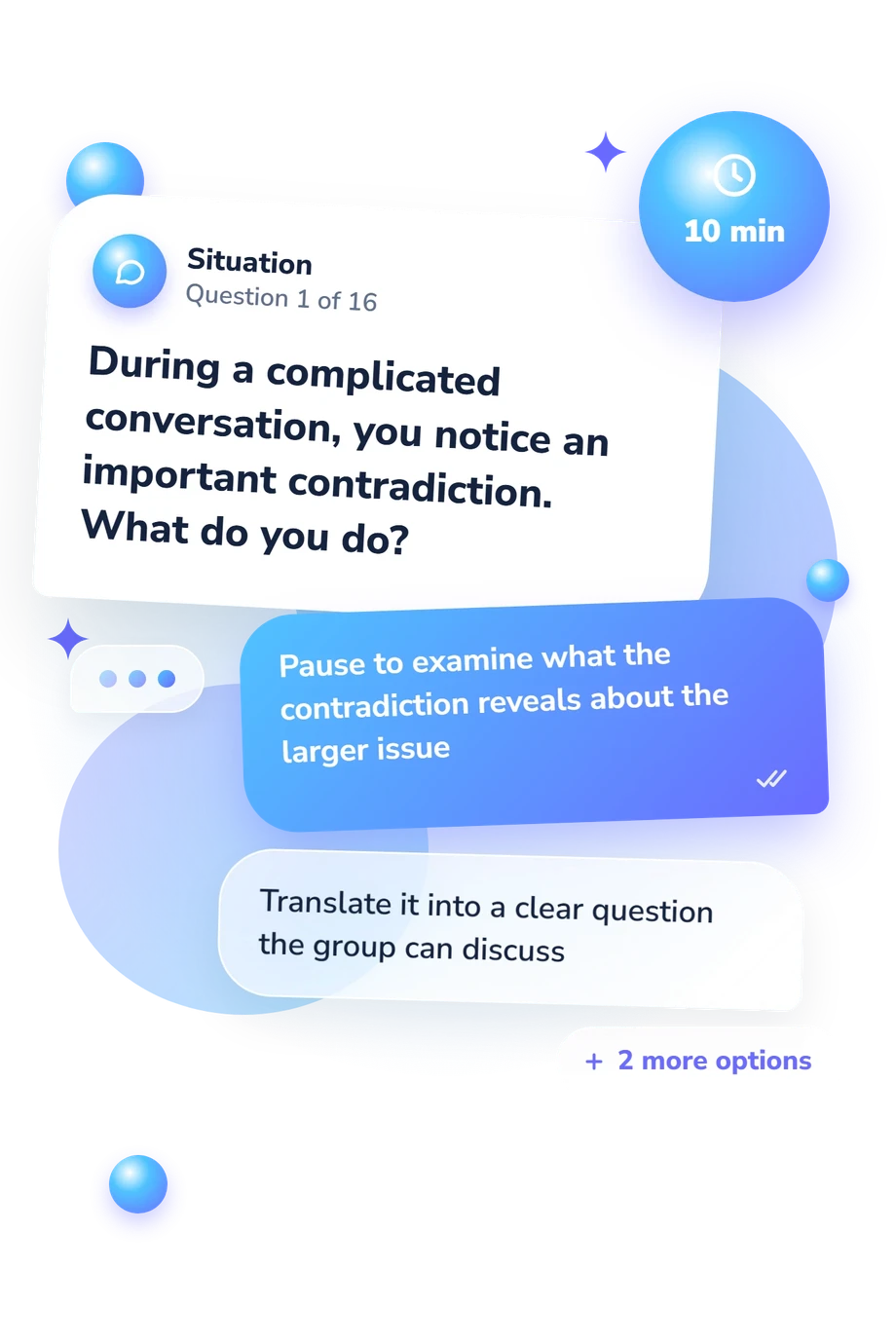
- Craft a clearer explanation and invite questions
- Study why the idea produced such different interpretations
- Defend the people being unfairly blamed for the confusion
- Ease the frustration before returning to the discussion
- Take charge and enforce a stronger solution
- Map the causes and identify the principle the fixes have missed
- Reframe the problem so everyone shares the same understanding
- Slow down and repair the strain created by earlier attempts
Which Archangel Are You Quiz - Description and methodology of the test
People drawn to symbolic spirituality can use the Which Archangel Are You Quiz to reflect on how they communicate, protect, restore, or seek understanding. It suits readers who want a structured language for comparing personal values and recurring responses, without treating an archangel profile as a fixed identity. As an archangel personality quiz, it turns familiar choices into a readable pattern.
What This Assessment Explores
Four affinities organize questions around communication, protection, restoration, and insight. Their bands distinguish quieter, situational, and stronger expressions of each tendency. The who is your archangel quiz framing is symbolic: results compare qualities, not supernatural identity. The displayed dimensions are:
- Gabriel (0-12) measures expression: Quiet affinity (0-4) stays secondary; Emerging messenger (5-8) values clarity; Strong Gabriel affinity (9-12) makes it central.
- Michael (0-12) measures protection: Quiet affinity (0-4) stays secondary; Situational protector (5-8) appears when needed; Strong affinity (9-12) signals leadership.
- Raphael (0-12) measures restoration: Quiet affinity (0-4) stays secondary; Responsive restorer (5-8) offers care; Strong Raphael affinity (9-12) supports healing.
- Uriel (0-12) measures insight: Quiet affinity (0-4) keeps analysis quieter; Curious illuminator (5-8) finds patterns; Strong Uriel affinity (9-12) centers wisdom.
The highest score is strongest; scores within one point form a blended result.
Methodology and Scientific Basis
Each item presents a brief situation with four response options. The choices contrast clarifying a message, protecting a boundary, restoring balance, and finding an underlying pattern. Selecting the most characteristic response makes this a comparative self-report, not a right-or-wrong test.
Each choice contributes to one affinity total; the highest identifies the closest profile. For someone treating this as a who is my archangel quiz, the result describes recurring preferences across communication, decisions, conflict, and support rather than a fixed spiritual identity.
The imagery is conceptually consistent with Archangels 101 (Virtue, 2011), which connects the four archangel figures with protection, healing, communication, and guidance. This questionnaire is not an adaptation of that method. Levene, Marx, and Bhayro (2014) add context for protective angelic symbolism, while Charles (1912) and Fairweather (1913) represent older Enochic traditions and translation history; these sources support imagery, not psychometric validation.
The tool has no stated standardized norms, reliability estimates, or clinical validation. Mood, self-awareness, and familiarity with angelic symbolism may influence answers, so its result works best as a reflection prompt.
- Virtue, Doreen. Archangels 101: How to Connect Closely with Archangels Michael, Raphael, Gabriel, Uriel, and Others for Healing, Protection, and Guidance. Hay House, 2011. ISBN 9781401926397.
- Levene, Dan, Dalia Marx, and Siam Bhayro. “Gabriel Is on Their Right”: Angelic Protection in Jewish Magic and Babylonian Lore. Studia Mesopotamica 1 (2014): 185-198.
- Charles, Robert Henry. The Book of Enoch: Or 1 Enoch. Oxford: Clarendon Press, 1912.
- Fairweather, William. “Charles's Translation of the Book of Enoch.” The American Journal of Theology 17, no. 2 (1913): 273-274. 10.1086/479182.
Updated: