
Wedding Dress Quiz
How the Scales are Structured
Who Usually Takes This Test?
See How You Compare
Below is a preview of how scores are typically distributed across each scale.
Example Questions From the Test
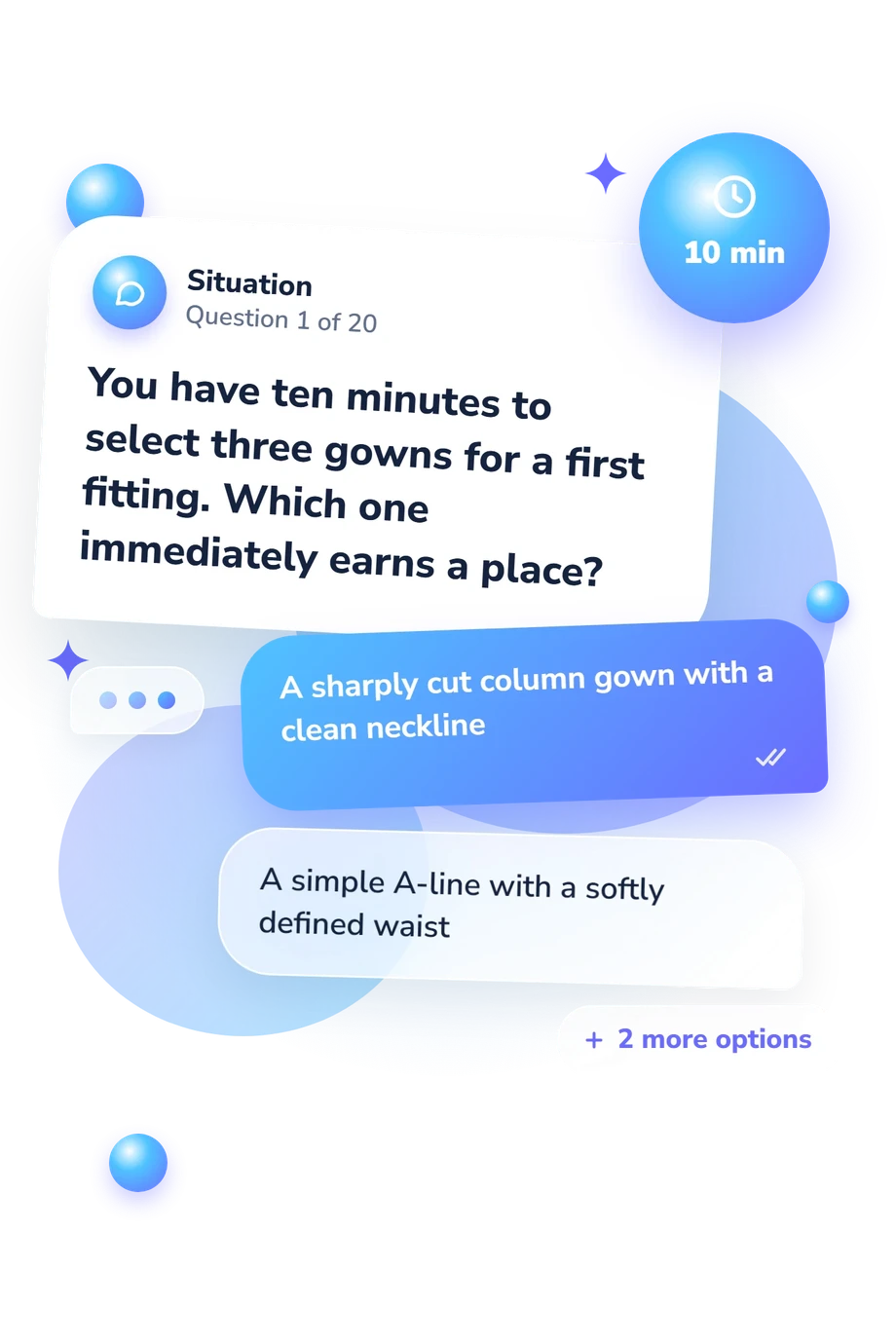
- A sharply cut column gown with a clean neckline
- A simple A-line with a softly defined waist
- A lace gown with loose sleeves and an airy skirt
- A highly structured gown with a vast layered skirt
- Keep the line clean and let cut, fabric, and fit carry the look
- Add one removable statement piece while preserving the slim base
- Build out the skirt so the silhouette becomes a clear A-line
- Add substantial layers until the gown feels grand and expansive
- Keep a balanced silhouette that feels at home in both settings
- Lean into a formal, high-impact skirt for the indoor setting
- Choose a relaxed dress that belongs most clearly outdoors
- Use a sleek base and transform it with a removable overskirt
Wedding Dress Quiz - Description and methodology of the test
Anyone choosing a gown silhouette, refining a mood board, or preparing for fittings can use this assessment to turn visual preferences into a clearer starting point. The wedding dress quiz is intended for people who want language for the balance of shape, movement, structure, and styling they already notice in dresses. As a bridal dress quiz, it supports comparisons across settings and priorities without forcing personal taste into one answer.
What This Assessment Explores
Choices across silhouette, volume, movement, texture, venue, and ceremony produce comparative affinities. As a wedding dress style quiz, it compares the five silhouette affinities and identifies the strongest or blended profile. The result covers:
- Free-Spirited Bohemian (0-12) measures relaxed, tactile, nature-led styling: Polished Direction (0-4), Bohemian Notes (5-8), Bohemian Signature (9-12).
- Modern Sheath (0-12) measures clean, narrow, restrained simplicity: More Dimension (0-4), Streamlined Accent (5-8), Sheath Signature (9-12).
- Regal Ball Gown (0-12) measures formal volume, structure, and ceremony: Subtler Presence (0-4), Selective Grandeur (5-8), Ball Gown Signature (9-12).
- Sculpted Mermaid (0-12) measures contour, deliberate curves, and lower flare: Softer Outline (0-4), Touch of Sculpture (5-8), Mermaid Signature (9-12).
- Timeless A-Line (0-12) measures balanced proportions and gradual widening: Different Direction (0-4), Flexible Classic (5-8), A-Line Signature (9-12).
Methodology and Evidence Base
Each item presents a fitting or styling situation with four answer choices. The contrasts cover silhouette, volume, movement, venue, accessories, texture, and ceremony, showing how preferences hold across visual and practical contexts. The quiz asks readers to imagine their dream wedding dress across varied situations, sampling whether silhouette and styling preferences remain attractive across settings, comfort needs, and formality levels.
The questionnaire is conceptually consistent with Jeon, Moon, and Chung (2013), whose work examines wedding-dress design through form and styling variables; it is not an adaptation of that instrument. Kaiser’s clothing framework offers general background on how garments can relate to identity and context.
Comparing the five scores, the highest indicates the strongest affinity, with a score within one point forming a blended result. The quiz helps answer what wedding dress should I wear by showing which silhouette to consider for fittings, while keeping personal judgment central. Self-reported answers can shift with mood, current plans, cultural expectations, or self-awareness, so the result works best as structured reflection when comparing options.
- Mi-Jin Jeon, Sun-Jeong Moon, and Sham-Ho Chung. "A Study for the Development of a Variable Wedding Dress Design." Fashion & Textile Research Journal 15, no. 5 (2013): 694-703. 10.5805/SFTI.2013.15.5.694
- Mindy Tram Hoang and Jimmy Calanchini. "Social Perceptions of Fashion." UC Riverside Undergraduate Research Journal 19, no. 1 (2025): 13-21. 10.5070/RJ5.35880
- Susan B. Kaiser. "Toward a Contextual Social Psychology of Clothing: A Synthesis of Symbolic Interactionist and Cognitive Theoretical Perspectives." Clothing and Textiles Research Journal 2, no. 1 (1983): 1-9. 10.1177/0887302X8300200101
Updated: