
Boyfriend Gift Quiz
How the Scales are Structured
Who Usually Takes This Test?
See How You Compare
Below is a preview of how scores are typically distributed across each scale.
Example Questions From the Test
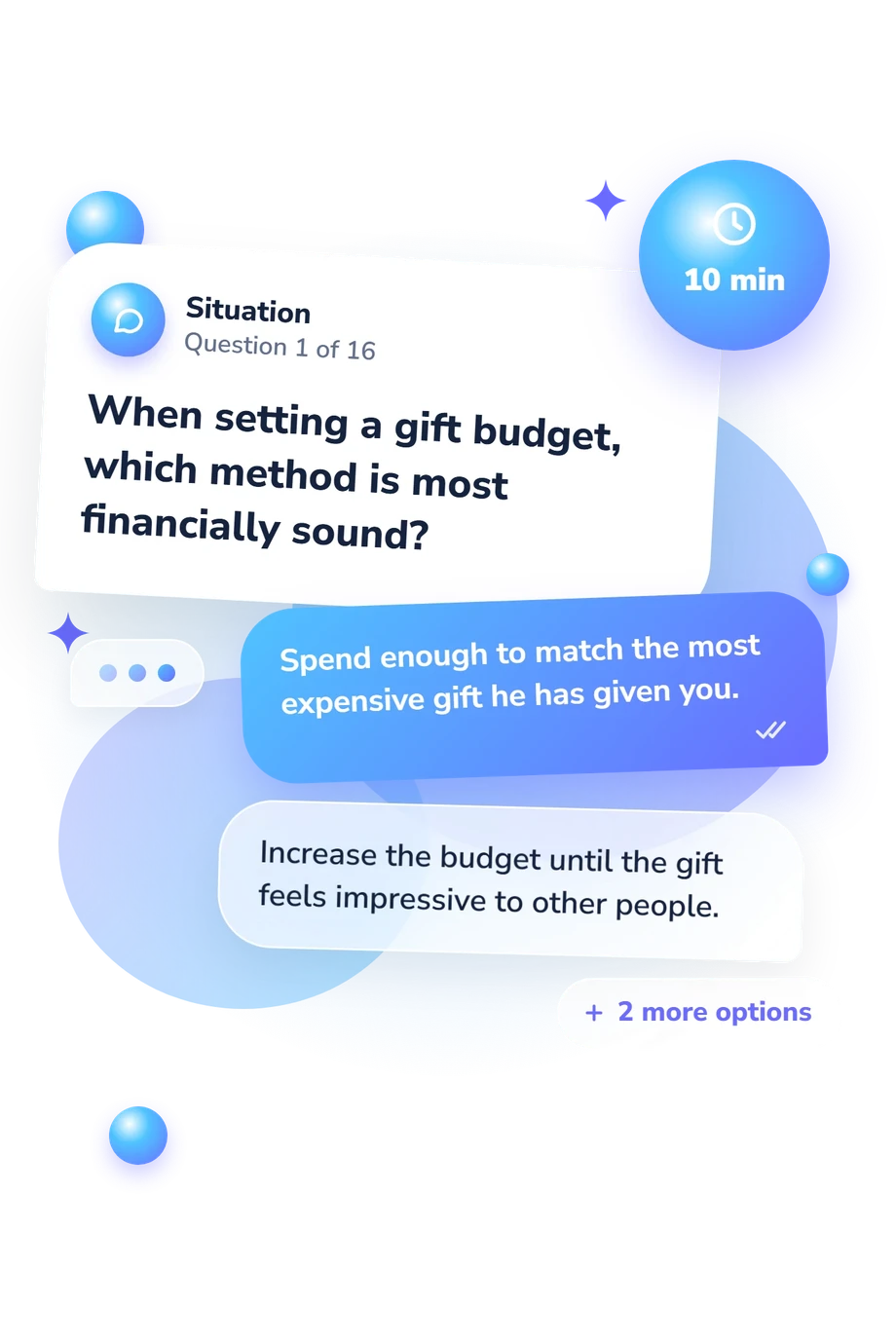
- Spend enough to match the most expensive gift he has given you.
- Increase the budget until the gift feels impressive to other people.
- Use the average amount couples reportedly spend on the occasion.
- Choose a total cost you can comfortably afford, including fees and extras.
- Whether every snack has the same visual color scheme.
- His allergies, dietary restrictions, and strongly disliked ingredients.
- Whether homemade food is more romantic than purchased food.
- The average number of snacks included in commercial gift boxes.
- The color most frequently shown in advertisements.
- The exact console, device, or model with which it must be compatible.
- Whether the accessory is currently popular with reviewers.
- Whether its packaging matches his existing gaming equipment.
Boyfriend Gift Quiz - Description and methodology of the test
Choosing a present becomes harder when price, novelty, or expectations take over. The boyfriend gift quiz is intended for partners who want to examine recipient-centred judgment and notice where a choice may overlook his preferences, needs, or comfort. It helps you think through the question behind a what should I get my boyfriend for his birthday quiz while keeping attention on the recipient.
What This Assessment Explores
Rather than measuring romance, this questionnaire examines how gifts fit people and situations. Scenarios cover preferences, hints, memories, budget, compatibility, timing, delivery, and pressure. The question behind a what should I get him for his birthday quiz is about fit, not novelty.
Two areas emerge:
- Recipient insight shows whether you use preferences, interests, and details to find a meaningful fit.
- Practical, recipient-centred planning shows whether a choice matches needs, budget, compatibility, timing, logistics, and comfort without pressure.
The result is Boyfriend Gift Knowledge, 0-16: Foundations to build 0-6 calls for clearer preference clues and practical checks; Developing gift sense 7-12 reflects sound gift principles, with room to sharpen compatibility, logistics, or recipient-centred planning; Strong gift judgment 13-16 indicates that you consistently recognize thoughtful ways to match gifts with his interests, circumstances, and comfort. These bands describe planning tendencies, not affection or relationship quality.
Methodology and Evidence Base
Each item presents a scenario with four answer choices. Options contrast recipient-centred reasoning with status, assumptions, novelty, or convenience. When deciding what to get a guy for his birthday, the what to get a guy for his birthday quiz grounds a choice in evidence about him, not generic advice. The exact point assignment is not specified; the displayed bands are descriptive. They do not identify a gift or predict his reaction.
Gino and Flynn's study of explicit recipient information in gift exchange gives the questionnaire context. Galak, Givi, and Williams examine overvalued surprise or symbolism in gift expectations, while Flynn and Adams examine why price is not a reliable substitute for appreciation. The questionnaire is conceptually consistent with these studies, not a validated adaptation.
Christmas-gift planning in a what to get boyfriend for Christmas quiz stays tied to recipient information, gift expectations, and price; logistics and comfort remain features of its scenarios, not claims established by those studies. As an online judgment questionnaire, it offers descriptive bands; the cited studies provide conceptual context, not norms, validation, or standardization for this assessment. Scores can shift with relationship context, familiarity with his habits, and respondent honesty.
- Francesca Gino and Francis J. Flynn, “Give them what they want: The benefits of explicitness in gift exchange,” Journal of Experimental Social Psychology, 2011, 47(5), 915-922. 10.1016/j.jesp.2011.03.015
- Jeff Galak, Julian Givi, and Elanor F. Williams, “Why Certain Gifts Are Great to Give but Not to Get: A Framework for Understanding Errors in Gift Giving,” Current Directions in Psychological Science, 2016, 25(6), 380-385. 10.1177/0963721416656937
- Francis J. Flynn and Gabrielle S. Adams, “Money can’t buy love: Asymmetric beliefs about gift price and feelings of appreciation,” Journal of Experimental Social Psychology, 2009, 45(2), 404-409. 10.1016/j.jesp.2008.11.003
Updated: