
Dirty Mind Picture Quiz
How the Scales are Structured
Who Usually Takes This Test?
See How You Compare
Below is a preview of how scores are typically distributed across each scale.
Example Questions From the Test
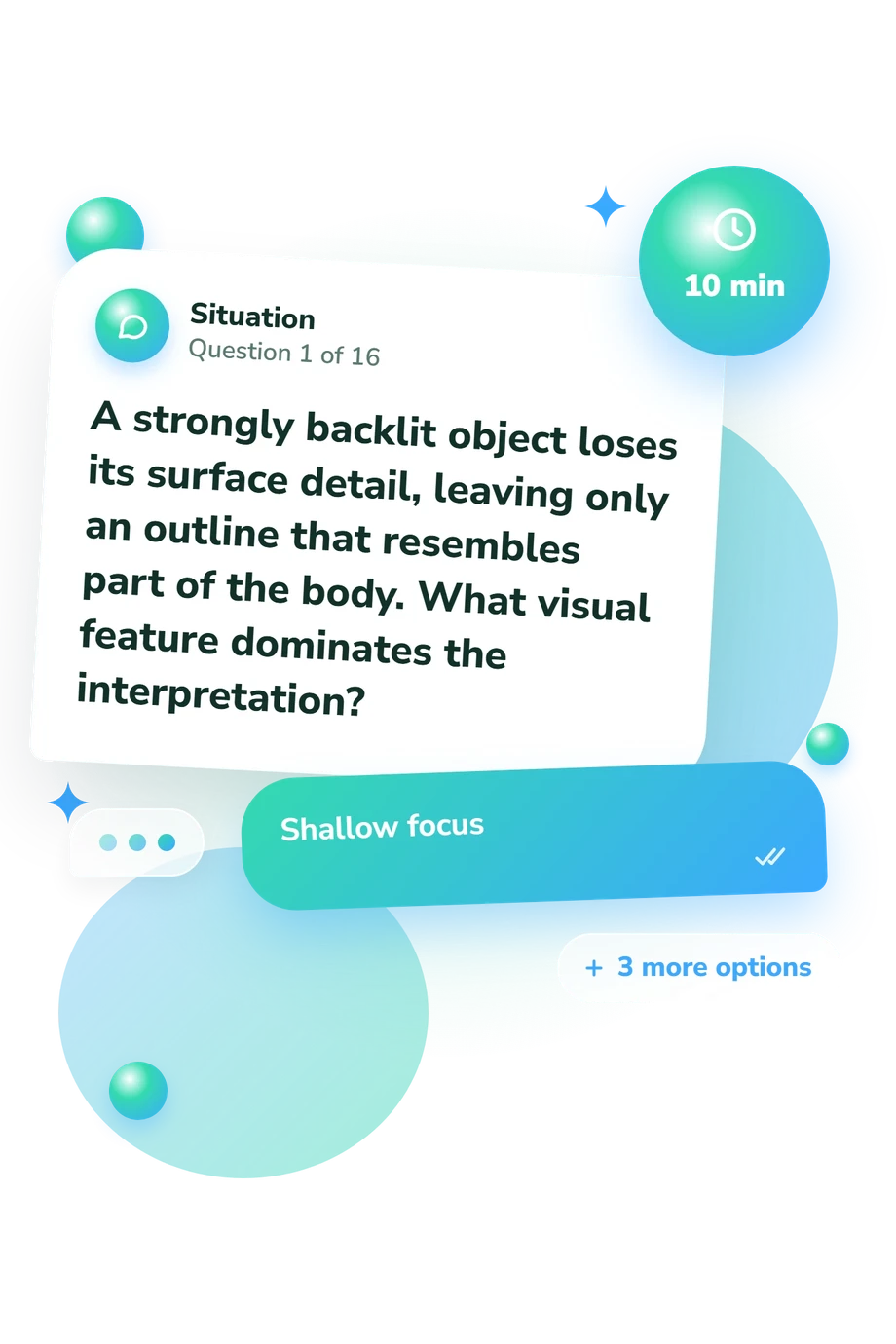
- Shallow focus
- Texture gradient
- White balance
- Silhouette
- It has fewer pixels than the original version
- Its subject was intentionally concealed by the photographer
- It supports two or more plausible visual interpretations
- It contains obvious digital manipulation
- Chromatic adaptation
- Pareidolia
- Motion parallax
- Change blindness
Dirty Mind Picture Quiz - Description and methodology of the test
For readers who want to understand why an ordinary photograph can look suggestive, the Dirty Mind Picture Quiz offers a focused exercise in recognizing specific visual mechanisms. It is intended for curious people who want to examine how cropping, viewpoint, framing, and expectation can alter an interpretation rather than receive a personality label. As a quiz about suggestive-looking pictures, it turns those mechanisms into a practical knowledge exercise.
What This Assessment Explores
The questionnaire examines how visual structure and prior expectations can turn innocent objects, outlines, or scenes into suggestive interpretations. It suits readers interested in why first impressions feel convincing and how context changes them. Mechanism recognition is the focus of this visual perception quiz, not sexual attitudes or private behavior.
The result uses one scale:
- Dirty Mind Picture Knowledge (0-16) reflects knowledge of perceptual and photographic effects behind suggestive-looking but potentially innocent pictures: Foundation (0-6) means you recognize some visual tricks but may rely on first impressions; Developing Eye (7-12) means you understand common effects and contextual shifts; Strong Visual Literacy (13-16) means you consistently distinguish ambiguity, composition, and perception.
Items cover silhouette, reflection, forced perspective, pareidolia, priming, cropping, Gestalt closure, occlusion, juxtaposition, negative space, context, figure-ground organization, and confirmation bias. The result describes recognition of visual effects, not character.
Methodology and Evidence Base
Each item presents a visual-perception scenario followed by four answer choices. Selecting the concept that best explains the effect tests recognition of mechanisms such as viewpoint change, reflection, cropping, Gestalt completion, or interpretive bias. The displayed result reports knowledge of the relevant visual effects tested by these picture perception questions; item weighting and calculation details are not specified, and the questionnaire does not establish reverse scoring, norms, or reliability estimates.
The evidence base is conceptual rather than a claim that this questionnaire reproduces a published instrument. Goolkasian and Woodberry (2010) is the closest source for priming around ambiguous figures. Intaitė, Noreika, Šoliūnas, and Falter (2013) describe the interaction of bottom-up visual input with top-down expectation, while Zhou and Meng (2020) address individual differences in pareidolia. The questionnaire is conceptually consistent with these findings, but it is not an adaptation or validated reproduction of their measures.
Answers may shift with attention, terminology, expectations, and self-awareness. Read the bands as levels of concept recognition within this response set, not population cutoffs or clinical categories; the result cannot explain why an image feels suggestive.
- Paula Goolkasian and Courtney Woodberry (2010). Priming effects with ambiguous figures. Attention, Perception, & Psychophysics, 72(1), 168-178. 10.3758/APP.72.1.168
- Monika Intaitė, Valdas Noreika, Alvydas Šoliūnas, and Christine M. Falter (2013). Interaction of bottom-up and top-down processes in the perception of ambiguous figures. Vision Research, 89, 24-31. 10.1016/j.visres.2013.06.011
- Liu-Fang Zhou and Ming Meng (2020). Do you see the “face”? Individual differences in face pareidolia. Journal of Pacific Rim Psychology, 14, e2. 10.1017/prp.2019.27
Updated: