
Do I Need My Tonsils Removed Quiz
How the Scales are Structured
Who Usually Takes This Test?
See How You Compare
Below is a preview of how scores are typically distributed across each scale.
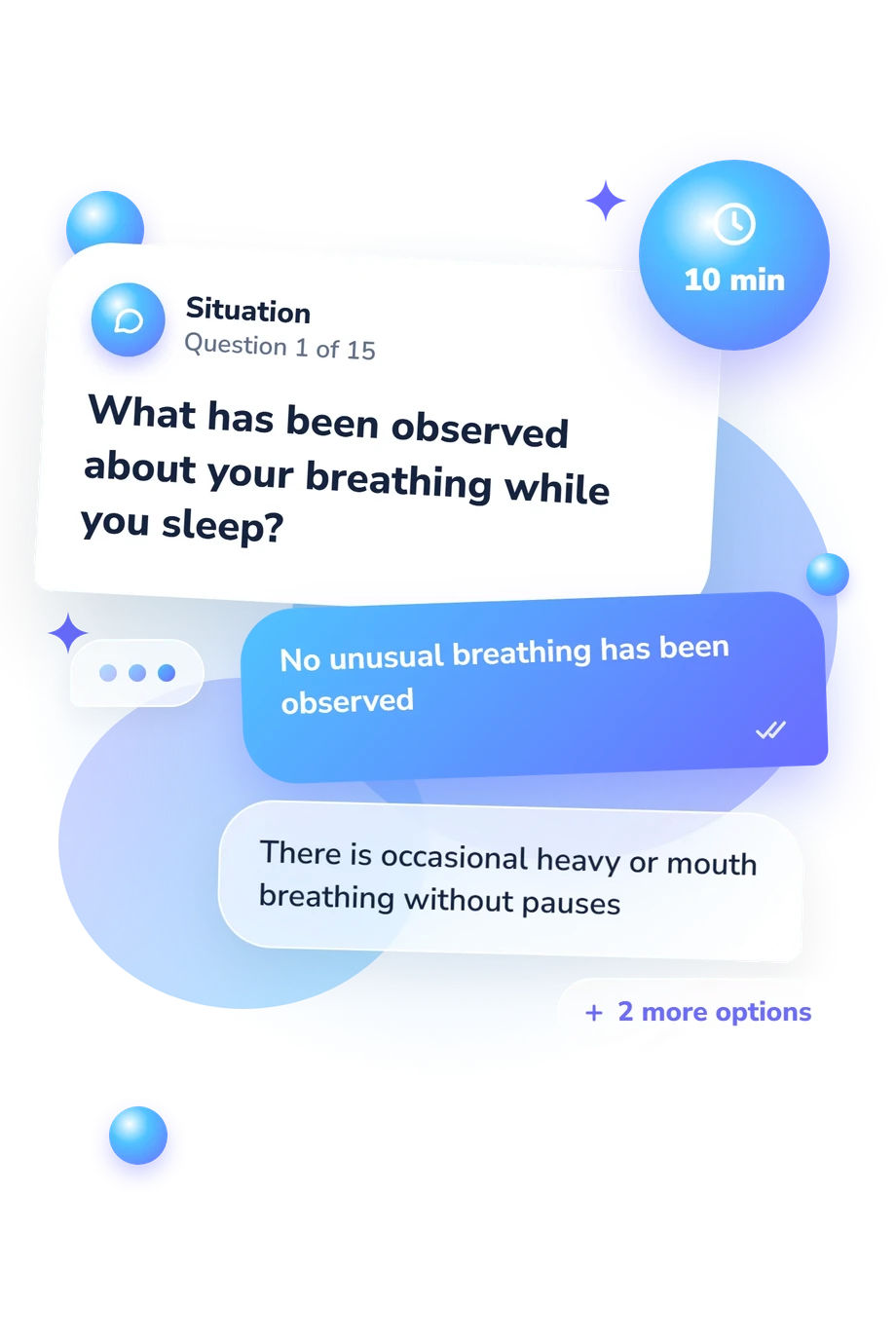
Example Questions From the Test
- Two
- None
- Three or more
- One
- Five or more distinct episodes
- No episodes
- One or two episodes
- Three or four episodes
- Most nights or every night
- Never
- Occasionally, such as during a cold or allergy flare
- Several nights per week
Do I Need My Tonsils Removed Quiz - Description and methodology of the test
For people weighing whether they should get their tonsils removed, this assessment-a should i get my tonsils removed quiz-brings together infections, isolated complications, sleep-related breathing, swallowing difficulty, one-sided changes, and effects on daily life. The Do I Need My Tonsils Removed Quiz is intended for anyone considering surgery; its result shows which patterns may warrant closer attention.
What This Assessment Explores
Questions cover recurrence, persistence, treatment response, sleep breathing, swallowing, one-sided changes, complications, and clinician advice. Questions address whether you need your tonsils out-the do i need my tonsils out quiz question-and whether removal merits clinical discussion, not a yes-or-no conclusion.
Three scales summarize these patterns:
- Complications and Care Impact (0-15) covers complications, care impact, disruption, one-sided changes, and clinician or specialist recommendations: No indicator selected (0), Some care impact (1-2), Prompt clinical follow-up (3-15).
- Recurring Tonsil Infections (0-15) reflects repeated or prolonged episodes: No infection-pattern points (0), Some infection signal (1-2), Clinical review warranted (3-15).
- Sleep, Breathing, and Swallowing Obstruction (0-15) captures airway, sleep, or swallowing signals: No signal (0), Some signal (1-2), Prompt review (3-15).
Any endorsed experience matters independently; rapidly worsening swelling, severe breathing difficulty, blue or gray lips, inability to swallow liquids, severe dehydration, or bleeding with breathing difficulty need urgent help.
Methodology and Evidence Base
This self-report questionnaire offers four response choices tailored to the relevant symptom pattern. The options vary with frequency, severity, persistence, impact, or urgency rather than following one fixed order. Questions use periods such as the past year, three years, a recent episode, current swallowing, or typical sleep, separating frequency, persistence, and functional impact.
Results remain separate by domain. The displayed bands are unvalidated reflective groupings, not diagnostic or surgical cutoffs, and the questionnaire does not state how many points each answer contributes. A single score-3 response overrides the total, so a significant symptom should not be dismissed because another domain is quiet.
The recurrent tonsillitis surgical guideline and the NATTINA trial provide relevant context for recurring infections, complications, management, and treatment choices. This questionnaire is conceptually consistent with those works but is not an adaptation or validation of either.
Its result organizes dates, tests, treatments, sleep and swallowing observations, and clinical advice for a tonsil removal decision; recall errors, illness, and incomplete self-observation can affect results, so examination and urgency determine next steps.
- Windfuhr JP, Toepfner N, Steffen G, Waldfahrer F, Berner R. Clinical practice guideline: tonsillitis II. Surgical management. European Archives of Oto-Rhino-Laryngology. 2016;273(4):989-1009. 10.1007/s00405-016-3904-x
- Mitchell RB, Archer SM, Ishman SL, Rosenfeld RM, et al. Clinical Practice Guideline: Tonsillectomy in Children (Update)-Executive Summary. Otolaryngology-Head and Neck Surgery. 2019;160(2):187-205. 10.1177/0194599818807917
- Wilson JA, O'Hara J, Fouweather T, et al. Conservative management versus tonsillectomy in adults with recurrent acute tonsillitis in the UK (NATTINA): a multicentre, open-label, randomised controlled trial. The Lancet. 2023;401(10393):2051-2059. 10.1016/S0140-6736(23)00519-6
Updated: