
Tech Company Logos Quiz
How the Scales are Structured
Who Usually Takes This Test?
See How You Compare
Below is a preview of how scores are typically distributed across each scale.
Example Questions From the Test
- HP
- Asus
- Lenovo
- Acer
- SoundCloud
- Spotify
- Pandora
- Shazam
- Mozilla
- Opera
- Oracle
Tech Company Logos Quiz - Description and methodology of the test
People who work with digital products, follow technology brands, or enjoy visual trivia can use this tech company logos quiz to identify familiar corporate marks from visual descriptions and four answer choices. The technology logo quiz format asks visitors to distinguish visual marks rather than evaluate the companies, giving the result a focused picture of established-logo knowledge. It also highlights the visual details that support accurate identification.
What This Assessment Measures
This questionnaire measures recognition of technology-company identities across hardware, software, internet, cloud, workplace, and digital brands. Items ask readers to distinguish wordmarks, monograms, letters, colors, symbols, and silhouettes.
As a company logo recognition test, it suits visitors checking brand familiarity and the visual cues they identify reliably. A higher result reflects wider recognition of the designs shown, while a lower result may signal confusion between similar marks or unfamiliar sectors.
The Tech Company Logos Knowledge scale runs from 0-16 across three bands:
- Logo Starter (0-6) indicates recognition of some highly visible marks, with possible confusion between brands sharing visual styles.
- Developing Spotter (7-12) shows recognition of many major technology logos while leaving room to strengthen sector and wordmark cues.
- Logo Expert (13-16) reflects strong recognition across hardware, software, internet, and digital-service brands.
Methodology and Evidence Base
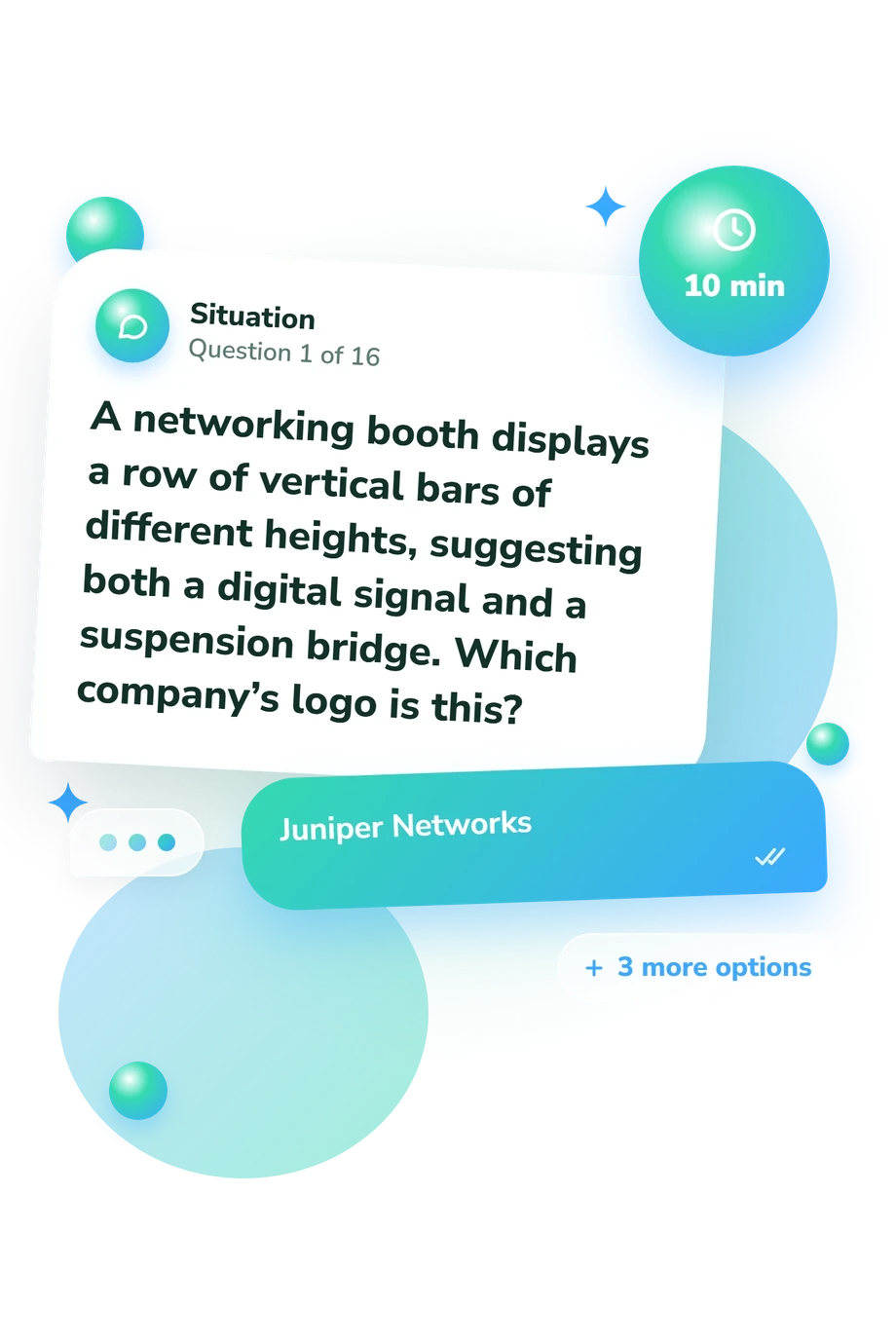
Each item gives a logo description or situation and asks the visitor to choose one company from four options. The prompts combine wordmarks and symbols across technology sectors, so success depends on matching visual structure with stored brand knowledge. Each correct identification receives one point. The one-point rule makes the task a straightforward recognition exercise rather than a weighted psychological score. In this tech logo quiz, each answer tests the described mark against the right company.
Research with car-brand logos distinguishes recognition from recall and naming in logo-based memory tasks. The BRAND recognition database adds context on organized brand-recognition norms, while logo-distinctiveness research examines how clarity, visual meaning, and distinctiveness affect noticeability and memory. This questionnaire is conceptually consistent with those works, not an adaptation of their instruments.
Interpret the result as a snapshot of familiarity with the designs included. The displayed bands describe performance on this logo set, not clinical categories; prior exposure, cultural familiarity, rebranding, similar marks, guessing, and attention can affect performance. The result reflects this selection of designs rather than a permanent ability.
- Julia Mayas, Antonio Prieto, and Pedro R. Montoro (2024). Memory and metamemory in everyday settings: Assessing recall, recognition, and naming using car brand logos. Applied Cognitive Psychology, 38(1), e4138. 10.1002/acp.4138
- Carolina Raffaelli, Elena Bocchi, Zachary Estes, and James S. Adelman (2025). BRAND: Brand recognition and attitude norms database. Behavior Research Methods, 57(1), Article 17. 10.3758/s13428-024-02525-x
- Pamela W. Henderson and Joseph A. Cote (1998). Guidelines for Selecting or Modifying Logos. Journal of Marketing, 62(2), 14-30. 10.1177/002224299806200202
Updated: