What Is a Social Psychologist: Understanding Human Behavior in Groups
You’ve probably heard the term social psychologist and wondered what exactly that means. A social psychologist studies how our thoughts, emotions, and behaviors shift in response to other people — friends, coworkers, strangers, or even digital crowds online. According to the American Psychological Association, this branch of psychology explores how individuals are influenced by social contexts, from persuasion and prejudice to teamwork and empathy.
In plain terms, social psychologists try to answer questions we all ask at some point: Why do people follow trends? What makes groups unite or divide? How can understanding these patterns improve relationships and communities?
In this article, you’ll learn what social psychologists actually do, how their work differs from that of clinical therapists, and why their research matters in everyday life — from classrooms and offices to public health campaigns.

What Does a Social Psychologist Do?
Social psychologists study how people think, feel, and behave in relation to others. They explore how social forces — norms, group pressure, relationships, and culture — shape our decisions and perceptions. According to the American Psychological Association, social psychology is the scientific study of how people’s thoughts and actions are influenced by the real or imagined presence of others.
At its core, social psychology bridges individual and society. It looks at how personal identity interacts with group behavior. Imagine being in a meeting where one confident speaker changes the whole room’s tone — that shift in collective mood is exactly what a social psychologist examines.
They design controlled experiments and surveys to uncover patterns behind:
- conformity and obedience;
- prejudice and discrimination;
- attraction, friendship, and cooperation;
- persuasion and attitude change;
- leadership and power dynamics.
Through data and observation, they reveal the invisible rules of human connection. The work often involves studying both positive and harmful sides of social influence — why kindness spreads in some groups while bias grows in others.
Social psychologists apply their insights in several ways:
- helping companies create fairer hiring practices;
- advising schools on bullying prevention;
- improving teamwork and leadership in organizations;
- supporting public campaigns on health or safety behaviors.
Here’s the thing: their findings don’t just describe people; they change outcomes. For example, understanding how peer influence affects vaccination rates or recycling behavior helps policymakers design better interventions.
In short, a social psychologist blends science with real life — decoding how we shape each other’s minds every day.

How Social Psychology Differs from Clinical or Counseling Psychology
People often confuse social psychologists with therapists, but their goals and methods are quite different. Social psychologists focus on research — exploring how environments and relationships influence behavior — while clinical and counseling psychologists provide direct therapy to individuals who experience emotional distress.
Here’s the simple distinction: a social psychologist studies why someone might feel anxious before public speaking; a clinical psychologist helps that person manage the anxiety itself. Both deal with human behavior, but they work on different levels — one explaining patterns, the other treating symptoms.
According to the American Psychological Association, social psychology examines social influences such as conformity, group norms, and prejudice, while clinical psychology addresses mental health conditions and personal adjustment. Social psychologists rely on experiments, statistics, and observation rather than one-on-one therapy sessions.
Let’s look closer at how these roles compare:
| Aspect | Social Psychologist | Clinical Psychologist |
|---|---|---|
| Primary focus | Studies how people think, feel, and act within social contexts | Diagnoses and treats emotional or mental health disorders |
| Main methods | Experiments, surveys, group observations, statistical modeling | Individual assessment, psychotherapy, clinical interviews |
| Typical setting | Universities, corporations, research centers, government agencies | Hospitals, private practices, mental-health clinics |
| Goal | Understand and improve social interactions, reduce prejudice, enhance cooperation | Alleviate psychological distress and promote mental health |
| Education path | Usually Ph.D. in Social Psychology or related research field | Psy.D. or Ph.D. in Clinical Psychology plus supervised practice and licensure |
Both fields contribute to public well-being but through different routes. Social psychologists uncover the collective patterns that shape societies, and clinical psychologists help individuals heal within those societies.
The two disciplines often overlap — for instance, when studying stigma, trauma, or social anxiety — yet their perspectives remain complementary. Together, they remind us that understanding people means looking both inward and outward.
Why Social Psychology Matters in Everyday Life
Social psychology isn’t just an academic subject; it’s something you experience every day. Every time you adapt your tone in a meeting, comfort a friend, or hesitate to speak up in a group, social psychology is quietly at work. It helps explain why we follow norms, how relationships form, and what drives cooperation — or conflict.
According to Harvard Health researchers, strong social ties improve mental and physical health, reducing stress and even lengthening life. Social psychologists dig into the mechanisms behind those effects, showing how empathy, trust, and belonging influence not only happiness but biology itself.
Their findings have powerful real-world applications:
- workplaces use them to improve teamwork and leadership;
- schools apply them to reduce bullying and increase inclusion;
- governments and nonprofits rely on them to design public health campaigns that actually change behavior;
- marketers use them to understand persuasion and consumer decision-making.
Here’s the thing: understanding social influence can make life smoother. Once you realize how group pressure or bias shapes behavior, it’s easier to resist manipulation and build fairer interactions. Concepts like cognitive dissonance (our discomfort when actions conflict with values) or confirmation bias (our tendency to favor familiar ideas) show up in everyday conversations, politics, and even social media feeds.
In simple terms, learning a bit of social psychology helps you read the room — and yourself — more accurately. It turns self-awareness into a social skill. Whether you’re managing a team, raising kids, or navigating friendships, the same insights that researchers use in labs can make daily life more connected, cooperative, and kind.
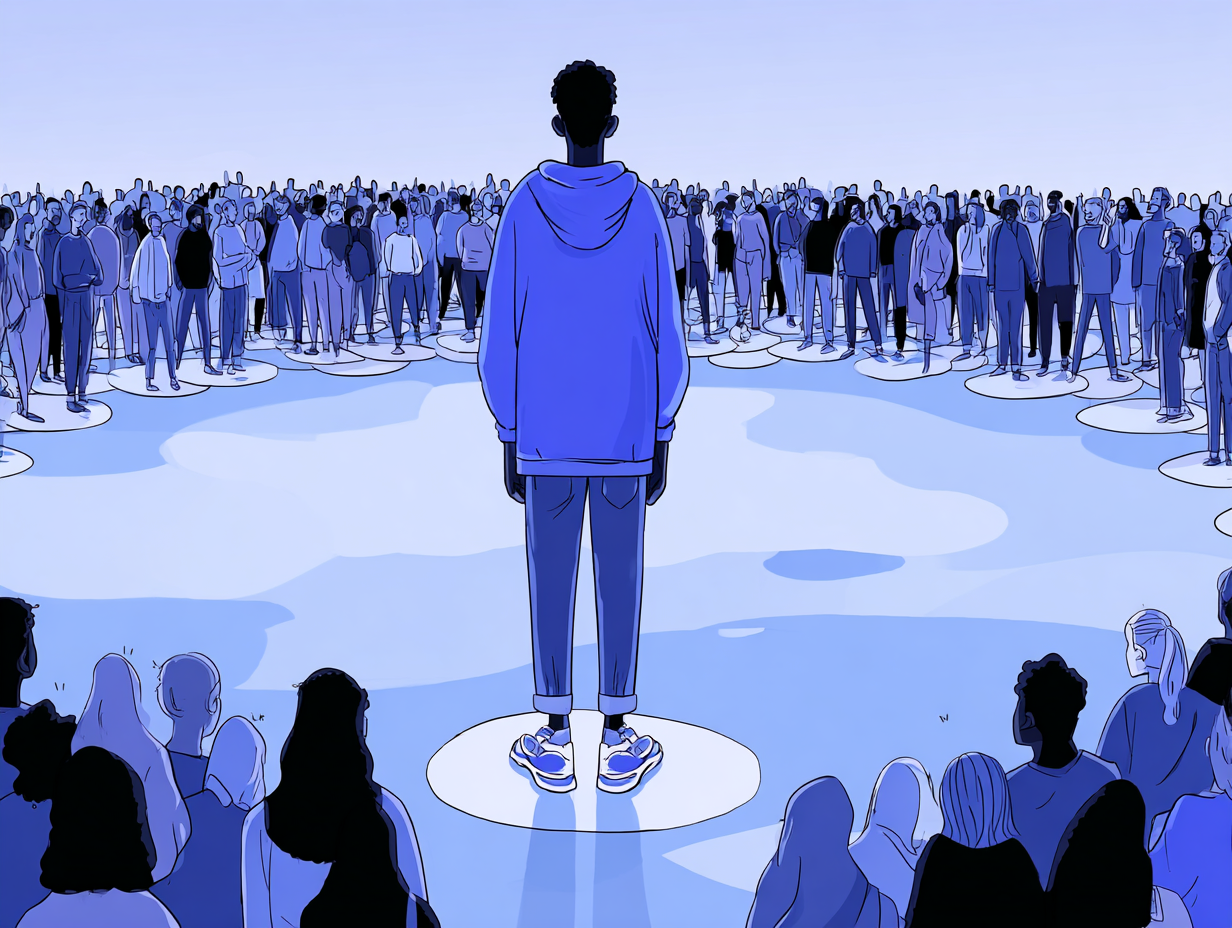
How Social Psychologists Work and Where They Do It
Social psychologists wear many hats — researcher, consultant, educator, policy adviser. Their work stretches far beyond the classroom. At universities, they design experiments to understand how people respond to social pressure, form impressions, or develop empathy. In corporations, they analyze team dynamics and communication patterns. In government and nonprofit organizations, they advise on public campaigns that encourage cooperation or reduce prejudice.
According to the American Psychological Association, social psychologists apply rigorous scientific methods — experiments, surveys, and statistical modeling — to uncover patterns in human interaction. They test ideas about persuasion, motivation, and bias the same way a biologist studies cells: through data and careful observation.
Here are a few places you’ll often find social psychologists working:
- universities and research institutions, leading studies or teaching behavioral science;
- corporations, where they support leadership training, marketing, and consumer insight;
- federal or local government agencies, designing programs that address public health, education, or justice;
- nonprofit organizations, helping communities improve communication and inclusion.
Ethics and confidentiality remain central to this work. Even when collecting data from groups, researchers must follow strict federal and institutional guidelines to protect participants’ privacy. Social psychologists who collaborate with companies or public agencies often follow both APA standards and federal research laws (IRB oversight, informed consent).
On the flip side, applied social psychologists might conduct workshops or consultation projects rather than research. For example, a psychologist could help a company assess implicit bias in hiring or advise a city department on encouraging civic participation. In all cases, the focus stays on improving systems rather than diagnosing individuals.
In short, whether they’re running lab studies or guiding social change, social psychologists help connect evidence with real human progress.
Education Path and Career Outlook
Becoming a social psychologist takes curiosity, persistence, and years of education — but for many, it’s a deeply rewarding path. Most start with a bachelor’s degree in psychology or behavioral science, followed by graduate study focused on research methods and statistics. Doctoral programs (Ph.D.) emphasize designing experiments, analyzing data, and publishing findings that expand what we know about human behavior.
The American Psychological Association notes that most research and academic positions require a doctorate, though some applied or assistant roles are open to those with master’s degrees. During graduate training, students often teach, assist in laboratories, or work with faculty on studies examining topics like prejudice, leadership, or motivation.
After earning a Ph.D., social psychologists may pursue careers in:
- higher education (teaching, conducting research, mentoring students);
- corporations (organizational consulting, marketing, or consumer behavior analysis);
- government and public policy (studying voting behavior, diversity, or communication);
- nonprofit or research organizations (community engagement, social impact projects).
According to the U.S. Bureau of Labor Statistics, psychologists working in research or academia typically earn between $85,000 and $110,000 per year, depending on experience and location. Positions in corporate or consulting settings can exceed that range, especially when psychologists lead applied behavioral projects.
Licensing requirements differ by role. Researchers who do not provide therapy generally do not need a state license, but those offering applied consultation or assessments to the public may require one. Regardless of setting, continuing education is vital — many professionals maintain membership in organizations like the Society for Personality and Social Psychology (APA Division 8) to stay current with new findings and ethical standards.
In short, the career path combines science and purpose. Social psychologists build knowledge that helps societies understand themselves, creating ripple effects that shape education, policy, and culture for decades.

When and Why You Might Consult a Social Psychologist
Most people never think of meeting a social psychologist directly — yet there are moments when their expertise makes a real difference. Social psychologists are often called in when communities, schools, or organizations face patterns of misunderstanding, discrimination, or conflict that ordinary conversation can’t fix.
For example, a company struggling with diversity or communication issues might bring in a social psychologist to study team dynamics and design bias-reduction workshops. Schools sometimes collaborate with them to address bullying or group exclusion. Government agencies consult social psychologists when developing public campaigns on health, safety, or environmental behavior.
Unlike clinical therapy, this kind of help focuses on systems, not symptoms. The goal isn’t to treat individual distress but to understand and improve collective behavior. According to APA Division 8, social psychologists frequently advise institutions on ethical decision-making, persuasion strategies, and public trust — areas that directly affect how society functions.
Here’s the thing: consulting a social psychologist can prevent larger problems later. Research from the Substance Abuse and Mental Health Services Administration shows that environments built on inclusion and empathy protect people’s well-being as much as formal counseling does. By addressing social stressors early, organizations reduce burnout, turnover, and conflict before they escalate.
If you ever feel that a workplace, school, or community is caught in repetitive tension or bias, seeking professional guidance from a social psychologist can help identify what’s fueling it. And if any situation feels emotionally overwhelming or unsafe, remember: you can always call or text 988 for the Suicide and Crisis Lifeline in the U.S. If there’s immediate danger, dial 911.
Social psychologists may not provide therapy, but they help shape the healthier environments where therapy — and everyday life — can thrive.
References
- American Psychological Association. Social Psychology. 2023.
- Society for Personality and Social Psychology (APA Division 8). About SPSP. 2024.
- Harvard Health Publishing. The Health Benefits of Strong Relationships. 2023.
- U.S. Bureau of Labor Statistics. Psychologists: Occupational Outlook Handbook. 2024.
- American Psychological Association. Where Social Psychologists Work. 2023.
- Simply Psychology. Social Psychology Explained. 2023.
- Substance Abuse and Mental Health Services Administration (SAMHSA). 988 Suicide and Crisis Lifeline. 2024.
Conclusion
Social psychologists look beyond individual minds to see the invisible patterns that connect us. Their work explains why kindness spreads, how bias forms, and what keeps groups cooperating. Through research and application, they help make workplaces, schools, and communities fairer and more resilient.
If you ever find yourself struggling in a social environment or noticing conflict in your organization, know that help doesn’t always mean therapy — sometimes it means understanding the systems that shape us. And if distress ever feels too heavy, call or text 988 in the U.S. to reach the Suicide and Crisis Lifeline. Help is always there.
Frequently Asked Questions
What does a social psychologist study?
Social psychologists study how people's thoughts, feelings, and actions are influenced by others. Topics include conformity, prejudice, persuasion, and relationships.
Is a social psychologist the same as a therapist?
No. Social psychologists usually work in research or organizational settings, while therapists focus on helping individuals through clinical treatment or counseling.
Where can social psychologists work?
They work in universities, corporations, nonprofits, and government agencies. Many study teamwork, leadership, or social change in applied environments.
How do you become a social psychologist?
Most earn a bachelor's in psychology, followed by a Ph.D. in social psychology. Graduate students learn experimental design, data analysis, and theory application.
Can social psychology help improve relationships?
Yes. By understanding empathy, communication, and bias, social psychology offers practical tools for strengthening personal and professional relationships.
When should organizations consult a social psychologist?
When patterns of conflict, inequality, or low morale appear. Social psychologists analyze group behavior and design solutions that encourage cooperation and inclusion.