How to Motivate a Child to Study — Psychologist’s Advice
Real motivation doesn’t come from pressure or threats - it grows when a child feels safe and valued. Kids start to care about learning when they sense that their effort matters more than perfection. Psychologists often tell parents that connection is the real foundation of discipline: when you listen, encourage, and share small successes, a child begins to believe, “I can do this.” And once that belief takes root, curiosity and pride start to return on their own.
In this guide, you’ll learn why children lose motivation to study, how to rebuild it step by step, and when to consider professional help if frustration turns into deeper emotional distress. These psychologist-backed insights can make learning feel lighter - for both you and your child.

Why Children Lose Motivation to Study
Children rarely lose interest in learning overnight. What looks like laziness or defiance is often a sign of emotional overload, fatigue, or fear of failure. Understanding these hidden causes helps parents respond with empathy instead of frustration.
Here’s the thing: motivation in kids isn’t a switch you can turn on. It grows out of curiosity, confidence, and a sense of control. When those needs are blocked, even bright students start to resist schoolwork.
The Psychology Behind Motivation
According to the American Psychological Association, children are naturally driven by intrinsic motivation - the inner satisfaction that comes from learning something new. When learning feels safe and meaningful, curiosity naturally returns - and with it, quiet confidence. But when school becomes a cycle of correction and comparison, kids stop learning for themselves. Their motivation shifts to chasing rewards - grades, praise, or extra screen time - and the joy of discovery fades. Over time, that pressure breeds anxiety, not ambition.
Several psychological needs shape how children engage with school:
- Autonomy. When kids feel micromanaged, they often push back just to regain control.
- Competence. Repeated failure or harsh criticism chips away at confidence.
- Connection. When family life feels tense, studying starts to carry emotional weight.
Each of these - autonomy, competence, and connection - must be met for motivation to take root.
Emotional and Environmental Triggers
Sometimes what looks like “laziness” is really emotional overload. A child who’s being bullied, feels family tension, or fears disappointment may avoid schoolwork to escape the stress. Experts at the Child Mind Institute note that this kind of exhaustion often shows up as procrastination, irritability, or conveniently “forgetting” assignments.
External factors matter just as much. Too little sleep, too any screens, and chaotic routines make it nearly impossible for the brain’s prefrontal cortex - the part responsible for focus and planning - to do its job. Predictability and rest are as essential to learning as textbooks and teachers.
When Pressure Backfires
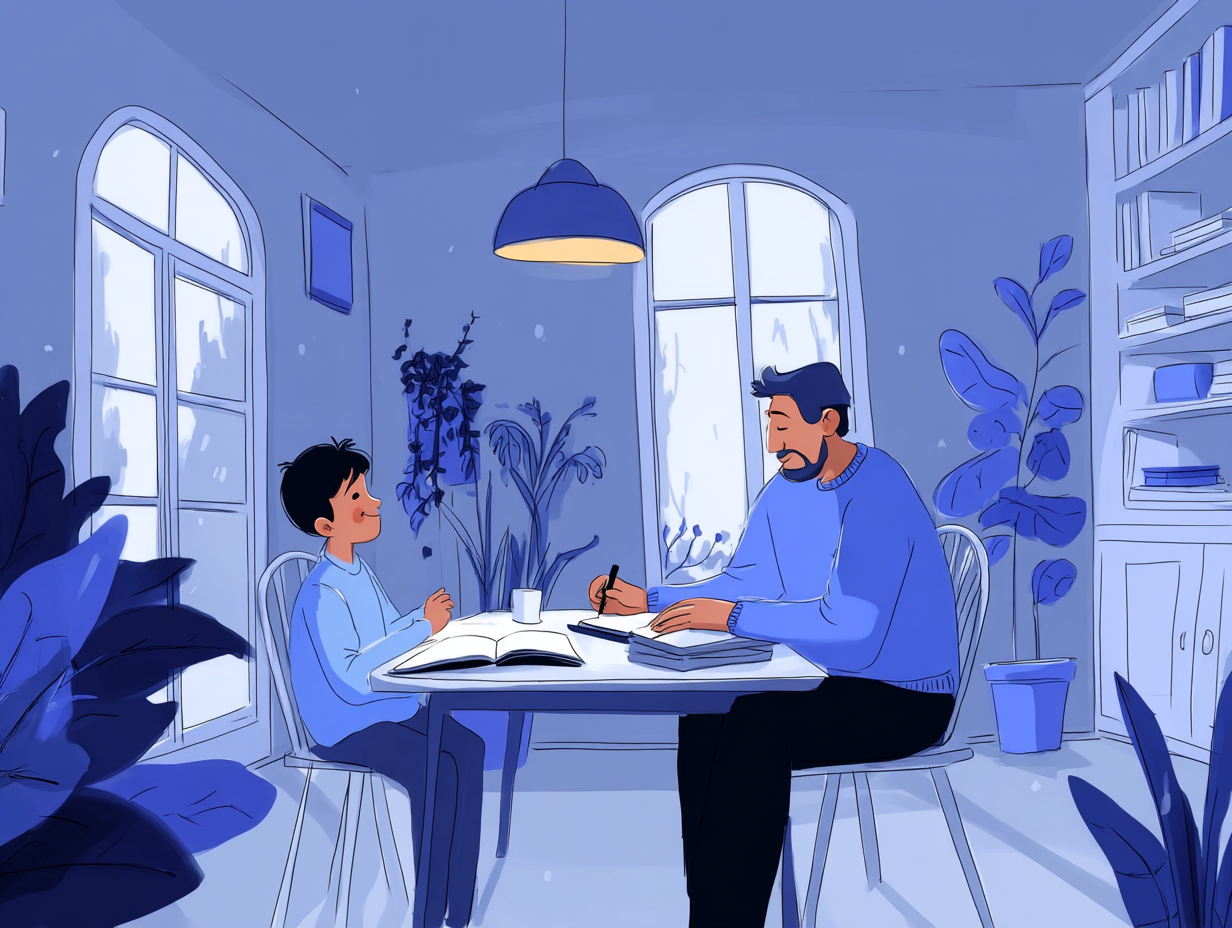
Many parents try to motivate with rules or rewards: “No video games until homework is done.” It may work for a while, but it teaches the wrong lesson - that learning is a chore to survive, not something meaningful to master. Over time, kids link studying with tension instead of curiosity.
A better question isn’t “How do I make my child study?” but “What’s getting in the way of my child’s interest?” That simple shift - from control to understanding - is where real motivation begins.
Important to know If your child’s disinterest lasts for weeks, affects sleep or mood, or includes statements like “I’m stupid” or “School doesn’t matter,” it may signal deeper emotional distress. Talk with a licensed child psychologist or counselor. In a crisis, call or text 988 (Suicide and Crisis Lifeline in the U.S.). If there’s immediate danger, dial 911.
Table: Common Causes of Study Resistance in Children
| Cause | Why It Happens | What Helps |
|---|---|---|
| Lack of autonomy | Child feels overcontrolled and powerless | Offer limited choices, involve them in planning study time |
| Fear of failure | Perfectionism or past criticism reduces confidence | Emphasize effort over results; model learning from mistakes |
| Emotional overload | Stress, bullying, or family tension make focus difficult | Create calm routines; address emotional needs first |
| Low relevance | Schoolwork feels disconnected from real life | Link lessons to personal interests and everyday examples |
| Fatigue and distraction | Poor sleep, irregular meals, excessive screen time | Ensure rest, nutrition, and scheduled tech breaks |
What Parents Can Do at Home
Once you understand why motivation fades, the next step is rebuilding it - gently, through structure and empathy. Home is where children form their earliest beliefs about learning. When parents make studying feel safe and rewarding, motivation follows naturally.
Create Predictable Routines
Children do best when life feels predictable. Having a set study time and a calm, clutter-free spot to work helps their brains shift into focus mode with less resistance. Psychologists often suggest short, focused bursts - about 20 to 30 minutes for younger kids - followed by a quick break to reset. That rhythm keeps learning engaging and teaches the brain that effort is manageable, not exhausting.
Even small rituals matter: setting up materials, lighting a desk lamp, or playing soft background music can signal “study time” to the nervous system. Predictability helps the body and mind settle into focus.

Set Realistic Expectations
Perfectionism - in either parent or child - kills motivation. Replace “You must get all A’s” with “Let’s do our best and learn from mistakes.” Praise effort and persistence rather than results. According to Harvard Education researchers, children who receive process-focused feedback (“You worked hard on that problem”) develop stronger long-term motivation than those rewarded only for outcomes.
Kids Reflect What You Model
Children naturally copy the adults around them. When they see you read, ask questions, or get excited about learning something new, they quietly take that in. You don’t need a speech - just share small moments: “I just learned something cool,” or “Let’s figure that out together.” When curiosity feels like something the whole family does, learning stops being homework and starts being part of life.
Keep Rewards in Perspective
Small rewards - a bit of screen time, choosing dinner, a favorite snack - can help kids get started. But genuine motivation grows when they feel involved, not managed. Try changing the script from “Do your homework so you can earn this” to “How could you make this project more interesting for yourself?” Let them make choices: pick a topic, add drawings, build a chart. When kids feel ownership, they stop working to please and start working because it feels like theirs.
Set Boundaries Without Turning It Into a Battle
You don’t have to fight screens - just make limits clear and predictable. Homework first, fun later. Add short, healthy breaks for stretching or snacks, and try keeping devices out of reach before bedtime so their minds can slow down. It’s not about punishment; it’s about helping kids learn balance in a world that never really turns off.
Stay Grounded When Things Get Tense
Every parent hits that wall - the moment when homework turns into a power struggle. When it happens, pause. Take a slow breath and say something simple like, “This feels hard right now. Let’s step away and come back in ten minutes.” That calm moment teaches far more than any lecture. Kids learn how to handle frustration by watching you do it.
Here’s the thing: children remember how we make them feel during difficult moments far more than what we say. When they feel trusted, they start trusting themselves - and that’s when motivation takes root.
Communication That Builds Motivation
Motivation grows in the space between words - in how parents talk to their children, not at them. A calm, respectful tone teaches that learning is a shared process, not a power struggle. When conversations feel safe, kids become more open to guidance.

Listen Before You Lecture
Start by understanding what’s behind the resistance. Ask open-ended questions like:
- “What’s the hardest part about homework for you?”
- “What would make studying easier?”
- “Do you feel worried about anything at school?”
Then, really listen - without interrupting or rushing to fix things. Active listening validates emotions and helps children feel capable rather than controlled. The American Psychological Association notes that when kids feel heard, their cooperation and motivation increase significantly.
Replace Criticism with Collaboration
Phrases like “You’re not trying hard enough” or “Why can’t you focus?” trigger defensiveness. Try reframing: “Let’s figure out what’s making this tricky,” or “I can see you’re tired; how about a short break?” Collaboration turns tension into teamwork.
When parents share problem-solving responsibility - for example, by saying “What’s your plan for finishing this?” - kids develop autonomy and confidence. These are the true foundations of lasting motivation.
Encourage Emotional Expression
Children often act out because they can’t verbalize feelings of frustration, shame, or fear. Help them name emotions: “It sounds like you’re frustrated because the math feels confusing.” Labeling emotions lowers their intensity, teaching kids emotional literacy - a crucial skill for learning and self-regulation.
Use Praise as Guidance, Not Control
Praise shapes motivation when it’s sincere and specific. Instead of “Good job,” say “You stayed focused even when that was hard.” This highlights effort and perseverance, reinforcing intrinsic motivation. Avoid overpraising, which can create pressure or dependence on approval.
Be Mindful of Nonverbal Cues
Tone, posture, and facial expressions communicate more than words. A calm presence tells children, “I believe in you.” Even short eye contact or a supportive gesture can de-escalate stress during study time.
Here’s the thing: children remember how we make them feel during difficult moments far more than what we say. When they feel trusted, they start trusting themselves - and that’s when motivation takes root.
When to Seek Professional Help
Even the most patient parent eventually runs out of ideas. When every strategy - reminders, rewards, pep talks - stops working and school has become a daily battle, it might be time to reach out for extra help. Asking for support isn’t giving up; it’s one of the most caring things you can do to protect your child’s well-being.
Recognizing When It’s More Than Motivation
Psychologists say to look closer when resistance to school is joined by deeper emotional or physical changes:
- frequent sadness, worry, or irritability;
- sudden drop in grades or focus;
- pulling away from friends or activities they used to enjoy;
- stomachaches or headaches before school;
- phrases like “I’m dumb,” “I can’t do anything right,” or “School doesn’t matter.”
These aren’t just signs of laziness or defiance - they’re signals that your child may be struggling with something bigger. According to the National Institute of Mental Health, ongoing shifts like these can point to anxiety, depression, or learning challenges that respond best to early support. The sooner you act, the easier it is to get things back on track.
What a Child Psychologist Can Do
A child psychologist begins by looking at the whole picture - not just the school struggle itself, but everything around it: emotions, home life, friendships, and the classroom environment. Through gentle conversations, play-based activities, or simple structured exercises, they try to understand what’s really getting in the way of motivation.
Therapy can look different for every family:
- Cognitive-behavioral work (CBT): teaches kids to catch unhelpful thoughts like “I can’t do this” and replace them with ones that build patience and confidence.
- Parent - child sessions: give families tools to communicate more clearly, set routines that actually stick, and ease tension around homework or expectations.
- Collaboration with teachers: keeps everyone on the same page, so the support your child gets at home carries into the classroom.
The goal isn’t to “fix” your child - it’s to build an environment where they feel safe, capable, and curious again. When that safety returns, motivation follows naturally.
Normalizing Professional Support
In the U.S., licensed child psychologists, counselors, and social workers are trained to work collaboratively with families. Therapy for kids often looks playful - drawing, storytelling, or games - but it helps children express feelings they can’t yet verbalize.
Here’s the key: getting help early often shortens the duration of distress and strengthens resilience. Many families find that even a few sessions of guidance shift the emotional climate at home.
Important to knowIf your child ever talks about hopelessness or self-harm, treat it as an emergency. Call or text 988 (Suicide and Crisis Lifeline in the U.S.) for free, confidential support 24/7. If there is immediate danger, call 911. You don’t have to face this alone - help is always available.
Techniques Psychologists Recommend for Sustainable Motivation
When parents ask psychologists how to motivate a child to study, the best answers blend structure, emotional support, and gradual independence. There’s no one magic formula - but evidence-based techniques can make learning feel lighter and more meaningful.
1. Show That Effort Pays Off
Kids don’t need perfect pep talks - they need proof that practice works. When you notice effort, not results, something changes. Try saying, “You really stuck with that problem,” instead of “You’re so smart.” Research from Stanford backs this up: children praised for persistence are more likely to try again after a tough moment. They start to believe that getting better is something they can control.
2. Start Small, Celebrate Often
Big goals don’t mean much to kids - they live in the “right now.” Telling a child to “get better grades” is like asking them to climb a mountain they can’t even see. Start closer. One math page. Ten quiet minutes with a book. Remembering to pack homework. That’s progress.
Notice it when it happens. Say, “Hey, that looked easier for you today,” or just smile and nod. Maybe stick a star on the page, maybe just say thanks for trying. Those tiny moments of recognition are fuel. They tell your child, “I see you. What you do matters.” And little by little, that’s what builds real motivation - not rewards, but being noticed.
3. Make It Matter
Kids learn best when what they’re learning connects to life. If you’re cooking, ask them to double a recipe. Talk about the animals they’re obsessed with. Let them teach you what they just learned in class. When they see learning everywhere, school stops feeling like a job and starts feeling like part of the world.
4. Cool Down Before Fixing Things
When frustration hits, solving the problem right away rarely works. Take a breath together first - maybe a slow count of four in, six out. Go get water, walk to another room. Once you both calm down, the brain opens back up for learning. Kids watch how you handle stress far more than they listen to what you say about it.
5. Let Them See Progress
Write plans where they can see them - on the fridge, a whiteboard, a notebook. Cross things off when they’re done. That simple act releases a small hit of satisfaction and reminds them they can finish things. Progress in sight is progress that sticks.
6. Ask, Don’t Advise
After study time, keep it light: “What helped you today?” or “What got in the way?” Then listen. Reflection works better than lectures because it helps kids think for themselves. Over time, those tiny check-ins turn into self-motivation.
7. Keep Some Fun in It
Play doesn’t ruin focus - it fuels it. Make quick games, small challenges, or trivia rounds. Add a laugh somewhere. A relaxed brain learns faster than a stressed one, every time.
Important to knowMotivation isn’t about being cheerful all the time. Some resistance means they’re growing. The real win is when your child starts thinking, “This is tough, but I can figure it out.” That’s the spark that keeps learning alive.
References
- American Psychological Association. Parenting and Child Motivation. (2023). Explains how parental warmth, autonomy support, and balanced expectations foster children’s intrinsic motivation and reduce resistance to studying.
- Harvard Graduate School of Education. What Motivates Students to Learn. (2023). Discusses how curiosity, relevance, and autonomy lead to sustained engagement in learning.
- Child Mind Institute. When Kids Refuse to Go to School. (2023). Highlights emotional causes behind study avoidance, including anxiety, stress, and perfectionism.
- National Institute of Mental Health. Child and Adolescent Mental Health. (2022). Provides an overview of early signs of emotional distress and the benefits of timely psychological support.
- Stanford University Center for Educational Research. How a Growth Mindset Helps Students Learn. (2023). Describes how praising effort over intelligence builds resilience, motivation, and long-term academic persistence.
Conclusion
Children don’t need constant reminders to study - they need to feel safe, capable, and seen. Motivation thrives when parents focus on connection instead of control, support instead of pressure.
By building steady routines, celebrating small wins, and keeping communication open, families can turn homework from conflict into collaboration. And when the struggle feels heavier than expected, reaching out to a child psychologist isn’t giving up - it’s giving your child every chance to succeed with confidence and joy.
If distress or hopelessness ever surface, call or text 988 (Suicide and Crisis Lifeline in the U.S.), or dial 911 in an emergency. Professional help is confidential, compassionate, and always within reach.
Frequently Asked Questions
What is the best way to motivate a child to study?
Start with empathy and structure. Create a calm routine, praise effort instead of grades, and connect learning to your child’s interests. Psychologists emphasize curiosity and emotional safety as the strongest motivators.
How do I know if my child’s lack of motivation is serious?
If your child shows long-lasting sadness, irritability, or withdrawal from activities they once enjoyed, consider consulting a licensed child psychologist. Emotional distress can sometimes appear as loss of motivation.
Should I use rewards to make my child study?
Short-term rewards can help start good habits, but they should gradually give way to intrinsic motivation. Encourage your child to find meaning and pride in learning rather than working only for prizes or screen time.
When should I take my child to a psychologist?
If school resistance causes anxiety, sleep problems, or constant conflict, professional help can clarify the root causes. A psychologist can guide both child and parents toward practical coping tools and emotional balance.
How can I talk to my child about school without arguments?
Ask open questions, listen without judgment, and focus on shared problem-solving. Instead of saying “Why didn’t you study?”, try “What can make homework less stressful for you?” This shift builds trust and motivation.
Can therapy really improve school motivation?
Yes. Child-focused therapy can uncover emotional barriers and teach coping strategies. Many families report that children regain curiosity, focus, and self-confidence once they feel supported both at home and in therapy.