Autism vs OCD: Key Differences, Overlap, and How to Tell Them Apart


Repeating an action can leave you wondering whether it's a habit, a coping strategy, or something else. Autism vs OCD can be confusing because both may involve routines, repeated movements, and distress when something feels unfinished or changes unexpectedly. Watching the behavior alone rarely gives you the answer.
A person with autism might follow a familiar route because predictability feels comfortable or helps manage sensory demands. A person with obsessive-compulsive disorder (OCD) might repeat a route to neutralize a distressing thought or prevent a feared outcome. But these examples are not diagnostic rules. Some people experience both conditions, and the reasons behind a behavior can overlap.
This guide explains the main differences, where autism and OCD intersect, and what clinicians look for during an assessment. You'll also learn when repeated behaviors deserve closer attention and how to seek qualified support in the United States.
Autism vs OCD: What Are the Key Differences?
Autism and obsessive-compulsive disorder (OCD) can both involve repetition, but clinicians look for different underlying patterns. Autism is a neurodevelopmental condition involving differences in social communication alongside restricted or repetitive behaviors. OCD involves obsessions, compulsions, or both, with symptoms that consume time or cause significant distress or impairment.
Understanding Autism Spectrum Disorder
Autism spectrum disorder (ASD) begins in early development, even when a person is identified much later. The National Institute of Mental Health describes differences in social interaction and communication, focused interests, routines, and sensory responses. A person with autism might replay the same song during a noisy commute because its familiarity makes the experience easier to manage.

Some routines make everyday life easier rather than more difficult. Their meaning depends on their purpose, a person's needs, and whether they create difficulties or provide useful regulation. Autism is not defined by unwanted intrusive thoughts.
Understanding Obsessive-Compulsive Disorder
OCD can involve intrusive thoughts, images, or urges, as well as repeated physical or mental acts. For instance, someone may check a stove repeatedly after leaving home, not because the routine feels pleasant, but because doubt about a possible fire remains intense. Some compulsions are silent, such as mentally repeating a phrase.
The American Psychiatric Association notes that obsessions or compulsions must be time-consuming or cause clinically significant distress or impairment. A person does not need to recognize every compulsion as unreasonable for OCD to be considered.
Key Differences at a Glance
These comparisons show what clinicians consider, not how to diagnose yourself.
| Feature | Autism | OCD |
|---|---|---|
| Core pattern | Social-communication differences and restricted, repetitive behaviors | Obsessions, compulsions, or both |
| Behavioral function | May support predictability or sensory regulation | Often reduces distress or perceived threats |
| Intrusive thoughts | Not a defining diagnostic feature | Common, sometimes difficult to recognize |
| Development | Signs begin during early development | Can begin in childhood or adulthood |
| Distress | May follow sensory overload or disrupted routines | May follow obsessions or interrupted compulsions |
These distinctions sometimes blur. An action can serve more than one purpose, and a person may experience both conditions. That is why clinicians consider developmental history and the function of behaviors, rather than diagnosing from a checklist of visible habits.
Similar Behaviors, Different Functions
Two people may straighten the same row of books. One enjoys the symmetry; the other feels unable to stop. In autism, repetition may support sensory regulation, predictability, or enjoyment. In OCD, repetitive actions often serve to reduce distress, respond to an intrusive thought, or relieve an uncomfortable sense that something is incomplete. However, these motivations are not always easy to separate.
Routines, Sensory Regulation, and Stimming
Repetitive behaviors are part of the diagnostic profile of autism spectrum disorder. They can include rocking, hand movements, repeating sounds, following familiar schedules, or spending considerable time on a particular interest.
Some of these actions are forms of stimming, short for self-stimulatory behavior. Stimming may help a person regulate sensory input, manage emotions, or concentrate. It does not necessarily indicate anxiety or a psychological problem.
Consider a student who repeatedly rubs the edge of a sweater during a crowded school lunch. The texture provides familiar sensory feedback in an environment filled with unpredictable sounds. Removing the sweater might increase discomfort, not because the student expects something terrible to happen, but because a useful source of regulation is gone.
Routines can serve a similar purpose. Eating the same breakfast or taking a familiar route may reduce the effort of processing unexpected changes. A disrupted routine can still produce genuine distress, particularly when sensory demands or uncertainty become overwhelming.
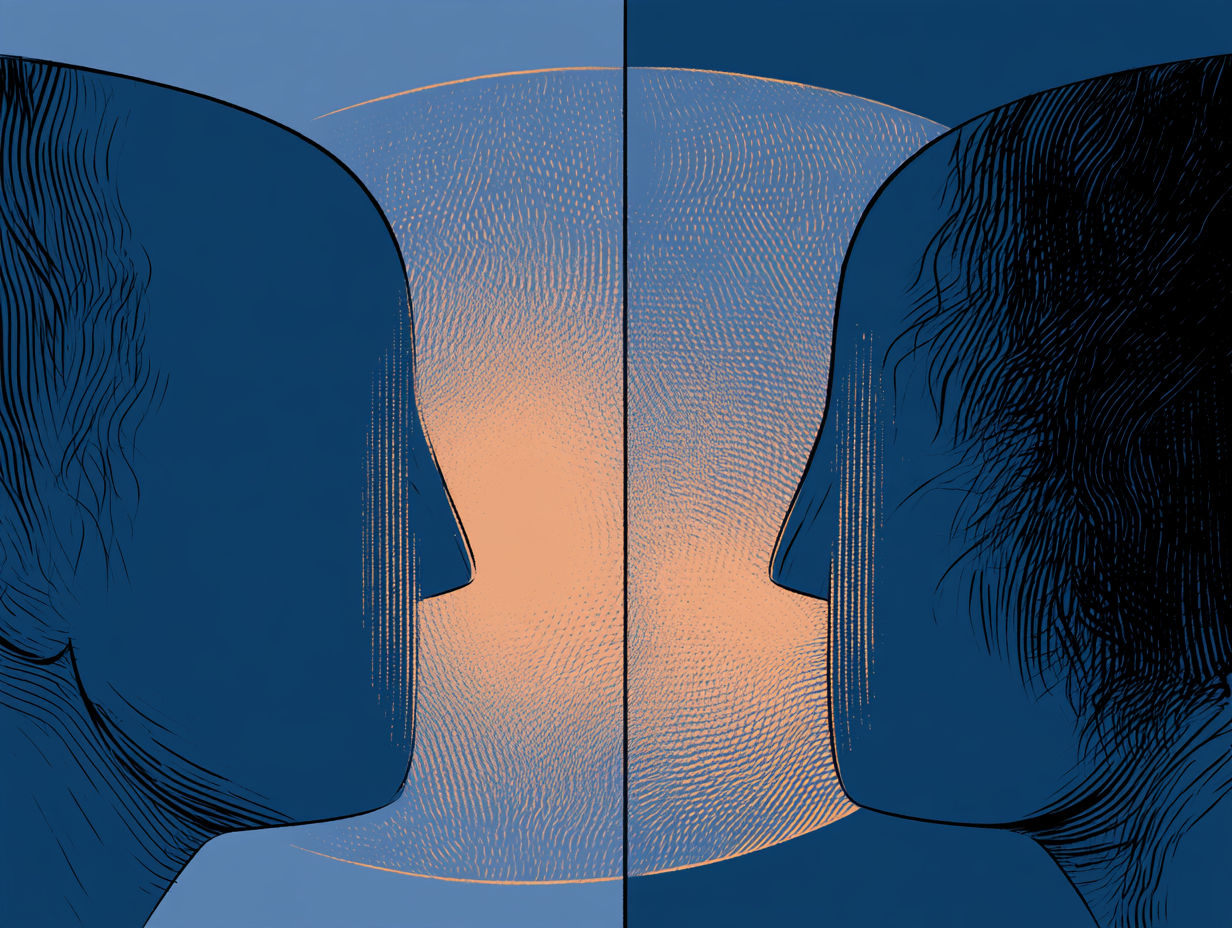
A familiar routine does not necessarily reflect an attempt to quiet an intrusive thought. Repetitive behaviors may be meaningful, enjoyable, or necessary for navigating everyday environments. Clinicians generally consider their function before deciding whether any intervention is appropriate.
Intrusive Thoughts, Checking, and Compulsions
In OCD, repetitive behavior often develops around an uncomfortable internal experience. A person might experience an unwanted thought, question their memory, or feel compelled to repeat an action until it seems complete.
Imagine someone who checks an apartment door five times before leaving for work. Each check briefly reduces doubt about whether the door is locked. Minutes later, uncertainty returns, creating another urge to check. The repeated behavior offers short-term relief without resolving the underlying obsession.
Compulsions are not always visible. Some people mentally review conversations, count silently, repeat reassuring phrases, or search their memories for evidence that they have done nothing wrong.
According to the National Institute of Mental Health, compulsions can become difficult to control and may interfere significantly with daily activities. People experiencing OCD often recognize the burden of their rituals, although insight varies.
Not every compulsion involves a clearly articulated fear. Some people describe a powerful sense of incompleteness or a need for something to feel "just right." This matters when comparing OCD with autism because both conditions can involve arranging objects, repeating movements, or discomfort when routines are interrupted.
When Anxiety, Comfort, and Repetition Overlap
A familiar routine can be soothing and anxiety-reducing at the same time. Someone may organize their desk because visual order improves concentration. Another person may arrange identical objects repeatedly because an intrusive sense of wrongness becomes unbearable until everything feels exact.
The same person might experience both motivations.
A systematic review published in the Journal of Autism and Developmental Disorders examined 31 studies and found considerable overlap in the intensity and content of repetitive behaviors associated with autism and OCD. Appearance alone therefore offers limited diagnostic information.
Clinicians may explore what happens before a behavior, what the person expects if they resist it, and how they feel afterward. They also consider whether the behavior has existed since early development or emerged alongside new distressing thoughts.
For someone questioning their own experiences, recording these details can make a clinical conversation more productive. The goal is not to label every habit as a symptom, but to understand which behaviors support everyday functioning and which have become difficult to control or interfere with daily life.
Can Autism and OCD Occur Together?
Yes, a person can have both autism spectrum disorder and obsessive-compulsive disorder. Studies document co-occurring autism and OCD, although prevalence estimates differ by age group, study population, and assessment methods. When both are present, identifying the purpose of repetitive behaviors becomes particularly important.
What Co-Occurring Autism and OCD May Look Like
A person with autism might follow a consistent evening routine because its predictability makes daily life more manageable. That same person could also experience intrusive fears about contamination and repeatedly wash their hands to reduce anxiety. Although both behaviors involve repetition, they serve different purposes.
Not every behavior fits neatly into one category. Someone may enjoy arranging books by color but also feel compelled to restart the arrangement whenever an unwanted thought interrupts the process. Sensory preferences, familiar routines, and compulsions can exist alongside one another.
Having autism does not prevent someone from developing OCD, and experiencing OCD does not rule out autism.
Why One Condition Can Mask the Other
OCD symptoms may go unrecognized when clinicians or family members interpret every repetitive action as part of autism. Conversely, lifelong social communication differences and sensory needs may be overlooked when attention focuses exclusively on compulsive behaviors.
The International OCD Foundation emphasizes that distinguishing these overlapping symptoms requires careful clinical assessment. A person's developmental history, changes in behavior, and experiences of distress provide valuable information.
For example, a familiar routine that once felt comforting but has become exhausting, time-consuming, or connected to intrusive fears deserves closer examination. Recognizing both conditions allows clinicians to address OCD-related distress without automatically treating helpful autism-related routines as symptoms that need eliminating.
If you've spent years trying to understand your routines, getting a clear explanation may take more than one conversation with a specialist.
Autism vs OCD: Clinical Assessment and Diagnosis
Clinicians distinguish autism and OCD by examining a person's developmental history, the purpose of repetitive behaviors, and their effects on daily life. No single habit, questionnaire score, or brief observation can reliably separate the two conditions, particularly when they occur together.
Developmental History and DSM-5-TR Criteria
Under DSM-5-TR criteria, an autism diagnosis involves persistent differences in social communication and interaction, along with restricted or repetitive patterns of behavior or interests. These features begin during early development, although they may become more noticeable when social demands increase. An OCD assessment instead examines obsessions, compulsions, or both, and whether they are time-consuming or cause significant distress or impairment.
A clinician may ask about childhood friendships, communication, sensory sensitivities, and familiar routines. They will also explore when distressing thoughts or rituals began. OCD can also start in childhood, so age of onset alone cannot settle the question.
Understanding the Purpose and Impact of Behaviors
What happens just before someone repeats an action? Do they seek sensory comfort, respond to an unwanted thought, or try to quiet a persistent feeling that something is wrong? The answers provide context, although motivation alone cannot establish a diagnosis.
For example, a teenager may repeatedly ask whether the stove is off. A clinician would explore whether the questions reflect a need for predictable reassurance, a feared catastrophe, or a combination of factors. They would also ask how much time the pattern consumes and what happens when reassurance is unavailable.
What a Professional Assessment May Involve
Assessment may include clinical interviews, behavioral observation, developmental records, and standardized measures selected for the person's age and communication needs. When relevant and available, clinicians may seek information from family members or other people who know the person's developmental history, with appropriate consent.
The CDC explains that autism assessment draws on developmental history and behavior. For children, the agency cautions against basing a diagnosis on a single assessment tool. For OCD, clinicians also examine intrusive experiences, mental rituals, avoidance, and functional impairment.
A licensed psychologist, psychiatrist, or appropriately trained specialist can explain which evaluations are needed. If both conditions are possible, seek someone experienced in assessing their overlap.
When Should You Seek an Evaluation or Treatment?
Seek a professional evaluation when repetitive behaviors, unwanted thoughts, or distress start disrupting school, work, sleep, or relationships. You do not need to decide whether autism or OCD explains the symptoms before asking for help.
Signs That Professional Support May Be Needed
Pay attention to changes in how long behaviors take and how difficult they are to interrupt. For example, checking a door for an hour every morning, avoiding activities because of intrusive fears, or becoming increasingly distressed by a new ritual warrants discussion with a clinician. A familiar, helpful sensory routine alone is not evidence that treatment is needed.
Treatment Options and Individualized Support
According to the National Institute of Mental Health, exposure and response prevention (ERP), a form of cognitive behavioral therapy, is an effective treatment for OCD. A trained therapist helps people face obsession-related triggers while reducing compulsive responses. A prescribing clinician may also discuss medication, including selective serotonin reuptake inhibitors (SSRIs).
When autism and OCD coexist, the International OCD Foundation recommends adapting ERP to communication preferences, sensory needs, and processing pace. Treatment should target distressing compulsions, not automatically eliminate helpful forms of self-regulation.
Finding Help in the United States
You don't need to arrive at an appointment with the right label. Describing what happens and how it affects your day is a useful place to start.
Your primary care office may be the simplest first call. You can also check your insurance directory or the International OCD Foundation's provider directory. Ask whether the licensed psychologist, clinical social worker, counselor, or psychiatrist has experience assessing both conditions. Confirm insurance coverage, copays, and telehealth availability.
If you are in a mental health crisis, call or text 988 (Suicide & Crisis Lifeline). If you or someone else is in immediate danger, call 911.

References
1. National Institute of Mental Health. Autism Spectrum Disorder. 2025.
2. National Institute of Mental Health. Obsessive-Compulsive Disorder: When Unwanted Thoughts or Repetitive Behaviors Take Over. 2023.
3. Centers for Disease Control and Prevention. Clinical Testing and Diagnosis for Autism Spectrum Disorder. 2025.
4. American Psychiatric Association. What Is the DSM?. 2025.
5. O'Loghlen J., McKenzie M., Lang C., and Paynter J. Repetitive Behaviors in Autism and Obsessive-Compulsive Disorder: A Systematic Review. Journal of Autism and Developmental Disorders, 2025.
6. International OCD Foundation. Treatment. n.d.
7. Substance Abuse and Mental Health Services Administration. Crisis Help: Suicide, Mental Health, Drug, and Alcohol Issues. 2023.
Conclusion
Autism and OCD can look alike when routines and repetition are viewed from the outside, but their clinical features and the purposes behind behaviors differ. Autism involves early developmental differences in social communication alongside restricted or repetitive patterns. OCD involves obsessions, compulsions, or both, often with significant distress or disruption.
Because the two conditions can coexist, a single habit cannot confirm or exclude either diagnosis. A qualified clinician can examine developmental history, intrusive experiences, sensory needs, and everyday functioning to guide an accurate assessment. Understanding these differences makes it easier to seek support that addresses distress without unnecessarily changing routines that serve a useful purpose.
Frequently Asked Questions
Can OCD be mistaken for autism?
Yes. Repetitive behaviors, rigid routines, and discomfort with uncertainty can appear in both conditions. However, autism also involves developmental differences in social communication, while OCD involves obsessions, compulsions, or both. A qualified clinician examines the broader pattern rather than relying on one behavior.
Is stimming the same as an OCD compulsion?
Not necessarily. Stimming often provides sensory feedback, emotional regulation, or enjoyment, while OCD compulsions typically respond to intrusive thoughts or uncomfortable feelings. The behaviors may look similar, and their functions can overlap, so appearance alone cannot establish the difference.
Can someone have both autism and OCD?
Yes. Autism and OCD are separate conditions that can occur together. A person may rely on familiar routines for sensory comfort while also experiencing unwanted thoughts and distressing compulsions. An assessment that considers both conditions can clarify which behaviors require clinical attention.
Do people with autism experience intrusive thoughts?
Yes. People with autism can experience intrusive thoughts, including those associated with OCD. However, unwanted thoughts alone do not establish an OCD diagnosis. Clinicians examine their frequency, emotional impact, and connection to compulsive behaviors or avoidance.
How do doctors diagnose OCD in someone with autism?
Clinicians assess obsessions, compulsions, distress, and interference with daily functioning. They also review developmental history and consider how sensory needs or communication differences affect behavior. Interviews and standardized assessment tools may support the evaluation, but no single questionnaire determines the diagnosis.
Does ERP work for people who have both autism and OCD?
Exposure and response prevention (ERP) is an evidence-based treatment for OCD and can also benefit people with co-occurring autism. Therapists may adapt communication, session structure, and exposure exercises to individual needs. Treatment focuses on distressing OCD symptoms rather than automatically eliminating helpful sensory routines.