How to Save Your Marriage: 10 Steps When Things Feel Broken
Marriage can reach a point where everything feels heavy - conversations turn into arguments, distance grows, and even small moments feel strained. If you're trying to save your marriage, you're likely dealing with a mix of frustration, fear, and a quiet hope that things can still change. The truth is, many relationships go through periods of disconnection, and in many cases, repair is possible with the right approach.
In this guide, you'll learn why marriages break down, what actually helps rebuild connection, and how to take practical steps forward. You'll also understand when it makes sense to seek support from a licensed therapist and what signs to pay attention to along the way.

Can a Broken Marriage Be Saved? What Psychology Says
In many cases, yes - a broken marriage can be repaired, but not by going back to how things were before. Real change usually means building a new way of relating, not restoring the old one.
Research from the American Association for Marriage and Family Therapy shows that many couples improve with intentional effort and, when needed, professional support. But outcomes depend on two key factors: willingness from both partners and the ability to change patterns, not just intentions.
What “broken” actually means
When people say their marriage is broken, they usually don’t mean one single event. More often, it reflects a pattern that has developed over time:
- repeated conflicts that never fully resolve;
- emotional distance or feeling like roommates;
- loss of trust after betrayal or dishonesty;
- feeling unheard or misunderstood in conversations;
From a psychological perspective, these patterns often involve cycles of criticism, defensiveness, withdrawal, or emotional shutdown. The Gottman Institute describes similar dynamics as predictable interaction patterns that, if repeated, can erode connection over time.
Why some couples recover - and others don’t
Here’s the key difference: successful repair is not about avoiding conflict. It’s about how couples respond to it.
Couples who rebuild their relationship tend to:
- take responsibility for their part instead of focusing only on their partner;
- stay engaged during difficult conversations instead of shutting down;
- show small signs of care even when things feel tense;
Couples who continue to struggle often get stuck in rigid roles. For example, one partner may push for discussion while the other withdraws. Over time, this creates a cycle where both feel misunderstood, even though both are trying to cope.
A realistic expectation
If you’re asking whether you can save your marriage, it’s worth being honest about this: change is possible, but it’s rarely quick or comfortable. Repair often involves uncomfortable conversations, shifts in привычных реакциях, and learning new skills.
At the same time, feeling disconnected or overwhelmed in a relationship is more common than people openly admit. Many couples reach a point where they question everything - and still find a way forward.
When hope makes sense
There are strong indicators that a relationship can improve:
- both partners are still willing to talk, even if conversations are difficult;
- there is some level of emotional care or concern left;
- conflicts feel painful, but not completely indifferent;
For example, a couple may argue frequently about work stress and feel stuck in the same loop. But if both still care about resolving it, that tension often signals connection is still present - just strained.
When to pause and reflect more deeply
There are also situations where saving the relationship becomes more complex:
- ongoing emotional or physical harm;
- complete disengagement from one partner;
- repeated patterns without any willingness to change;
In these cases, working with a licensed therapist can help clarify whether repair is possible and what next steps are realistic.
If distress becomes overwhelming or leads to thoughts of harm, it’s important to seek immediate support. In the U.S., you can call or text 988 (Suicide & Crisis Lifeline). If you are in immediate danger, call 911.
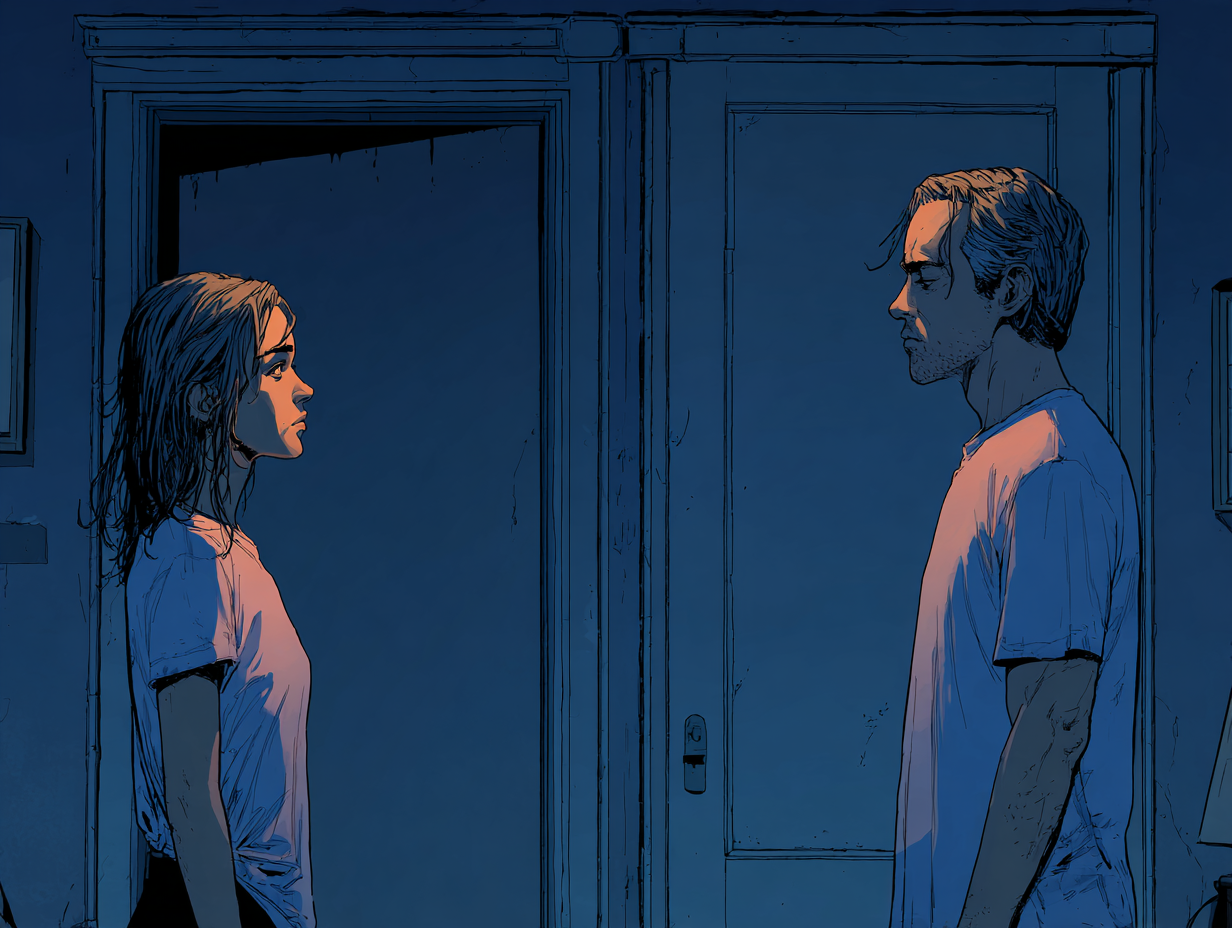
Why Marriages Break Down and Feel Impossible to Fix
Most marriages don’t break because of one dramatic event. They break down through patterns that repeat over time, often so gradually that it’s hard to notice when things shifted.
Here’s the core idea: relationships deteriorate when negative interaction cycles become stronger than moments of connection.
The most common breakdown patterns
In clinical practice, several patterns show up again and again when couples feel stuck:
- criticism instead of complaint - attacking the person, not the issue;
- defensiveness - responding with blame or justification instead of listening;
- emotional withdrawal - shutting down to avoid conflict;
- contempt - sarcasm, eye-rolling, or feeling superior;
These patterns often reinforce each other. One partner criticizes, the other becomes defensive, then withdraws, which leads to more criticism. Over time, both feel unheard.
The role of stress and emotional overload
External stress plays a bigger role than many people expect. Work pressure, financial strain, parenting demands, or health concerns can lower emotional capacity and increase reactivity.
According to the National Institute of Mental Health, chronic stress affects emotional regulation and decision-making. In relationships, this can show up as irritability, impatience, or overreacting to small issues.
For example, a conversation about household chores can escalate quickly if both partners are already exhausted. The argument may seem like it’s about chores, but the real driver is accumulated stress.
Attachment styles and emotional reactions
Attachment theory helps explain why partners respond so differently in conflict.
- people with anxious attachment may seek reassurance and push for discussion;
- people with avoidant attachment may distance themselves to reduce emotional intensity;
This creates a common dynamic: the more one partner pushes, the more the other withdraws. Both reactions make sense individually, but together they create frustration.
Why it starts to feel “impossible”
After enough repeated conflict, something shifts psychologically.
- partners begin to expect negative outcomes from conversations;
- neutral interactions are interpreted as criticism;
- motivation to try decreases because “nothing works anyway”;
This is sometimes called a negative sentiment override in relationship research. Once it sets in, even positive gestures may be overlooked or dismissed.

A concrete example
Imagine this scenario: one partner says, “You never help around the house.” The other hears criticism and responds, “That’s not true, I do a lot.” The first partner feels dismissed and escalates. The second shuts down.
Neither person is trying to harm the relationship. Both are reacting to protect themselves. But the pattern keeps repeating, and each cycle strengthens the sense that the marriage is failing.
The key takeaway
Here’s the important shift: most relationship problems are not about the surface issue. They’re about the pattern underneath.
Understanding that pattern is the first real step to change. Without that awareness, couples often try to solve the same argument repeatedly without addressing what actually drives it.
And once you see the pattern clearly, it becomes much easier to interrupt it and start building something different.
10 Steps to Save Your Marriage and Rebuild Connection
If you want to save your marriage, the most effective approach is not one big change, but a series of small, consistent shifts in behavior. These steps are grounded in relationship psychology and can help interrupt negative patterns and rebuild trust over time.
1. Pause the escalation
When conversations start to heat up, the goal is not to win - it’s to prevent damage. Taking a short break allows your nervous system to calm down.
For example, stepping away for 20 minutes after an argument can reduce impulsive reactions and make the next conversation more constructive.
2. Focus on your part first
It’s natural to focus on what your partner is doing wrong. But change usually begins when one person takes responsibility for their own behavior.
Instead of “You never listen,” try “I notice I get frustrated quickly, and I want to handle that differently.”
3. Replace criticism with specific requests
General complaints often trigger defensiveness. Clear, specific requests are easier to respond to.
- criticism: “You don’t care about this relationship”;
- request: “Can we spend one evening together this week without distractions?”;
This shift reduces tension and increases the chance of cooperation.
4. Rebuild small moments of connection
Connection doesn’t return all at once. It builds through small, repeated actions.
- checking in during the day;
- showing appreciation for everyday things;
- sharing short, positive interactions;
These moments may seem minor, but they gradually change the emotional tone of the relationship.
5. Learn to listen without preparing a response
Many conflicts escalate because both partners are focused on defending their position. Active listening means temporarily setting aside your response.
A simple structure helps: listen, reflect what you heard, and then respond. This alone can reduce misunderstandings significantly.
6. Interrupt negative patterns early
Once you recognize your typical conflict cycle, you can step out of it sooner.
For instance, if you notice that one of you tends to withdraw, naming it gently - “I think we’re both starting to shut down” - can shift the interaction before it escalates.

7. Create emotional safety
People open up when they feel safe, not when they feel judged. Emotional safety comes from consistent, predictable responses.
This includes:
- avoiding sarcasm or contempt;
- responding with curiosity instead of обвинение;
- acknowledging your partner’s feelings, even if you disagree;
8. Set realistic expectations
Trying to fix everything at once often leads to disappointment. Progress in relationships is usually uneven.
Some weeks will feel better, others more difficult. What matters is the overall direction, not perfection.
9. Address underlying stress
Sometimes relationship problems are amplified by external factors. Work pressure, financial concerns, or lack of rest can make small issues feel much bigger.
Taking steps to reduce stress - even simple ones like improving sleep or dividing responsibilities more clearly - can improve interactions significantly.
10. Consider professional support early
Working with a licensed therapist, such as a psychologist or marriage and family therapist, can help identify patterns more quickly and guide the process of change.
According to the American Association for Marriage and Family Therapy, many couples report improvement when they engage in structured therapy.
Seeking help is not a last resort. In many cases, it’s what makes change possible.
Important to know
Relationship repair does not mean tolerating harm. If there is ongoing emotional or physical abuse, the priority is safety, not saving the relationship. In such situations, reaching out to a licensed professional or support service is essential.
How to Communicate When Everything Turns Into Conflict
When conversations keep turning into arguments, the issue is usually not the topic itself, but the way the interaction unfolds. Changing how you communicate can often shift the entire dynamic, even before deeper issues are fully resolved.
Start with a softer approach
The way a conversation begins often determines how it ends. A harsh start increases the likelihood of defensiveness and escalation.
Compare these two openings:
- “You never listen to me”
- “I feel frustrated when I don’t feel heard, can we talk about this?”
The second version lowers tension and makes it easier for your partner to stay engaged.
Slow the conversation down
Conflict often escalates because both people react too quickly. Slowing down gives space for understanding instead of automatic responses.
- pausing before responding;
- asking a clarifying question instead of assuming intent;
- noticing when your tone is becoming sharper;
Even a few seconds of pause can change the direction of a conversation.
Reflect before responding
A simple but powerful tool is reflection. Before sharing your perspective, briefly summarize what you heard.
For example: “So you’re saying you feel overwhelmed when I come home late without letting you know.”
This helps your partner feel understood and reduces the need to repeat or escalate their point.
Focus on one issue at a time
Arguments often become overwhelming because multiple issues get mixed together. Staying with one topic increases the chance of resolution.
If new concerns come up, it can help to say: “Let’s finish this first, and then we can come back to the other part.”
Recognize emotional flooding
During intense conflict, the body can enter a state of high arousal - sometimes called emotional flooding. Heart rate increases, thinking becomes less clear, and reactions become more impulsive.
When this happens, continuing the conversation is rarely productive.
A practical approach is to agree in advance that either partner can pause the discussion when things become overwhelming, with the intention to return later.
A real-life scenario
Imagine a couple discussing finances. One partner raises concerns about spending. The other hears criticism and immediately responds defensively. The conversation escalates, voices rise, and both leave feeling frustrated.
Now imagine the same situation handled differently. The first partner starts with a specific concern. The second reflects what they heard before responding. Both stay focused on the topic and pause if emotions rise too much.
The issue may still be difficult, but the interaction becomes manageable instead of destructive.
Build a new communication pattern
Here’s the key idea: communication is not just about expressing yourself. It’s about creating a space where both people can stay engaged without feeling attacked.
This takes practice, and it won’t feel natural at first. But over time, small changes in how you speak and respond can significantly reduce conflict intensity.
And once conversations feel safer, deeper issues become much easier to address.
When to Seek Help to Save Your Marriage
Trying to save your marriage on your own can work in some situations, but there are times when outside support becomes essential. Knowing when to involve a licensed professional can prevent further damage and make the repair process more effective.
Signs that professional help may be needed
Some patterns are difficult to change without guidance. You may benefit from couples therapy or counseling if you notice:
- the same arguments repeating without resolution;
- communication consistently turning into conflict or silence;
- emotional distance that doesn’t improve despite effort;
- loss of trust after betrayal that feels impossible to rebuild;
- one or both partners feeling stuck, exhausted, or hopeless;
These signs don’t mean the relationship is failing beyond repair. They often indicate that the current tools are not enough.
What couples therapy actually does
Couples therapy is not about deciding who is right. A licensed therapist helps identify patterns, improve communication, and create new ways of interacting.
- Cognitive Behavioral Therapy (CBT), which focuses on thought patterns and behavior;
- Emotionally Focused Therapy (EFT), which works with attachment and emotional connection;
- Behavioral couples therapy, which emphasizes practical changes in daily interactions;
A therapist may help you slow down conversations, recognize triggers, and respond differently in moments that would normally escalate.
What to expect from the process
In the beginning, sessions often focus on understanding the relationship dynamic rather than solving everything immediately.
- how conflicts typically start and escalate;
- what each partner needs but struggles to express;
- how past experiences influence current reactions;
Over time, the focus shifts toward practicing new skills and rebuilding trust.
For example, a couple might learn how to pause arguments before they escalate, or how to express frustration without triggering defensiveness. These changes may seem small, but they can significantly alter the direction of the relationship.
When saving the marriage may not be the only goal
There are situations where therapy focuses less on saving the relationship and more on clarity and safety.
- ongoing emotional or physical harm;
- complete unwillingness from one partner to engage;
- repeated violations of trust without accountability;
In these cases, a therapist can help you evaluate your options, set boundaries, and make decisions that prioritize well-being.
How to find the right support
In the United States, you can look for licensed professionals such as psychologists, clinical social workers, or marriage and family therapists.
- insurance provider directories;
- platforms like Psychology Today;
- referrals from primary care providers or community clinics;
When choosing a therapist, it’s helpful to look for someone with experience in couples work and evidence-based approaches.
Crisis and safety
If relationship distress becomes overwhelming or leads to thoughts of harming yourself or others, immediate support is important.
Call or text 988 to reach the Suicide & Crisis Lifeline in the U.S.
If you are in immediate danger, call 911.
References
1. American Association for Marriage and Family Therapy. Marriage and Family Therapy. 2023.
2. American Psychological Association. Relationships. 2022.
3. National Institute of Mental Health. Stress. 2023.
4. Mayo Clinic. Stress management. 2022.
5. Substance Abuse and Mental Health Services Administration (SAMHSA). Find Help. 2023.
Conclusion
Marriage can feel overwhelming when patterns repeat and nothing seems to change. But understanding how disconnection develops and taking small, consistent steps can shift the direction of a relationship. Many couples move from constant conflict to more stable and respectful communication by learning new ways to respond to each other.
You don’t have to solve everything at once. Focusing on one change at a time - how you speak, how you listen, how you pause - can create real progress. And if the situation feels too heavy to handle alone, reaching out to a licensed therapist is a practical and effective next step.
If distress becomes intense or you feel unsafe, support is available. Call or text 988 (Suicide & Crisis Lifeline). If you are in immediate danger, call 911.
Frequently Asked Questions
Can you really save your marriage if it feels completely broken?
In many cases, yes. Relationships that feel broken often reflect repeated patterns rather than permanent damage. With effort from both partners and, when needed, professional support, many couples are able to rebuild connection.
How long does it take to fix a marriage?
There is no fixed timeline. Some improvements can happen within weeks, especially in communication, while deeper changes such as rebuilding trust may take months. Consistency matters more than speed.
What is the most important step to save your marriage?
One of the most important steps is recognizing and changing interaction patterns. When partners shift how they respond to conflict, it often changes the entire dynamic of the relationship.
When should couples consider therapy?
Couples should consider therapy when conflicts repeat without resolution, communication breaks down, or emotional distance continues despite effort. Early support often makes change easier and more sustainable.
Is it normal to feel unsure about your marriage?
Yes, periods of doubt are common, especially during stress or conflict. Feeling uncertain does not automatically mean the relationship is over, but it can be a signal to reflect and take action.
Can one person save a marriage alone?
One person can initiate change and influence the dynamic, but long-term repair usually requires effort from both partners. A relationship improves most when both people are willing to engage.