Emotional Permanence in Relationships: What It Means and Why It Matters
Feeling emotionally close to your partner one moment and strangely disconnected the next can be deeply unsettling. Many people quietly worry that this shift means something is wrong with them or with the relationship itself. Emotional permanence offers a different explanation — one that is more common, and more human, than it might seem at first.
Emotional permanence refers to the ability to maintain a sense of emotional connection to someone even when they are not physically present or actively expressing affection. When emotional permanence is fragile, that connection can fade quickly during distance, silence, or conflict, creating doubt, anxiety, or emotional numbness. Importantly, this experience is not a measure of how much you love your partner. It reflects how your emotional system holds — or temporarily loses — a felt sense of closeness over time.
In relationships, emotional permanence shapes how secure or unstable connection feels during everyday separations: a busy workday, time apart, or a partner needing space. Understanding this concept can help you stop misinterpreting emotional shifts as relationship failure, recognize what’s actually happening internally, and respond in ways that support closeness rather than fear.
In this guide, you’ll learn what emotional permanence really means in romantic relationships, why emotional connection can fade during absence, how it differs from anxious attachment, and what helps restore a steady sense of closeness — including when professional support may be useful.

What Is Emotional Permanence in Relationships?
Emotional permanence in relationships describes the ability to hold on to a felt sense of emotional connection with a partner even when they are not physically present or actively expressing care. When emotional permanence is strong, closeness feels stable across time and distance. When it is weaker, emotional connection can fade quickly during silence, separation, or conflict, even in otherwise loving relationships.
This concept is often confused with commitment or love, but it is neither. Emotional permanence does not measure how deeply you care about someone. Instead, it reflects how consistently your emotional system can access feelings of closeness when external reassurance is absent. For some people, emotions remain available internally. For others, emotions are highly context-dependent and tied to immediate interaction.
Emotional permanence is related to, but distinct from, object permanence — a developmental concept describing the understanding that something continues to exist even when out of sight. In adult relationships, the challenge is not cognitive awareness, but emotional continuity. That emotional continuity can fluctuate under stress, uncertainty, or distance.
Here’s a common example. Imagine feeling deeply connected after a meaningful conversation with your partner. A day later, they are busy and less responsive. Even though nothing negative has happened, the emotional warmth you felt yesterday seems to vanish. You may start questioning your feelings or the relationship itself. This experience often reflects emotional impermanence, not a sudden change in love or commitment.
Emotional permanence also exists on a spectrum. Some people experience mild shifts that pass quickly, while others feel a near-complete emotional drop-off during separation. These patterns are shaped by emotional regulation skills, past relational experiences, and how the nervous system responds to distance.
Importantly, struggling with emotional permanence is not a flaw or a diagnosis. Many people experience it at certain points in life, especially during periods of stress, transition, or relational uncertainty. Understanding what emotional permanence is helps replace self-blame with clarity and opens the door to more supportive ways of relating — both to your partner and to yourself.
Why Does Emotional Connection Fade When a Partner Isn’t Present?
For many people, emotional connection feels strongest in moments of direct interaction — shared time, eye contact, physical closeness, or clear expressions of care. When those cues disappear, the emotional bond can feel surprisingly fragile. This shift often raises alarm: Why do I feel so disconnected when nothing has actually changed? The answer usually has less to do with love and more to do with how the emotional system processes absence.
Emotional connection is not stored the same way factual information is. You can know your partner cares about you while simultaneously struggling to feel that care in their absence. Emotional permanence relies on emotional memory — the ability to carry feelings forward without immediate reinforcement. For some people, that internal continuity is naturally weaker, especially under stress.
Stress plays a major role. When the nervous system is activated by uncertainty, conflict, or separation, emotional regulation becomes harder. Stress can temporarily disrupt emotional processing and reduce access to positive emotional states. In relationships, this can show up as emotional flatness, doubt, or detachment when a partner is unavailable, even briefly.
Attachment systems also activate around distance. When closeness decreases, the brain starts scanning for safety cues. If those cues are missing, emotional connection may shut down as a form of self-protection. Rather than maintaining warmth, the system shifts into a guarded state. This reaction is unconscious and fast, not a deliberate choice.
Consider a long-distance relationship. During video calls, connection feels vivid and secure. After the call ends, emotional closeness may drop sharply, replaced by emptiness or doubt. The relationship hasn’t changed — the emotional input has. For someone with low emotional permanence, distance makes feelings harder to access, even when trust is intact.
Conflict can have a similar effect. After an argument, some people feel emotionally cut off until repair happens. The emotional bond goes offline, not because love is gone, but because the nervous system hasn’t recalibrated to safety yet. Until reassurance or reconnection occurs, emotional warmth may remain out of reach.
This is where many people misinterpret their experience. Emotional fading often gets labeled as indifference, incompatibility, or emotional coldness. In reality, it is frequently a sign of difficulty holding emotional closeness internally during absence or uncertainty. The feeling is real, but the conclusion drawn from it often isn’t.
Understanding this mechanism matters because it changes how you respond. Instead of panicking or pulling away, you can recognize emotional fading as a temporary state. With awareness and the right supports, emotional connection can return without forcing reassurance or doubting the relationship itself.
Emotional Permanence vs Anxious Attachment: Key Differences
Emotional impermanence is often mistaken for anxious attachment, especially because both involve distress when closeness feels uncertain. While these experiences can overlap, they are not the same. Understanding the difference helps reduce self-blame and points toward more effective ways of coping in relationships.
At a high level, emotional permanence is about emotional continuity — whether you can still feel connected when your partner is absent. Anxious attachment is about fear of abandonment — a heightened sensitivity to signs of rejection or inconsistency. One centers on emotional fading; the other centers on emotional escalation.
| Aspect | Emotional Permanence | Anxious Attachment |
|---|---|---|
| Core experience | Emotional connection fades during absence | Fear of abandonment intensifies |
| Main trigger | Physical or emotional distance | Perceived rejection or inconsistency |
| Emotional response | Emotional blankness or detachment | Heightened anxiety and reassurance seeking |
| Primary need | Emotional anchoring and continuity | Safety reassurance predictability |
Here’s how this difference plays out in real life. A person with anxious attachment may feel increasingly worried when a partner is quiet, reaching out repeatedly for reassurance or imagining worst-case scenarios. Someone struggling with emotional permanence, on the other hand, may feel oddly numb or disconnected instead, not frantic, but uncertain about their own feelings until contact resumes.
That said, the two can coexist. A person may experience emotional fading and anxiety about what that fading means. Stress, past relational injuries, or inconsistent caregiving can amplify both patterns. What matters is recognizing which response is dominant in the moment, because the support needed differs.
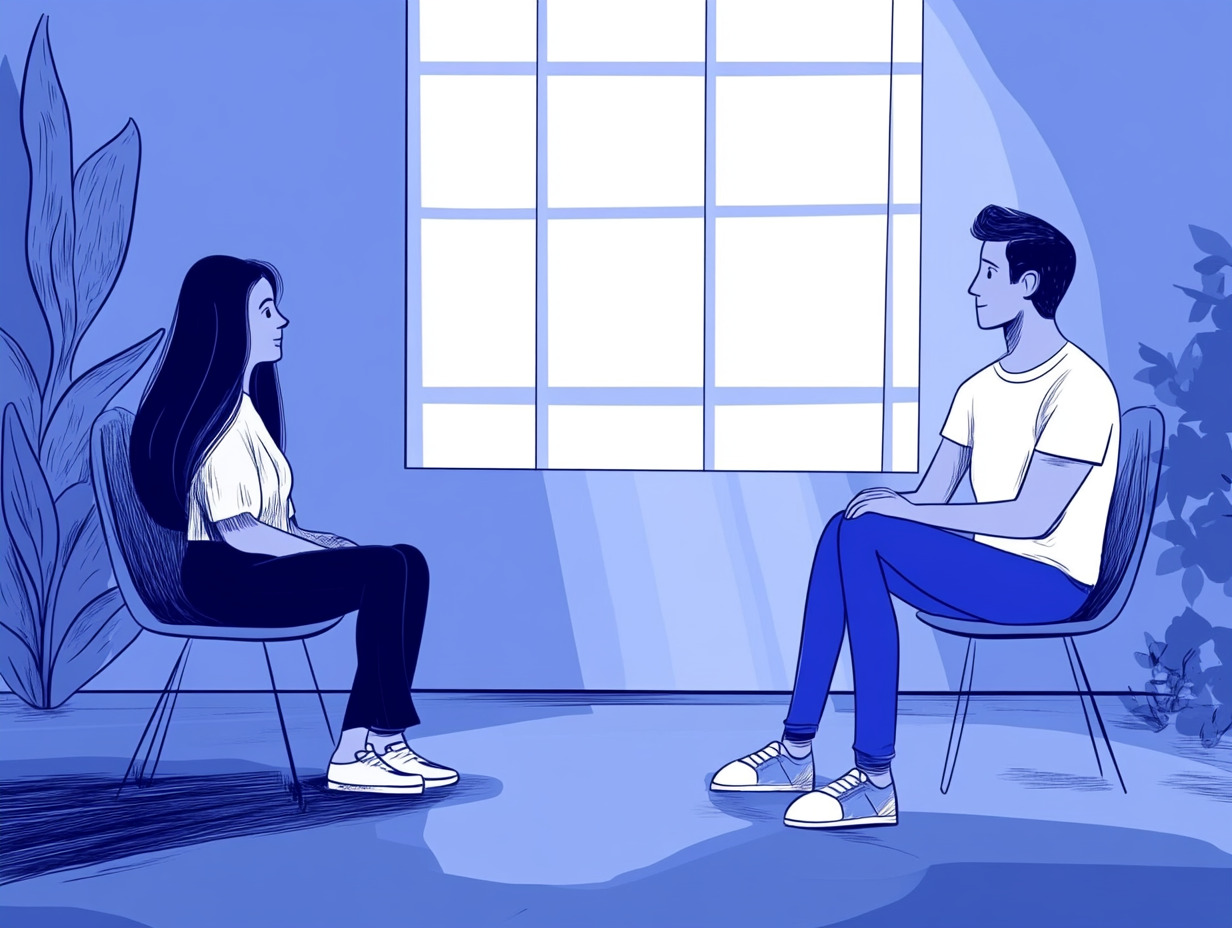
Emotional impermanence often benefits from practices that strengthen internal emotional continuity. Anxious attachment, by contrast, often requires work around tolerating uncertainty, soothing fear, and building trust over time. Neither pattern is a diagnosis, and neither defines your capacity for healthy relationships.
Distinguishing between the two helps shift the focus from what’s wrong with me to what does my nervous system need right now. That reframing alone can reduce reactivity and create space for more compassionate responses toward yourself and your partner.
How Emotional Permanence Affects Romantic Relationships
When emotional permanence is fragile, relationships can start to feel confusing or unstable, even when there is genuine care on both sides. The issue is not a lack of love, but the way emotional connection fluctuates in response to distance, silence, or unresolved tension.
One common effect is misinterpretation. Emotional fading may be read as a sign that feelings are disappearing or that the relationship is failing. In reality, the emotional bond may simply be offline until reconnection happens. Without this understanding, people often react by pulling away, testing the relationship, or mentally preparing for loss.
Communication patterns can also suffer. A partner experiencing emotional impermanence may struggle to express what they’re feeling because the feeling itself is unclear. They might say they don’t know how they feel, which can alarm a partner who experiences emotional connection more consistently.
Another challenge is the pursue withdraw cycle. When one partner feels emotionally disconnected, they may withdraw to make sense of their internal state. The other partner may interpret that withdrawal as rejection and push for closeness. Without awareness, this cycle can repeat and reinforce stress rather than restore connection.
Guilt is common as well. People often blame themselves for not feeling enough during periods of separation, especially if their partner remains emotionally steady. This self-criticism tends to increase emotional shutdown rather than resolve it.
Understanding the role of emotional permanence can soften these dynamics. When emotional fading is recognized as a temporary internal state rather than a relational verdict, couples can respond with curiosity instead of fear.
Emotional permanence does not determine relationship success, but awareness of it shapes how couples navigate distance conflict and repair. With clarity and shared language, emotional connection becomes something that can be supported rather than constantly questioned.
What Helps — and When to Seek Professional Support
When emotional connection fades during distance, the instinct is often to fix the feeling immediately or to doubt the relationship. In practice, what helps most is learning how to support emotional continuity without forcing reassurance or suppressing uncertainty.
One useful approach is emotional anchoring. This means intentionally reconnecting with memories, sensations, or symbols that represent closeness when your partner is not present. It might involve recalling a recent moment of warmth, rereading a supportive message, or grounding yourself in the knowledge that emotional states shift even when relationships remain stable.
Internal reassurance also matters. Instead of interpreting emotional fading as a warning sign, some people benefit from simple internal language such as I feel disconnected right now, and that doesn’t mean my feelings are gone. This kind of self-talk supports emotional regulation and reduces the urge to panic or withdraw.
Clear communication can prevent misunderstandings. Letting a partner know that emotional distance happens for you, and that it is temporary, helps separate internal experience from relational meaning. Statements like I need a little time to feel connected again, but I’m not pulling away from you often reduce tension on both sides.

Professional support may be helpful when emotional impermanence causes persistent distress, repeated conflict, or confusion about your own feelings. Therapists trained in attachment based therapy, cognitive behavioral therapy, or acceptance and commitment therapy can help strengthen emotional regulation and build a more stable internal sense of connection.
If emotional disconnection is accompanied by feelings of hopelessness, intense anxiety, or thoughts of harming yourself, immediate support is essential. In the United States, you can call or text 988 to reach the Suicide and Crisis Lifeline at any time. If you are in immediate danger, call 911. Support is confidential and available around the clock.
Emotional permanence can improve with awareness, practice, and support. You don’t need to force closeness or question your capacity for love. With the right tools, emotional connection can become something you trust, even during distance.
References
1. American Psychological Association. Attachment Theory and Close Relationships. 2023.
2. American Psychiatric Association. Diagnostic and Statistical Manual of Mental Disorders DSM 5 TR. 2022.
3. National Institute of Mental Health. Emotion Regulation and Mental Health. 2023.
4. Harvard Health Publishing. The Role of Attachment in Adult Relationships. 2022.
5. American Psychological Association. Understanding Attachment and Emotional Regulation. 2021.
Conclusion
Emotional connection does not always move in a straight line. For some people, closeness feels vivid only when a partner is present or actively engaged, and it can fade during distance, silence, or stress. This experience reflects how the emotional system holds connection over time.
Understanding emotional permanence helps replace fear with clarity. It explains why feelings can temporarily disappear without meaning the relationship is failing, and why reassurance alone does not always restore closeness.
If emotional disconnection causes ongoing distress or confusion, professional support can help you build stronger emotional continuity. Needing support does not mean something is broken, it means your nervous system is asking for care.
If you ever feel overwhelmed or unsafe, call or text 988 to reach the Suicide and Crisis Lifeline in the United States. If you are in immediate danger, call 911.
Frequently Asked Questions
What does emotional permanence mean in relationships?
Emotional permanence refers to the ability to maintain a sense of emotional connection to a partner even when they are not physically present or emotionally expressive. When it is fragile, closeness can feel inconsistent during distance.
Is emotional impermanence a mental health diagnosis?
No. Emotional impermanence is not a diagnosis. It describes a relational experience influenced by emotional regulation and attachment patterns, not a mental disorder.
Can emotional connection fade even in healthy relationships?
Yes. Stress, conflict, or physical separation can temporarily reduce access to feelings of closeness. This does not mean the relationship is unhealthy or that love is gone.
How is emotional permanence different from anxious attachment?
Emotional permanence involves emotional fading during absence, while anxious attachment typically involves heightened fear and reassurance seeking. They can overlap, but they are not the same experience.
Can therapy help with emotional impermanence?
Yes. Therapies focused on attachment and emotional regulation can help people maintain a more stable internal sense of connection and reduce relationship related distress.
When should I seek professional help?
If emotional disconnection causes ongoing distress, confusion, or impacts daily functioning, speaking with a licensed mental health professional can be helpful. In a crisis, call or text 988. If you are in immediate danger, call 911.