How to Stop Crying: Techniques That Work In the Moment and Over Time

/https://cdn.freudly.ai/media/pages/images/83172652-2871-43fc-a00b-20bc430cd364.png)
Crying at the wrong moment — in a meeting, during an argument, in front of someone who doesn't deserve that vulnerability — is one of the most frustrating experiences a person can have.
If you're looking for ways to stop crying, you're not alone, and you're not weak for wanting to. The desire to control when and where you show emotion is completely valid. Crying is healthy. Crying on command during a performance review is not always helpful. Both things are true at once.
This article covers why tears are so hard to stop once they start, what works in the moment, what to do in specific situations like work or arguments, and how to build more emotional control over time — without suppressing emotions in ways that backfire.
Key Takeaways
- Crying begins when the amygdala signals the hypothalamus to activate tear production, making slow breathing the most physiologically direct way to interrupt it.
- Suppressing tears reduces visible crying but increases internal emotional arousal, making regulation through redirection more effective long-term.
- Frustration-crying during arguments occurs because the nervous system cannot distinguish emotional overwhelm from physical threat, triggering the same stress response.
- Identifying consistent crying triggers — specific people, times, or situations — reduces emotional reactivity faster than practicing techniques in isolation.
- Frequent crying without clear cause, or crying that interferes with daily functioning, warrants a conversation with a licensed therapist rather than self-management alone.
Why Is It So Hard to Stop Once You Start?
Trying not to cry often makes it worse. There's a reason for that.
When your brain processes an intense emotion — frustration, sadness, overwhelm, even relief — the amygdala, your brain's emotional alarm system, sends a signal to the hypothalamus. Research on the neuroscience of emotional crying confirms this pathway: the hypothalamus activates your autonomic nervous system, which triggers your lacrimal glands to produce tears. This happens faster than conscious thought. By the time you decide you don't want to cry, the cascade is already in motion.
What makes it harder to stop is the sympathetic nervous system activation that precedes crying — the same fight-or-flight response that raises your heart rate, tightens your throat, and constricts your chest. You can't simply tell your body to stand down. The physical state has to change before the emotional expression can.
Here's where most advice goes wrong.

Research published in Cognition and Emotion by psychologists at the University of Amsterdam found that suppression — actively holding back tears — effectively reduces visible emotional expression but does not reduce the internal emotional arousal driving it. In other words, the feeling intensifies even as the face stays neutral. Over time, habitual suppression makes emotional regulation harder, not easier, because the underlying state never actually resolves.
Redirection works better — giving the nervous system something else to do rather than fighting the response head-on.
Most advice about stopping crying focuses on willpower: don't cry, hold it together, think of something else. That framing misses what's actually happening. Crying isn't a decision. It's a physiological cascade. The techniques that work aren't about being stronger — they're about giving your nervous system a different path to take. Understanding that distinction changes how you use every technique on this list.
In-the-Moment Techniques That Actually Work
These work because they interrupt the physiological cascade — not because they override emotion with willpower.
Slow your breathing down deliberately.
Breathing is the most physiologically direct technique available. Slow, deep breathing activates the parasympathetic nervous system — the counterpart to the fight-or-flight response — which signals the body to downshift. Breathe in through your nose for four counts, hold for two, exhale slowly through your mouth for six. The extended exhale is the key part. It's the exhale that triggers the parasympathetic response, not the inhale.
Do this before you feel tears arriving, not after. Once the lacrimal glands are activated, breathing slows the cascade — it doesn't stop it instantly.
Apply a physical interrupt.
Your nervous system responds to competing physical sensations. Pressing firmly on the pressure point between your thumb and index finger, holding something cold, or pressing your tongue to the roof of your mouth all give your nervous system something else to process. Fidgeting with a small object — a coin, a clip, a ring — works on the same principle and has the advantage of being completely invisible to anyone watching. Briefly tensing your muscles — making a fist, pressing your feet into the floor — creates a competing physical signal and can produce a mild sense of bodily control that partially counteracts the loss-of-control feeling that often accompanies crying. None of these are magic — they buy you seconds. Seconds are often enough.
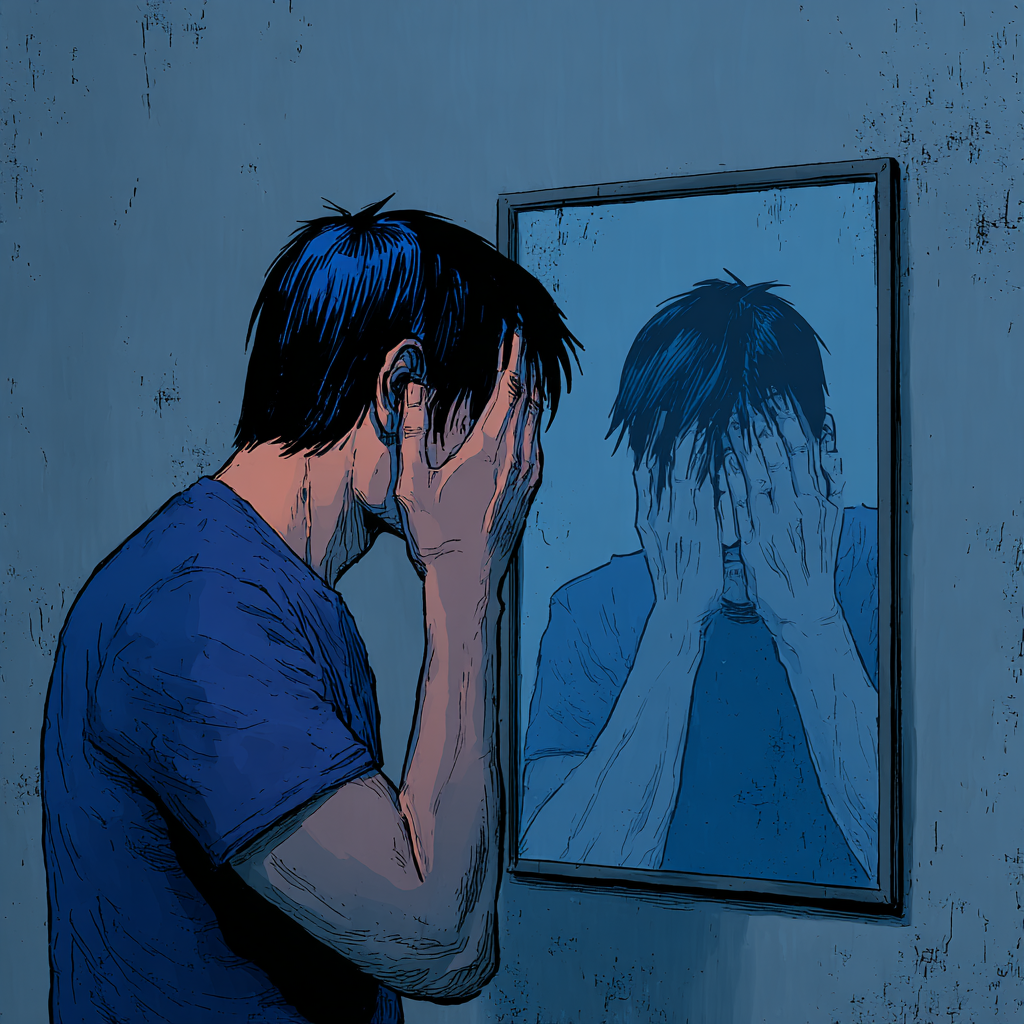
Redirect your visual and mental focus.
Looking away from whatever is triggering the emotional response removes the input feeding the amygdala.
If you're in a conversation, shift your gaze slightly — not dramatically enough to be rude, just enough to break the visual lock. Simultaneously, pull up a specific neutral image in your mind. Not something emotional in either direction.
A street corner you know well. The layout of your kitchen.
Specific and concrete works better than abstract positive thinking.
If you've already started — recover rather than suppress.
Once the first tear falls, stop trying to stop. Take one slow breath, say quietly if you can — "give me a second" — and let the first wave pass. Actively fighting the tears once they've started increases physiological arousal. A brief pause and a single breath resets the system faster than resistance does.
A script that works in most professional contexts: "Can we pause for a moment? I want to make sure I'm responding clearly." It buys time without explanation, signals competence, and doesn't require you to explain why you need the pause.
What If You're at Work or in an Argument?
Generic techniques help. Situational ones help more.
At work: exit before it's visible.
The most effective work strategy isn't a technique — it's a system. Before any high-stakes conversation you're anticipating, identify your exit script and use it at the first sign of emotional activation, not after tears start. "Can we pause? I want to grab some water" works. "Give me one moment" works. You don't need a reason. Standing up and moving — even walking to the bathroom and back — gives the nervous system a physical reset that sitting still cannot.
If you couldn't exit and tears fell anyway: own it briefly and move forward. "I feel strongly about this — give me a second." One sentence. Then continue. Most people respect visible emotion far more than speakers fear they will.
During arguments: understand what frustration-crying actually is.
Frustration-crying is one of the most misunderstood experiences in conflict. Picture this: you're in a heated discussion with a partner about something that genuinely matters to you. You're not sad. You're not hurt. You're frustrated — and the tears start anyway. Your partner misreads it as manipulation or fragility. You feel humiliated and lose the thread of what you were saying.
What's happening is straightforward: your nervous system cannot distinguish between emotional overwhelm and physical threat. Both activate the same stress response. When emotional intensity crosses a threshold, the cascade starts regardless of the emotion's content. Frustration, injustice, and feeling unheard trigger the same cascade as grief.
Most useful in-argument technique: a planned pause, not a retreat. "I need five minutes and then I want to finish this conversation." Not "I can't do this right now." A pause commits you to return and gives your nervous system the reset time it needs.
In public: invisible techniques only.
In public situations where exiting isn't possible, the breathing technique and pressure point work well because they're invisible. Tilting your chin up slightly — not dramatically — slows tear flow by gravity alone. Blinking deliberately clears the eyes without the face doing anything visible.
Building Long-Term Emotional Regulation
Quick techniques manage the symptom. Changing the pattern requires something different.
There's an important distinction between suppression and regulation. Suppression means stopping emotional expression while the internal state continues. Regulation means actually shifting the internal state. The first creates short-term compliance and long-term buildup. The second creates genuine change. Most people who feel they cry too easily have been suppressing rather than regulating — which is part of why the pattern persists.
Three approaches work for long-term change.
Map your triggers before they find you.
After any significant crying episode, write down three things: what happened, what you were feeling before it started, and what specifically crossed the threshold. Over time, patterns emerge. You might find you cry most when you feel unheard, or when you're physically depleted, or with a particular person. Identifying the trigger gives you decision-making time before the cascade starts — which is the only window where regulation is genuinely possible.
Sleep is not a lifestyle suggestion — it's a regulatory requirement.
Peer-reviewed work published in PMC and the Journal of Neuroscience shows that sleep deprivation increases amygdala reactivity while simultaneously reducing the prefrontal cortex's regulatory control over emotional responses — the exact mechanism that makes emotional regulation possible. People who are sleep-deprived don't just feel worse; their brains are structurally less capable of interrupting emotional cascades. Before you add techniques, fix your sleep.
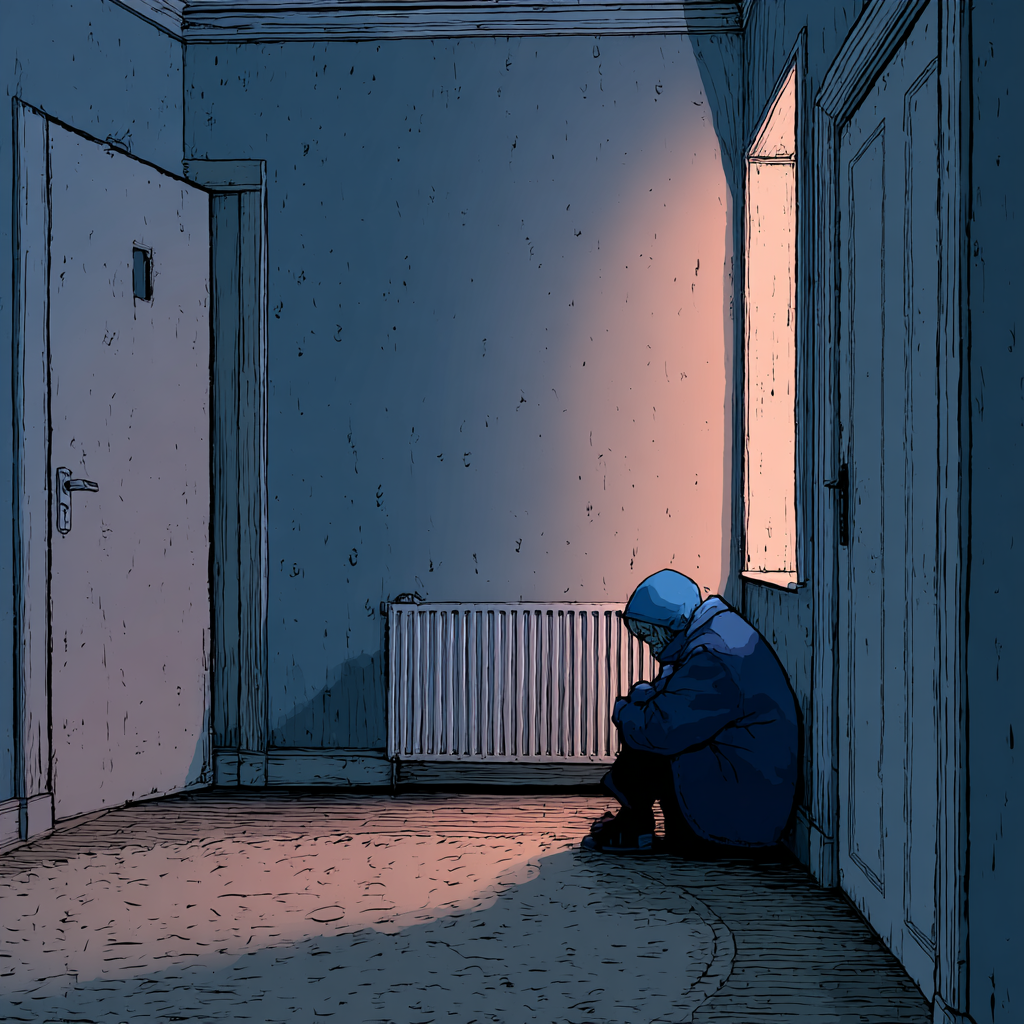
Let yourself cry — at a time and place of your choosing.
Scheduled emotional release sounds clinical but works practically. If you know you're holding a lot right now, give yourself a specific time to feel it fully — in private, without an audience. This reduces the pressure that builds behind suppressed emotion and makes public composure significantly easier to maintain.
When Is Frequent Crying Worth Paying Attention To?
Occasional crying — even frequent crying — is not a problem. Crying that consistently interrupts your life is worth examining.
Signals that suggest something more than situational emotion: crying most days without a clear reason, crying that provides no relief and leaves you feeling worse, crying that feels connected to a persistent low mood, loss of interest in things that used to matter, or exhaustion that sleep doesn't fix. These overlap with signs of depression, anxiety, burnout, and hormonal changes — none of which self-management techniques will fully address.
A therapist can help you identify what's driving the pattern and build the actual regulation skills that reduce it. Not because crying is pathological, but because when it's chronic and disruptive, it usually has a root that's worth understanding.
You don't need to be in crisis. Frequent emotional overwhelm that affects your relationships or your work is reason enough.
Tears are not a weakness to be eliminated. They're a physiological response to a nervous system that has crossed a threshold — and thresholds can be managed, raised, and understood.
The techniques in this article work because they work with the nervous system, not against it. The long-term strategies work because they address what's underneath, not just what's visible. Both matter.
If the pattern persists despite your efforts, it's not because you're too emotional. It's because something real is driving it — and that something deserves attention.
References
1. PsyPost. The neuroscience of why we cry happy tears. 2025.
2. Tandfonline / Cognition and Emotion. Stop crying! The impact of situational demands on interpersonal emotion regulation. 2019.
3. National Institutes of Health / PubMed Central. The Role of Sleep and the Effects of Sleep Loss on Cognitive, Affective, and Behavioral Processes. 2025.
4. Journal of Neuroscience. Losing Neutrality: The Neural Basis of Impaired Emotional Control without Sleep. 2015.
Frequently Asked Questions
Why do some people cry more easily than others?
Emotional sensitivity varies based on a combination of temperament, nervous system reactivity, sleep quality, stress levels, and life circumstances. People with more reactive amygdalas — the brain's emotional alarm system — reach the crying threshold faster under the same conditions as others. Hormonal factors, chronic stress, and a history of emotional suppression can all lower the threshold further. Crying easily isn't a character flaw. It's a physiological pattern, and physiological patterns can be shifted with the right strategies.
What is the fastest way to stop crying in the moment?
The most physiologically direct technique is controlled breathing — specifically a slow exhale that is longer than your inhale. Breathe in for four counts and out for six. The extended exhale activates the parasympathetic nervous system, which counteracts the fight-or-flight response driving the tears. Applying firm pressure to the point between your thumb and index finger simultaneously gives your nervous system a competing sensory signal. Used together, these two techniques can interrupt the cascade within thirty to sixty seconds.
Why do I cry during arguments even when I'm angry, not sad?
Frustration-crying happens because the nervous system cannot distinguish between emotional overwhelm and physical threat — both activate the same stress response. When emotional intensity crosses a threshold during a conflict, the physiological cascade begins regardless of whether the emotion is sadness, anger, or injustice. This is especially common in people who feel unheard or whose nervous systems are already activated before the argument starts. A planned five-minute pause — with a clear commitment to return — is more effective than trying to push through while the cascade is active.
Why does crying get worse once it starts?
Once the lacrimal glands are activated, actively trying to suppress tears increases physiological arousal rather than reducing it. Research from the University of Amsterdam published in Cognition and Emotion found that suppression reduces visible emotional expression but intensifies the internal emotional experience. This is why fighting tears often produces more tears. The more effective approach once crying has started is to pause briefly, take one slow breath, and let the first wave pass rather than resist it — the cascade typically subsides faster when not actively opposed.
Can you actually train yourself to cry less over time?
Yes — though the goal is building genuine emotional regulation rather than suppression, which tends to make the pattern worse long-term. Identifying your specific triggers, improving sleep quality, and practicing scheduled emotional release in private all lower the threshold over time by releasing the pressure that builds behind unprocessed emotion. Most people see meaningful change within several weeks of consistent trigger-awareness practice combined with adequate sleep.
When does frequent crying indicate something more serious?
Situational crying — in response to stress, conflict, or emotional moments — is normal at any frequency. Crying that happens most days without a clear reason, that provides no relief, or that comes with persistent low mood, loss of interest in usual activities, or exhaustion that sleep doesn't fix is worth discussing with a licensed therapist or primary care provider. These patterns can indicate depression, anxiety, burnout, or hormonal changes that respond well to professional support but won't resolve on their own with techniques.