Feeling Lost in Life: Why It Happens and How to Find Direction Again
/https://cdn.freudly.ai/media/pages/images/2a545d19-969e-4f96-bf1a-b1f6c8ab0cdf.png)
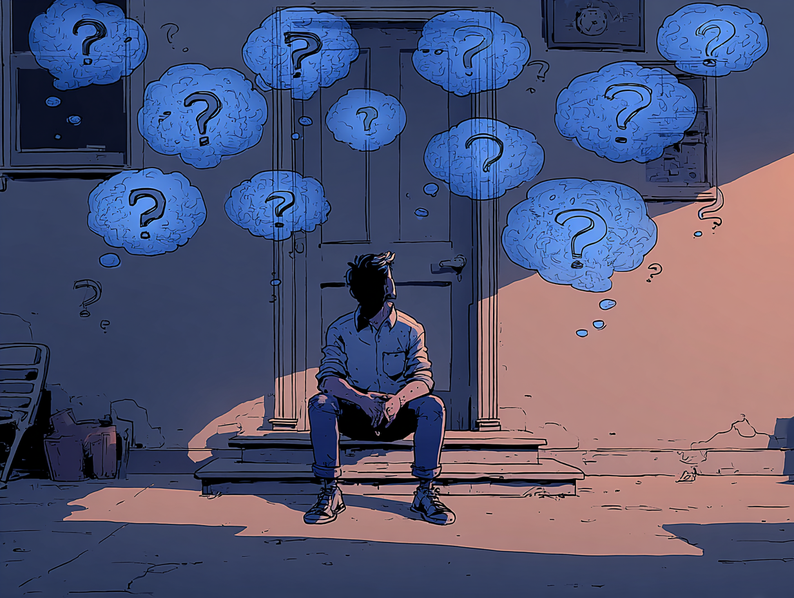
There are moments when life looks fine from the outside, yet something inside feels off. You keep moving, making decisions, showing up where you need to, but the sense of direction you once relied on is no longer there. It can feel confusing, even unsettling, especially when you cannot clearly explain what changed.
Feeling lost in life often happens during periods of stress, transition, burnout, or when your actions no longer match what actually matters to you. It does not necessarily mean something is wrong with you. In many cases, it reflects a gap between how you are living and what feels meaningful or sustainable.
This guide will help you understand why that feeling appears, what is happening beneath it, and what you can do to regain a sense of direction. You will also learn how to recognize when it may be time to speak with a licensed mental health professional and what kind of support can help.

What Does Feeling Lost in Life Actually Mean?
Feeling lost in life usually means you are no longer connected to a clear sense of direction, meaning, or internal guidance. You may still be functioning, going to work, completing tasks, talking to people, but something important feels missing. It becomes harder to answer simple questions like “What am I working toward?” or “Why does this matter to me?”
This experience is more common than people admit. It often shows up quietly, without a dramatic event. One day you realize that the path you are on no longer feels like yours, even if it once made sense.
Common Signs You May Feel Lost
Some patterns tend to appear when a person starts feeling disconnected from direction:
- difficulty making decisions, even small ones;
- lack of motivation or sense of purpose;
- feeling emotionally flat or detached from goals;
- frequent comparison to others who seem more certain;
- questioning choices that previously felt right;
- a sense of going through the motions without meaning;
These signs do not automatically point to a mental health condition. They often reflect a mismatch between your current life and your evolving needs, priorities, or identity.
Why This Experience Can Feel So Disturbing
Part of what makes this state uncomfortable is the loss of internal certainty. Most people rely on some level of direction to organize their decisions and energy. When that structure weakens, even ordinary choices can start to feel heavier.
There is also a social layer. You may look around and assume that others have clarity, which can intensify self-doubt. In reality, many people experience periods like this, but do not talk about them openly.
Feeling lost does not mean you have failed or fallen behind. It often means that something in your life has changed, and your internal sense of direction has not caught up yet. That gap is uncomfortable, but it is also a signal that something important needs attention.
Why Feeling Lost in Life Happens During Stress, Change, and Burnout
People often start feeling lost when life changes faster than their internal sense of identity, stability, or purpose can adapt. Even positive changes can create this effect. When your external situation shifts but your internal compass has not recalibrated yet, it becomes harder to feel grounded in your decisions.
At the same time, stress and burnout can make this disconnection stronger. When your mental and emotional resources are depleted, clarity tends to fade. You may still be moving forward, but without a strong sense of why.
Life Transitions and Identity Disruption
Major transitions often challenge how you see yourself. Finishing school, changing careers, moving to a new place, ending a relationship, or becoming a parent can all reshape your identity. What once felt clear may no longer apply.
For example, someone might spend years working toward a specific career path, only to reach it and feel unexpectedly empty. The structure is there, but the sense of meaning is not. This does not mean the choice was wrong. It often means that your priorities have evolved.
During transitions, it is common to temporarily lose a sense of direction because your old framework no longer fits, and the new one has not fully formed yet.
Burnout, Overwhelm, and Emotional Numbness
Burnout does not only affect productivity. It can also reduce your ability to feel connected to your own goals and preferences. When you are exhausted for a long time, your system shifts into survival mode. You focus on getting through the day rather than reflecting on where you are going.
Over time, this can create a sense of emotional numbness. Activities that once felt meaningful may start to feel flat. Decisions feel heavier because you do not have the energy to process them properly.
This is one reason why people sometimes describe feeling lost after periods of intense work, caregiving, or chronic stress. The issue is not a lack of direction alone. It is also a lack of available mental and emotional capacity.

Values Misalignment and Constant Self-Comparison
Another common cause is a mismatch between how you are living and what actually matters to you. Many people build their lives around expectations such as stability, success, or approval, without checking whether those goals still feel meaningful.
When your actions and your values drift apart, a subtle sense of discomfort can build over time. You may achieve what you planned, but still feel disconnected. This can be confusing because, on paper, things look fine.
Constant comparison can make this worse. If you measure your life against others, it becomes harder to recognize what genuinely fits you. Instead of making choices based on your own priorities, you react to external standards. That often leads to direction that feels forced rather than chosen.
In many cases, feeling lost is not about having no options. It is about having too many signals, too much pressure, or a path that no longer reflects who you are becoming.
How to Find Direction Again When You’re Feeling Lost in Life
When you feel stuck, the instinct is often to search for a big answer. You may think you need a clear life plan before taking any action. In practice, direction tends to return the other way around. Small, meaningful steps create clarity over time. Waiting for certainty often keeps you in place.
The goal is not to solve your entire life at once. It is to restore movement, reduce noise, and reconnect with what matters in a way that feels manageable.
Start With Small Decisions Instead of Big Life Answers
When everything feels uncertain, large decisions become overwhelming. Trying to answer questions like “What should I do with my life?” can create more pressure than progress.
Instead, focus on smaller choices that are easier to act on. For example, you might choose how to structure your next week, what activity to reintroduce into your routine, or which conversation you have been avoiding.
These decisions may seem minor, but they rebuild trust in your ability to choose. Over time, that trust becomes the foundation for larger direction.
Reconnect With Values, Not Just Goals
Goals can lose their meaning if they are disconnected from your values. Values are not specific outcomes. They are directions, such as growth, stability, creativity, connection, or independence.
If you feel lost, it can help to ask a different kind of question. Instead of “What should I achieve next?”, try “What kind of life feels aligned with who I am right now?”
For example, someone who values connection might focus on rebuilding relationships before making major career decisions. Someone who values autonomy might start by creating more flexible time in their schedule.
Clarity often begins when your actions reflect your values, even in small ways.
Build a One-Week Reset Plan
When your routine has broken down, a short reset can help restore structure without creating pressure. The idea is not to design a perfect system, but to create enough stability to think more clearly.
- Choose a consistent wake-up and sleep time.
- Add one physical activity, even if it is brief.
- Set one small, realistic goal for each day.
- Limit unnecessary input such as excessive social media or news.
- Schedule at least one activity that feels personally meaningful.
A simple plan like this can reduce overwhelm and create a sense of forward movement. It gives your mind a stable base to work from.
Reduce Noise So You Can Hear Yourself Think
Feeling lost is often intensified by too much input. Constant information, opinions, and comparison can drown out your own perspective. When everything is loud, it becomes difficult to recognize what actually matters to you.
Reducing noise does not mean withdrawing from life. It means creating space. This could involve limiting time on social platforms, taking breaks from advice content, or spending time without external input.
In that quieter space, your own preferences and reactions become easier to notice. Direction does not always appear as a clear answer. Sometimes it shows up as a slight pull toward something that feels more genuine than what came before.

When Feeling Lost in Life May Be More Than a Phase
Feeling lost can be a normal response to stress, change, or periods of uncertainty. At the same time, there are situations where it becomes more than a temporary phase. The difference is not always obvious, especially when the experience develops gradually.
One important factor is duration and impact. If the sense of disconnection continues for weeks and starts affecting your ability to function at work, maintain relationships, or take care of yourself, it deserves closer attention. The same applies if the feeling is no longer just about direction, but also includes persistent low mood, anxiety, or emotional numbness.
| Experience | Common Pattern | When to Seek Help |
|---|---|---|
| Feeling lost | low direction, uncertainty | if it persists and affects daily life |
| Burnout | exhaustion, numbness, cynicism | if rest does not improve it |
| Depression | low mood, hopelessness, loss of interest | if symptoms last 2+ weeks or worsen |
| Anxiety-related distress | rumination, tension, fear | if sleep, work, or relationships suffer |
Feeling Lost vs Depression
Feeling lost is often centered around uncertainty and lack of direction. Depression, in contrast, usually involves a broader pattern of symptoms such as persistent low mood, loss of interest in activities, fatigue, and a sense of hopelessness.
A person who feels lost may still experience moments of interest or engagement, even if they feel disconnected overall. In depression, those moments tend to fade or disappear. If low mood and loss of interest are present most of the time and do not improve, it may be important to seek professional support.
Feeling Lost vs Anxiety or Burnout
Anxiety often shows up as constant worry, tension, and difficulty relaxing. Burnout is typically linked to prolonged stress and is characterized by exhaustion, cynicism, and reduced effectiveness. Both can overlap with feeling lost.
For example, someone experiencing burnout may no longer feel connected to their work or goals, which can look like a loss of direction. Similarly, anxiety can make decision-making so difficult that everything starts to feel uncertain.
The key difference is that anxiety and burnout are driven by ongoing stress patterns, while feeling lost is more directly tied to a lack of clarity or alignment.
Warning Signs You Should Not Ignore
There are certain signs that suggest it is time to take your experience more seriously:
- persistent hopelessness or a sense that nothing matters;
- difficulty functioning in daily responsibilities;
- significant changes in sleep, appetite, or energy;
- withdrawing from relationships or activities;
- feeling emotionally numb or disconnected most of the time;
- thoughts about harming yourself or not wanting to continue;
If these signs are present, it is important not to handle them alone. Reaching out to a licensed mental health professional can help clarify what is happening and what support would be most appropriate.
When Should You Seek Professional Help for Feeling Lost in Life?
There are times when self-reflection and small changes are enough to restore a sense of direction. But if the feeling persists, spreads into multiple areas of your life, or becomes harder to manage, it may be time to involve a professional.
If feeling lost in life is affecting your ability to work, maintain relationships, sleep, or make decisions, that is a clear signal that additional support could be helpful. You do not need to wait for a crisis or a formal diagnosis to speak with someone.
What Kind of Mental Health Professional Can Help
Several types of licensed professionals can support you, depending on your needs:
- a psychologist, who focuses on assessment and therapy;
- a licensed clinical social worker, who often works with life transitions and emotional support;
- a licensed counselor, who can help with stress, decision-making, and personal development;
- a psychiatrist, who can evaluate whether medication may be appropriate;
What Therapy May Focus On
Therapy for feeling lost is not about being told what to do with your life. It is about understanding what is driving the disconnection and helping you rebuild clarity in a structured way.
- identify patterns that contribute to confusion or indecision;
- clarify your values and priorities;
- reduce overwhelm and improve emotional regulation;
- build confidence in decision-making;
- create realistic steps toward a direction that feels meaningful;
Approaches such as cognitive behavioral therapy or acceptance-based methods are often used to support this kind of work, depending on the situation.
Crisis Support and Immediate Safety Resources
If your experience includes thoughts about harming yourself or feeling unsafe, it is important to seek immediate help. In the United States, you can call or text 988, the Suicide and Crisis Lifeline. If you are in immediate danger, call 911.

You do not have to handle this alone. Support is available, and reaching out is a practical step toward safety and clarity.
References
1. SAMHSA. Mental Health, Drug and Alcohol: Signs You Need To Seek Help. 2023
2. National Institute of Mental Health. Caring for Your Mental Health.2022
3. National Institute of Mental Health. Help for Mental Illnesses. 2022
4. Mayo Clinic. Mental health: What’s normal, what’s not. 2024
5. American Psychological Association. Values Clarification.20221
Conclusion
Feeling lost can be one of the most disorienting experiences because it removes a sense of direction without always providing a clear reason. At the same time, it is a signal, not a failure. In many cases, it reflects change, overload, or a growing gap between how you are living and what actually matters to you.
Clarity does not usually appear all at once. It tends to return through small decisions, reduced noise, and actions that reconnect you with your values. Movement often comes before certainty, not after it.
If the feeling continues, becomes heavier, or starts affecting your daily life, it is worth taking seriously. Speaking with a licensed mental health professional can help you understand what is happening and what direction makes sense from here.
If you are in the United States and experiencing a crisis, you can call or text 988. If you are in immediate danger, call 911. Support is available, and reaching out can be an important step toward stability and recovery.
Frequently Asked Questions
Is it normal to feel lost in life for a while?
Yes. Many people feel lost during periods of stress, major life change, burnout, or uncertainty. Feeling disconnected from direction does not automatically mean something is wrong with you, but it is worth paying attention if the feeling becomes persistent or starts affecting daily life.
Can burnout make you feel lost in life?
Yes. Burnout can leave a person emotionally flat, exhausted, and disconnected from goals that once felt meaningful. When your internal resources are depleted, it becomes much harder to feel motivated or clear about what comes next.
How do I find direction when I feel stuck?
Start smaller than you think you need to. Instead of trying to solve your whole life at once, focus on one meaningful decision, one routine that supports your mental health, or one action that reflects your values. Direction often returns through movement, not through waiting for perfect clarity.
Does feeling lost in life mean I have depression?
Not necessarily. Feeling lost can happen during ordinary stress or transition, while depression involves a broader pattern of symptoms such as persistent low mood, hopelessness, loss of interest, and functional impairment. If the feeling lasts for weeks or keeps getting heavier, it is a good idea to talk with a licensed mental health professional.
When should I see a therapist for feeling lost in life?
Consider reaching out if you feel stuck for more than a couple of weeks, if daily functioning is getting harder, or if the experience is tied to hopelessness, withdrawal, sleep changes, or constant emotional overwhelm. Therapy can help clarify what is driving the feeling and what next steps make sense.
What kind of mental health professional can help me feel less lost?
A psychologist, licensed clinical social worker, licensed counselor, or psychiatrist may all be appropriate depending on your needs. For many people, a therapist who works with stress, burnout, life transitions, or depression is a strong place to start. If you are in crisis, call or text 988 in the United States, or call 911 if you are in immediate danger.